Interested in one of our products? Get a quote

Crafting Sacred Art: the Making of a St. Michael Sculpture

HGH is currently in the midst of an exciting collaboration with The Catholic Cemeteries of Hamilton (Ontario) to deliver a series of sculptures for their cemeteries.

Having worked with the Diocese previously, we were thrilled to get the call regarding this new project.

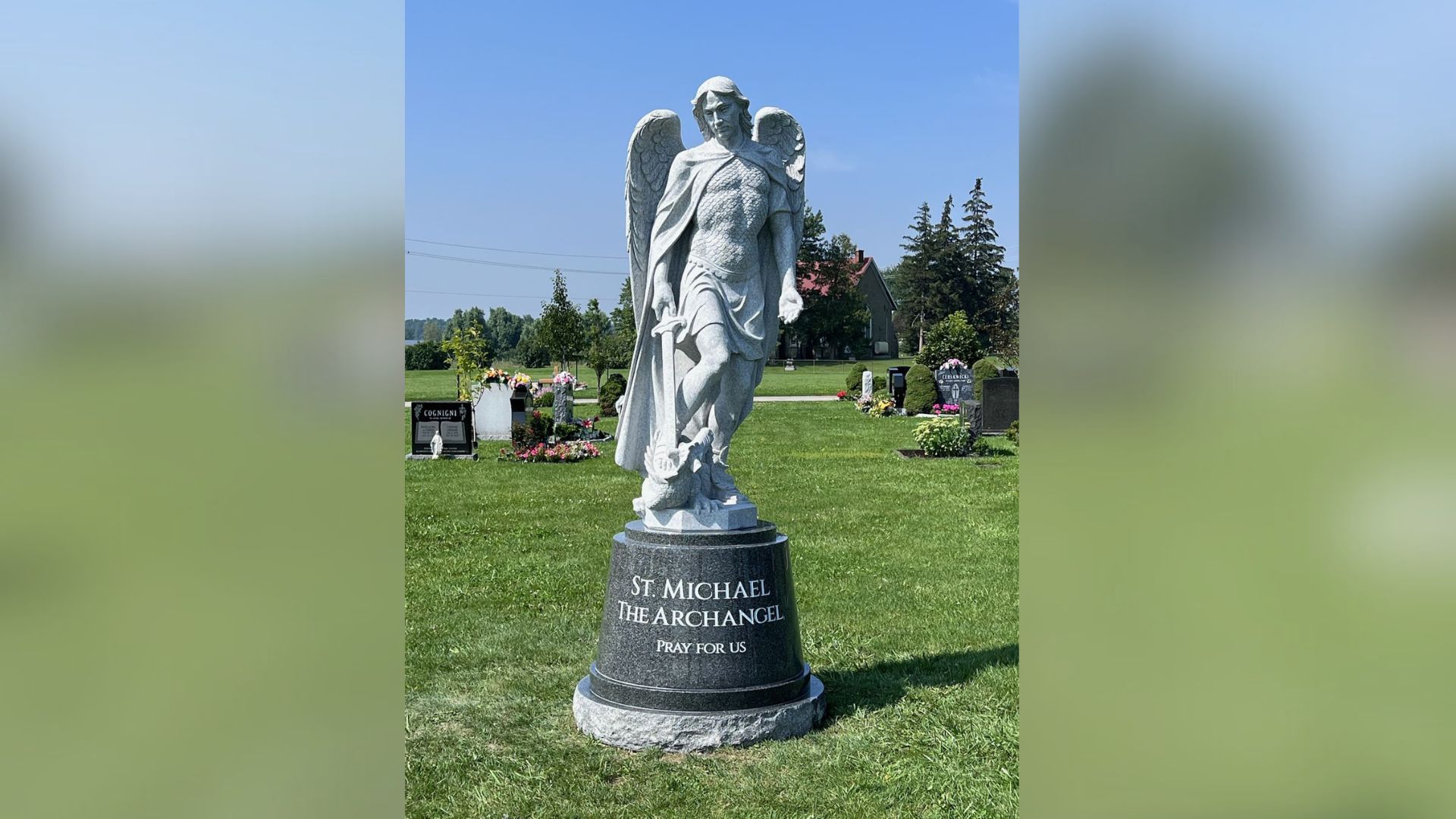
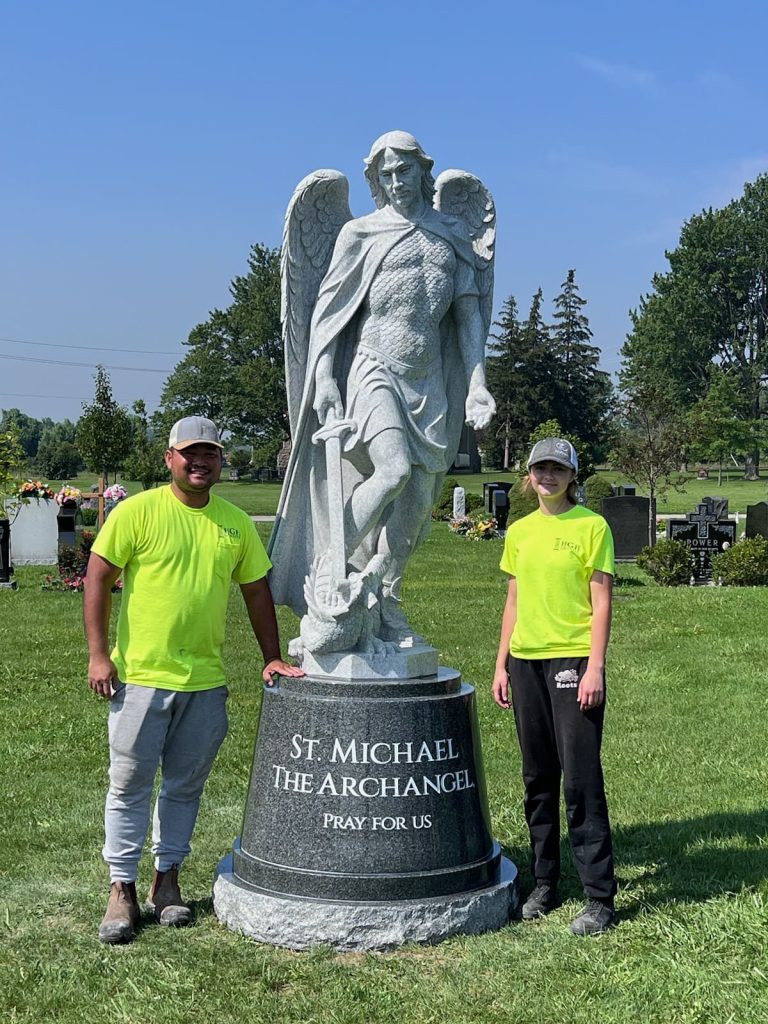
For us, it’s a wonderful opportunity to blend our granite sourcing expertise with our passion for creating life-like statuary. This blog details the process of making the St. Michael sculpture, pictured, which was installed in August 2023 at the Our Lady of the Angel’s Catholic Cemetery in Stoney Creek, ON.
Part 1. The brief

It all began with a call from the manager of special projects for the Diocese asking for our help. The idea for each granite sculpture was for it to delineate a distinct section of the cemetery. In addition to the St. Michael statue, this included a mother and child sculpture for the mothers and children’s area – both providing connection and solace for visitors.

During our initial conversations, we assessed the feasibility and potential of each design from a granite perspective.

For the St. Michael sculpture, we decided, together with the client, on Imperial Grey granite for the figure and South African Brits/Impala granite for the cylindrical base.
Part 2. The design

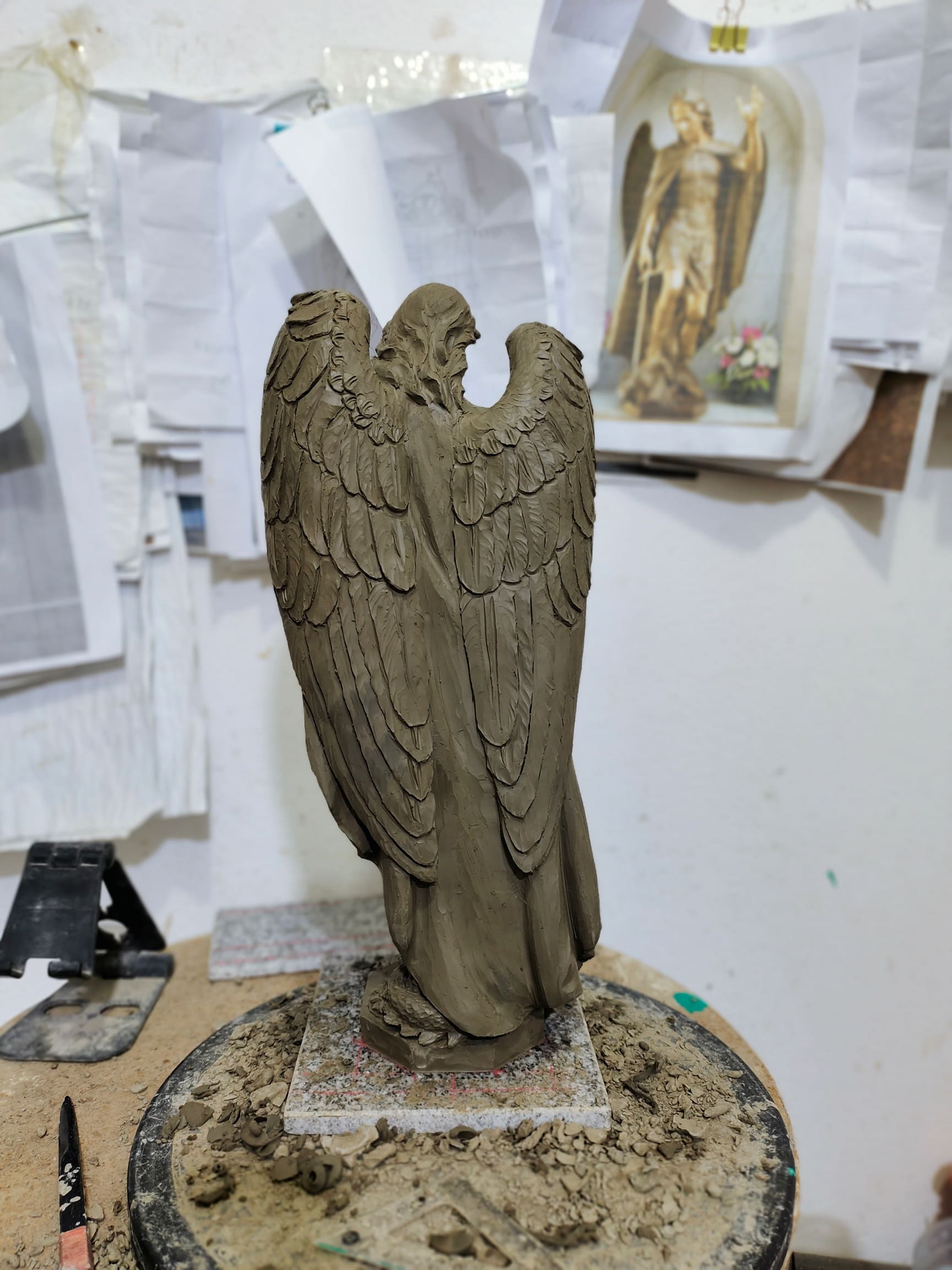
Both the client and HGH carried out research to find photos of St. Michael artwork and statuary that was in line with their vision. The customer finally settled on a bronze sculpture that was in one of their other facilities, while we made some changes to the design at their request.

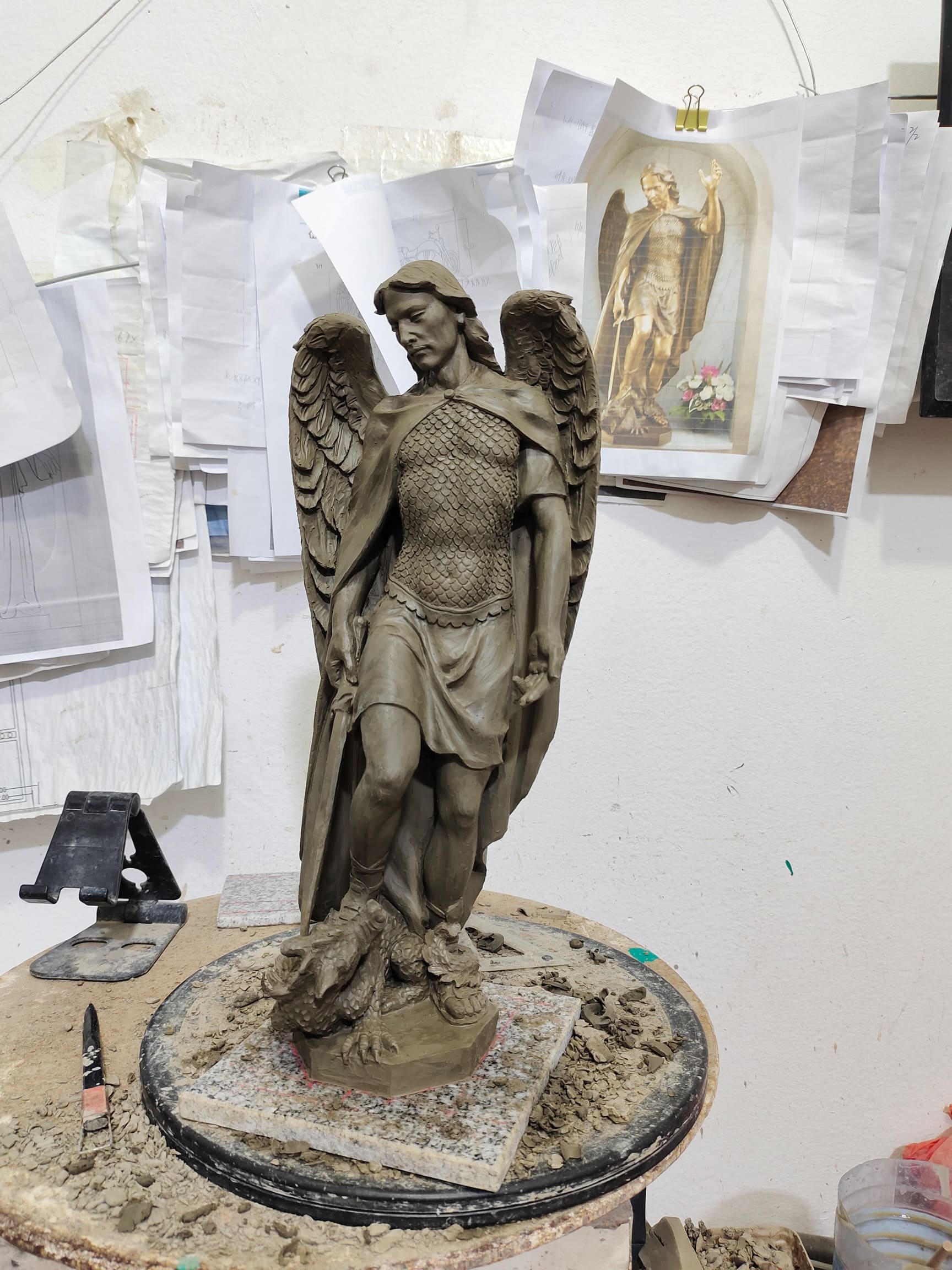
However, the St. Michael sculpture began life as a series of sketches with many revisions. We sent these drawings to our granite artists overseas, who began the process of manifesting the St. Michael figure in clay.

The clay used by the artist is a special sculpting clay that allows them to make continual adjustments to the model, if necessary, as work progresses. Following the client’s brief, the artist captured and made revisions to intricate details, such as the figure’s clothing creases, facial features, and hand placement.

After a six-week period of feedback and finesse-ing the clay sculpture, the client delivered their final approval.

Aligning with our client’s exact specifications before beginning work on the final pieces is an essential part of how we work. It might stretch timelines, but this way we know our clients are truly happy before any work begins – and prevents changes and delays further down the line.
Part 3. Bringing the figure to life in granite

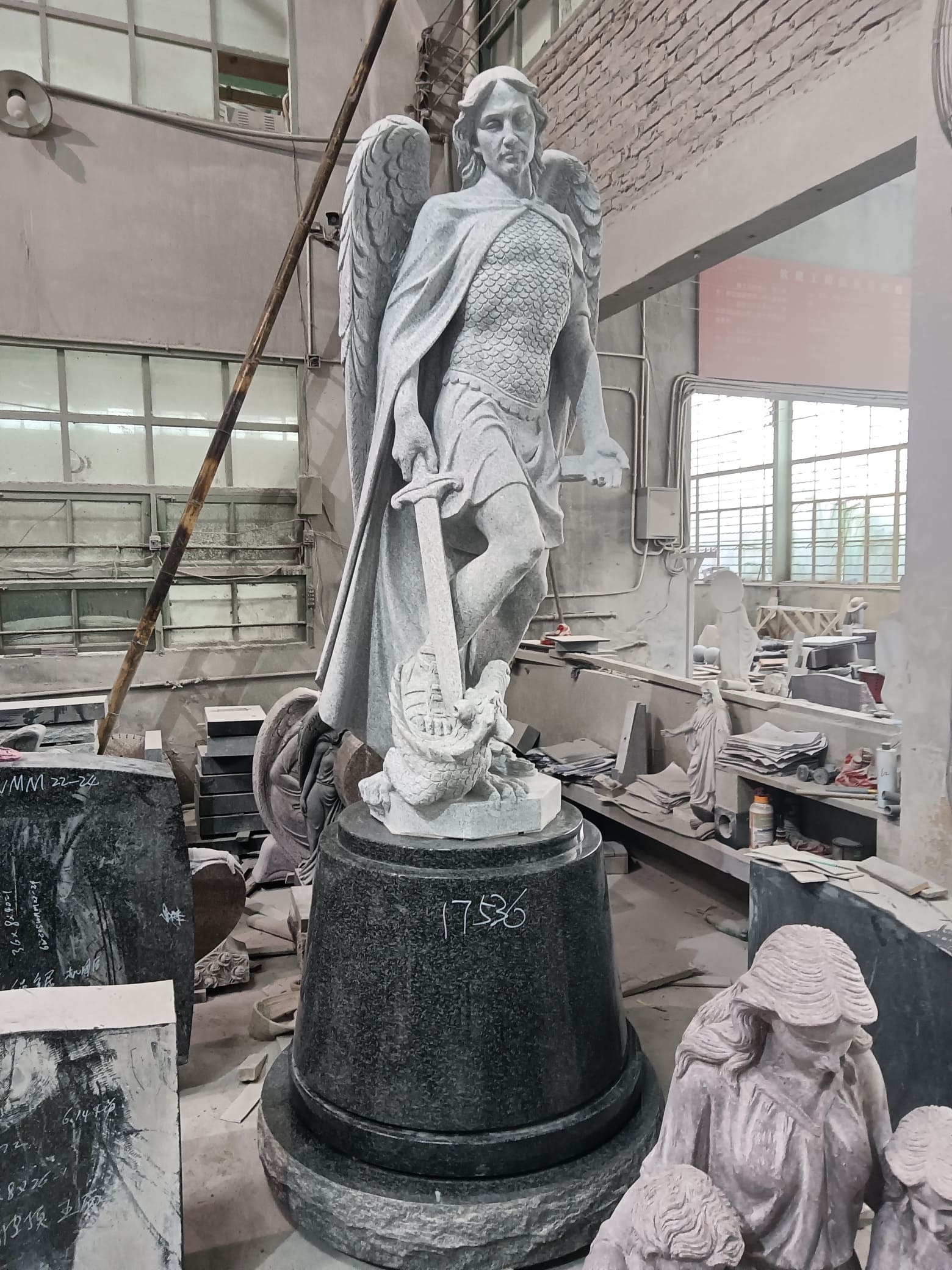
Once the client was happy with the clay iteration of the sculpture, it underwent a 3D scan. Working from this scan the plant was able to create the final piece in granite, using robotic milling and sculpting.

The finer touches were then hand-finished, while our sculptors sent the client photos for approval throughout.
Part 4. Bringing the sculpture home

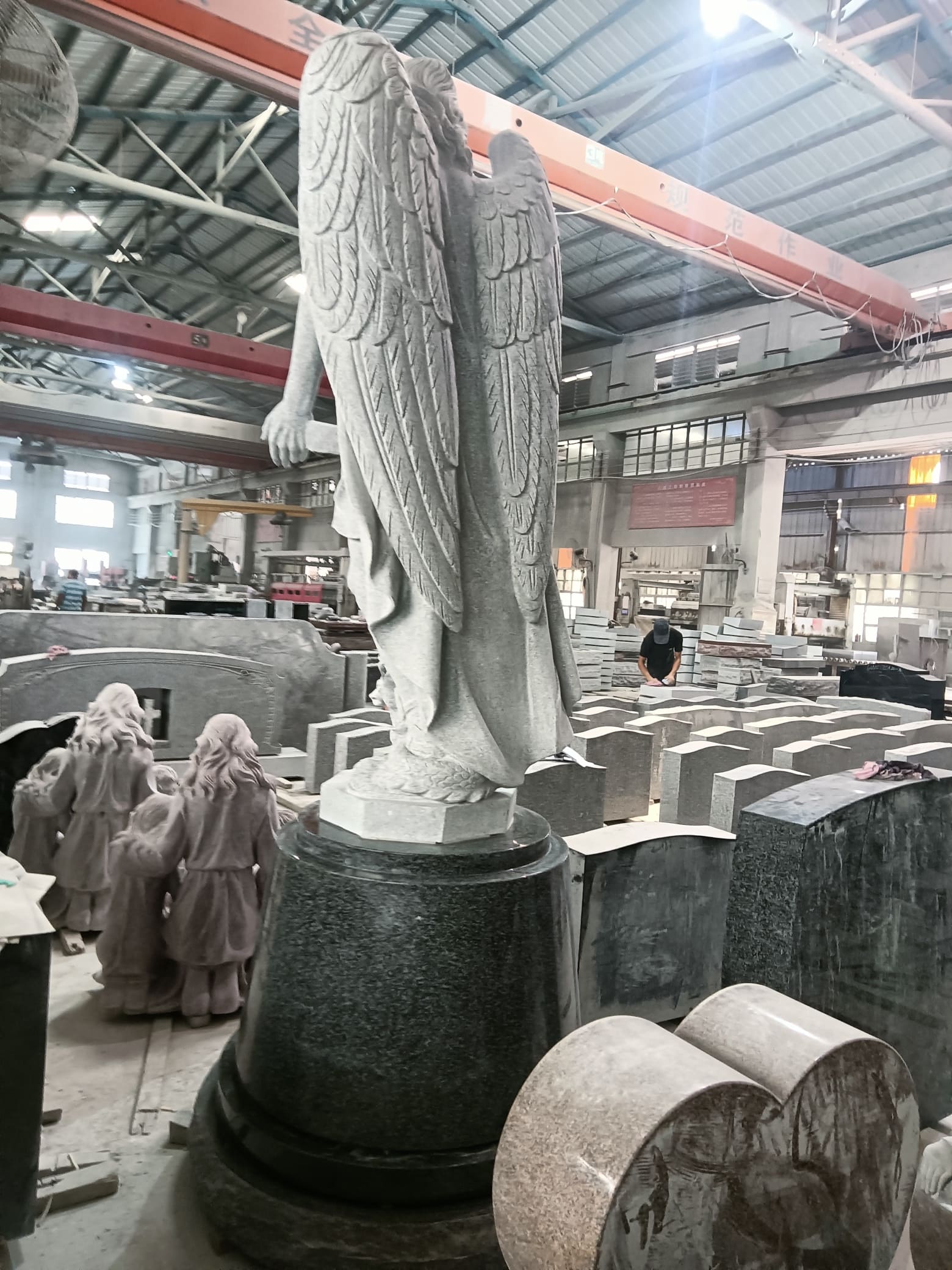
The sculpture’s journey back across the ocean took approximately six weeks, with each careful step of the way designed to ensure it arrived at our plant intact and ready for installation.

Once we’d received the sculpture, our skilled craftspeople completed the engraving, using stencils and a meticulous hand; they also added lettering through our sandblasting process.

Part 5. Installation

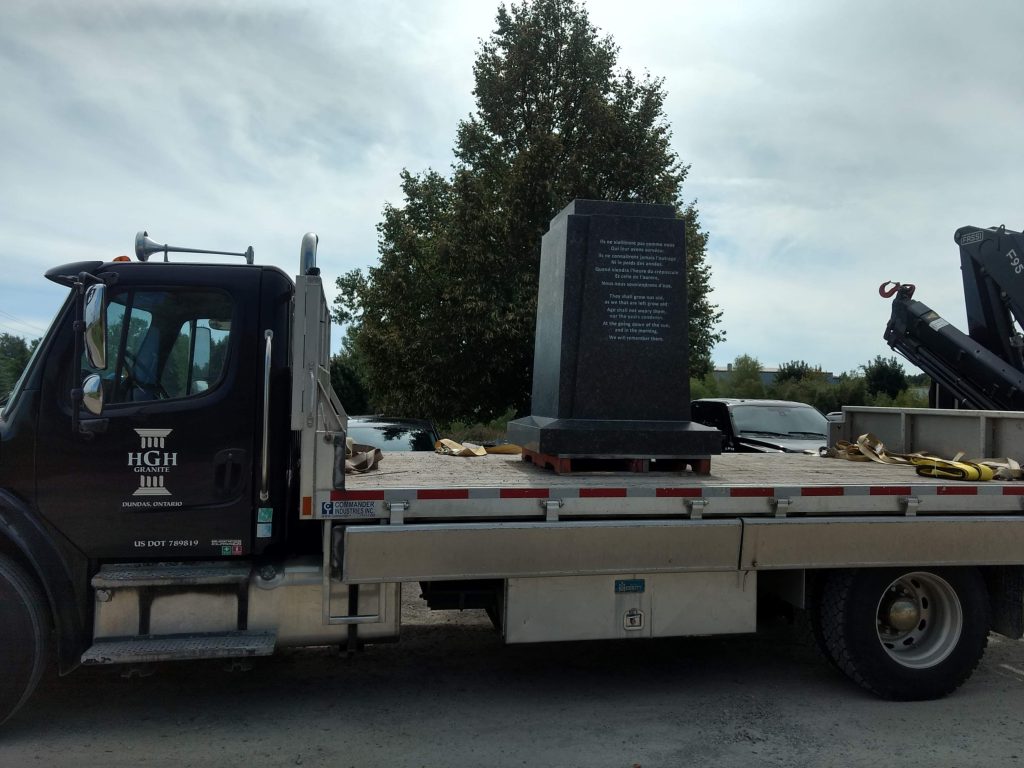
And then the sculpture was ready to be transported to the cemetery.

If you look closely at the picture below, you’ll be able to make out a piece of granite that was left attached to the sculpture between the hand and body of St. Michael. If this granite had been removed before shipping or transportation to the cemetery, this part of the sculpture would have been extremely fragile and at risk of being broken in transit.

Instead, and upon installation, our amazing craftsman Kevin carefully separated the hand from the body.
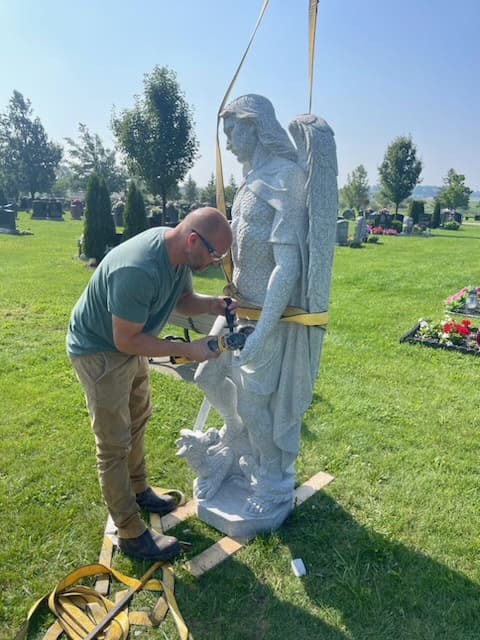
The round base of the sculpture added a layer of complexity to the installation process too, taking approximately one hour to install.

However, once the piece was in place, we were all thrilled by the results. We’re pleased to say, the client was too. The joy of crafting unique sculptures, witnessing the finished project, and knowing the client is happy, are some of the best aspects of our work.

Part 6. Work continues…

Our work with the Hamilton Catholic Cemeteries is ongoing – and we’re currently in the process of creating and installing further sculptures, which we look forward to sharing with you soon.
In conclusion

Crafting sacred art is an intricate, personal and complex process, where artistic vision, craftsmanship, an open mind and collaboration all come into play. We love that the St. Michael sculpture stands as a testament to this process and shows our commitment to enhancing sacred spaces with the enduring beauty of granite. We hope you’ve enjoyed reading about the process too.

At HGH, we pride ourselves on sourcing the finest granite and providing the best service to our valued clients. Whether you’re working on a monument project, a timeless headstone, or a public architecture piece, our team – and their many years of expertise – is at your service!

Get in touch with us today.
Your Complete Guide to Granite Maintenance and Repairs

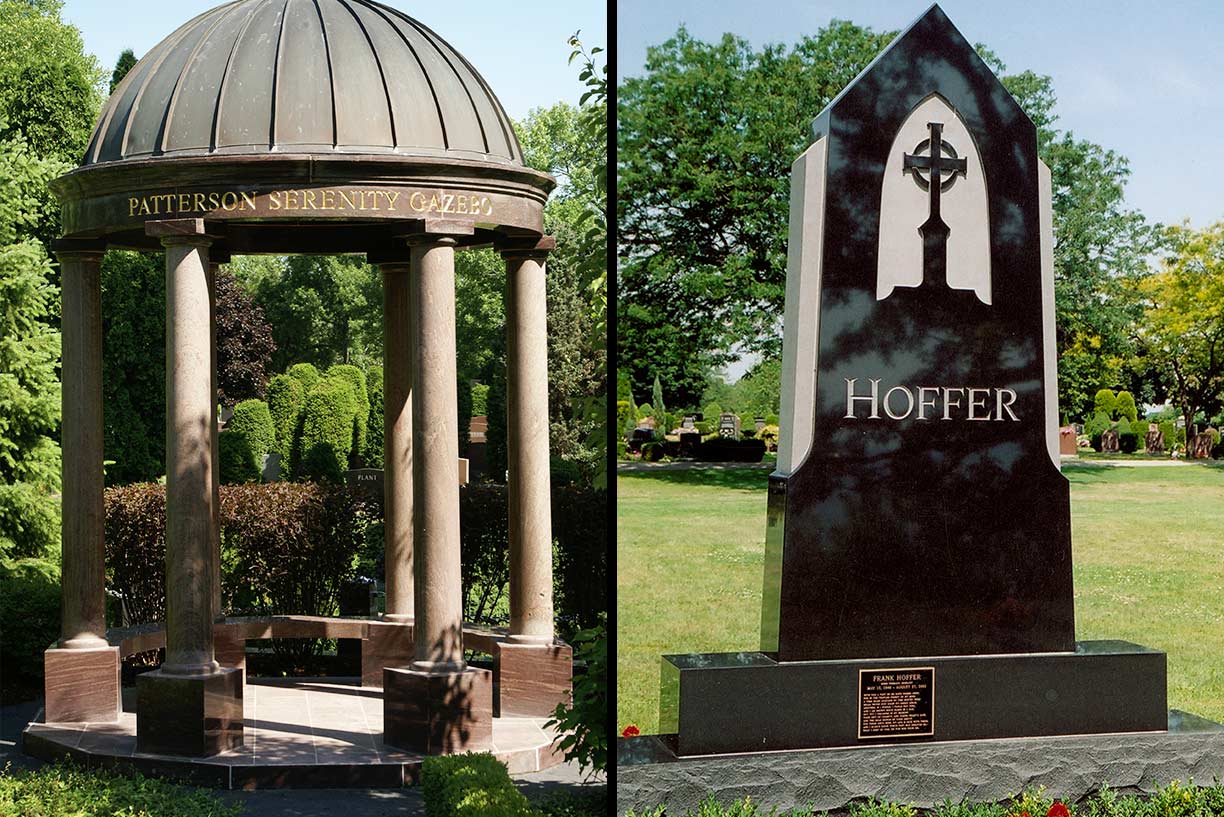
Whether you’re a landscape architect, memorial artist, or a monument company working granite, you choose it because of its timeless beauty and durability of granite pieces. We get that completely.

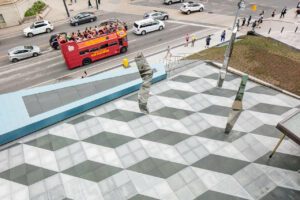
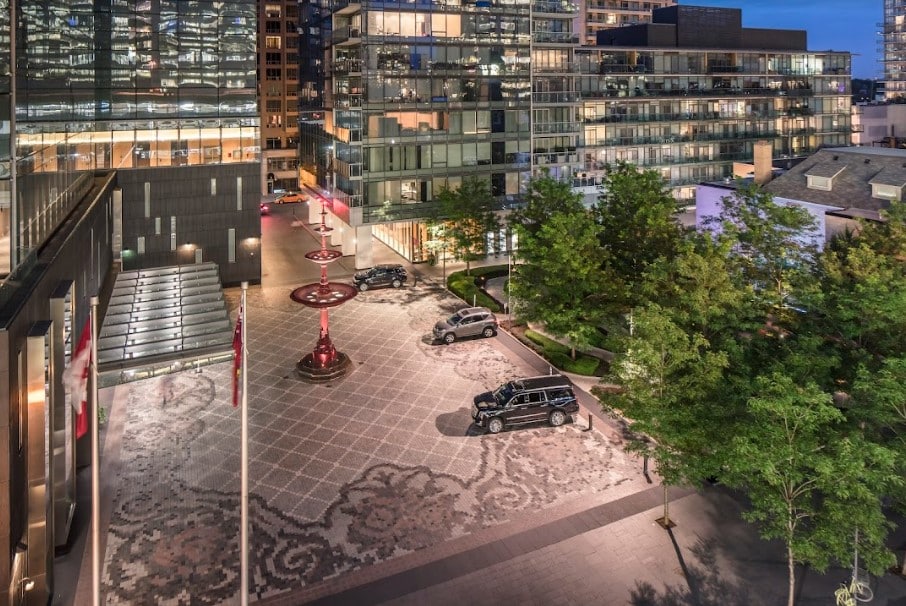
From awe-inspiring monuments to meaningful, elegant headstones and resilient public ‘carpets’ – see the ‘granite carpet’ at the Four Seasons’ Hotel, Toronto, below – granite adds gravitas to any project.

To preserve the longevity and lustre of such creations, however, requires regular maintenance and timely repairs. So, what does that look like? In this blog, we’re delving into the world of granite care, and offering up lots of valuable tips on how to maintain your granite installations and keep them in pristine condition.

How to Maintain Granite Pieces


1. Clean regularly

Regular cleaning is the cornerstone of granite maintenance. Firstly use a soft brush to remove any dirt or debris then use a mild detergent mixed with warm water to gently clean the surface of the piece, using a soft brush or sponge. White vinegar and water can also be used in combination.

It’s a good idea to test the cleaning solution on a small area of the stone first to ensure it doesn’t cause any adverse reactions.

If using white vinegar, We recommend never cleaning in direct, hot sunlight as it can cause possible damage to the stone.

We also recommend avoiding abrasive cleaners and harsh chemicals that could damage the natural beauty of the stone.

One last tip: draw up a cleaning schedule so no day, weeks or months go missed!

2. Apply granite sealer

Granite that is unpolished can be porous, making it susceptible to staining if left unsealed. Depending on the granite colour and finish, it’s a good idea to apply a quality granite sealer every one to three years to your piece. Sealing helps protect granite from staining, ensuring it maintains its good looks over time.

3. Avoid heavy impact

While granite is incredibly durable, it’s not completely indestructible. Avoid heavy impact or dropping heavy objects onto any granite surfaces as this may cause chips or fractures. Be mindful when using lawn mowers or other equipment near granite installations to prevent accidental damage.

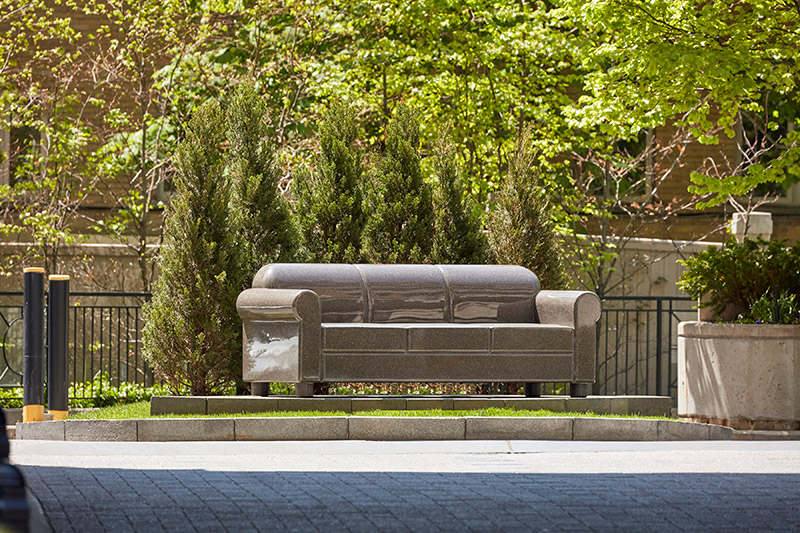
Granite couch by HGH Granite

How to Repair Granite Pieces


1. Look for signs of wear and tear

It’s important to keep a close eye on granite pieces for signs of wear and tear. Cracks, chips, discoloration, and surface scratches are common issues that can crop up over time, and dealing with them promptly is the name of the game. Create a schedule for regular check-ins. Dealing with the issue promptly will enable you to nip damage in the bud, and maintain the integrity of the granite.

2. Seek professional help if needed

We provide repair services at HGH if you need professional assistance. We’d always advise erring on the side of caution, as attempting to Do It Yourself is not a good idea – it might make problems worse and compromise the appearance of the granite.

In Conclusion

Maintaining and repairing granite pieces is a worthy investment that pays for itself in the long run. Implementing regular cleaning and maintenance schedules and practices – along with periodic sealing – will help you preserve the splendour of your piece and avoid costly repairs. Remember to stay vigilant for signs of wear and tear, though – and seek professional restoration services when needed.

At HGH, we pride ourselves on sourcing the finest granite and providing the best service to our valued clients. Whether you’re working on a monument project, a timeless headstone, or a public architecture piece, our team – and their many years of expertise – is at your service!

Get in touch with us today.
5 Ways We Work With Memorial Artists to Preserve Memories

In the world of public memorials, successful collaboration is the key to meaningful, beautiful pieces that stand the test of time – and become popular visit attractions.

In this blog, we’re going to take a look at how we work with the different parties involved in the creation of a public memorial – whether that be a piece honouring fallen soldiers, Indigenous people and their contribution to society, or legendary figures from the world of sports and literature.

1. Collaborating from the get-go

Collaboration is at the heart of creating meaningful memorial art. So how does it all start? Generally, we will receive a call from the interested party looking to share their concept for a memorial project.

The client will enquire about the possibility of making this piece from granite – or incorporating granite into the design.

After we’ve helped with their initial enquiry, we set up a meeting to discuss their requirements and the various methods we can use to achieve their desired results. By working together closely from the start, we get to the heart of the client’s brief and ensure it will be translated into a tangible memorial, encapsulating the essence of their subject.

2. Getting to know the customer

Understanding the customer’s vision is integral to getting started on a meaningful memorial. Adapting to different types of clients is part of our process too. We work with a variety, including:

  • Memorial companies
  • Municipalities
  • Cemeteries
  • Volunteer groups

These clients will hire an artist or urban design company, themselves – but we will meet with the artist in question as part of our process. In other cases, memorial artists come straight to us with their briefs.

3. Delivering expert insight

While the overall concept of a public memorial is developed by an artist or design team, we are responsible for providing a wide selection of granite colours, and finishes for them to select from, to help bring their vision to life. We also advise on the best materials for specific memorial designs.

4. Unleashing Creativity

Memorial artists possess a unique blend of artistic talent and empathy. And we love working closely with them to get to the core of the story they wish to tell. Our expertise in choosing the right colours and finishes + the durability and beauty of the chosen granite + the artists’ skills and soul-felt work = evocative memorials that capture the true essence of lives lived.

5. Learning from our successes and always striving to deliver

We’re proud to have successfully collaborated with a number of inspiring artists on a wide-ranging portfolio of extraordinary memorials, incorporating diverse designs, materials, and techniques.

Every project we’ve worked on has enriched and educated us in new ways – through the design process itself to overcoming supply challenges, for instance, in order to deliver on time and budget. We take everything we’ve learned into our next project with the aim of making it just as successful – if not more so – than the last.

Some of our favourite memorial projects include:

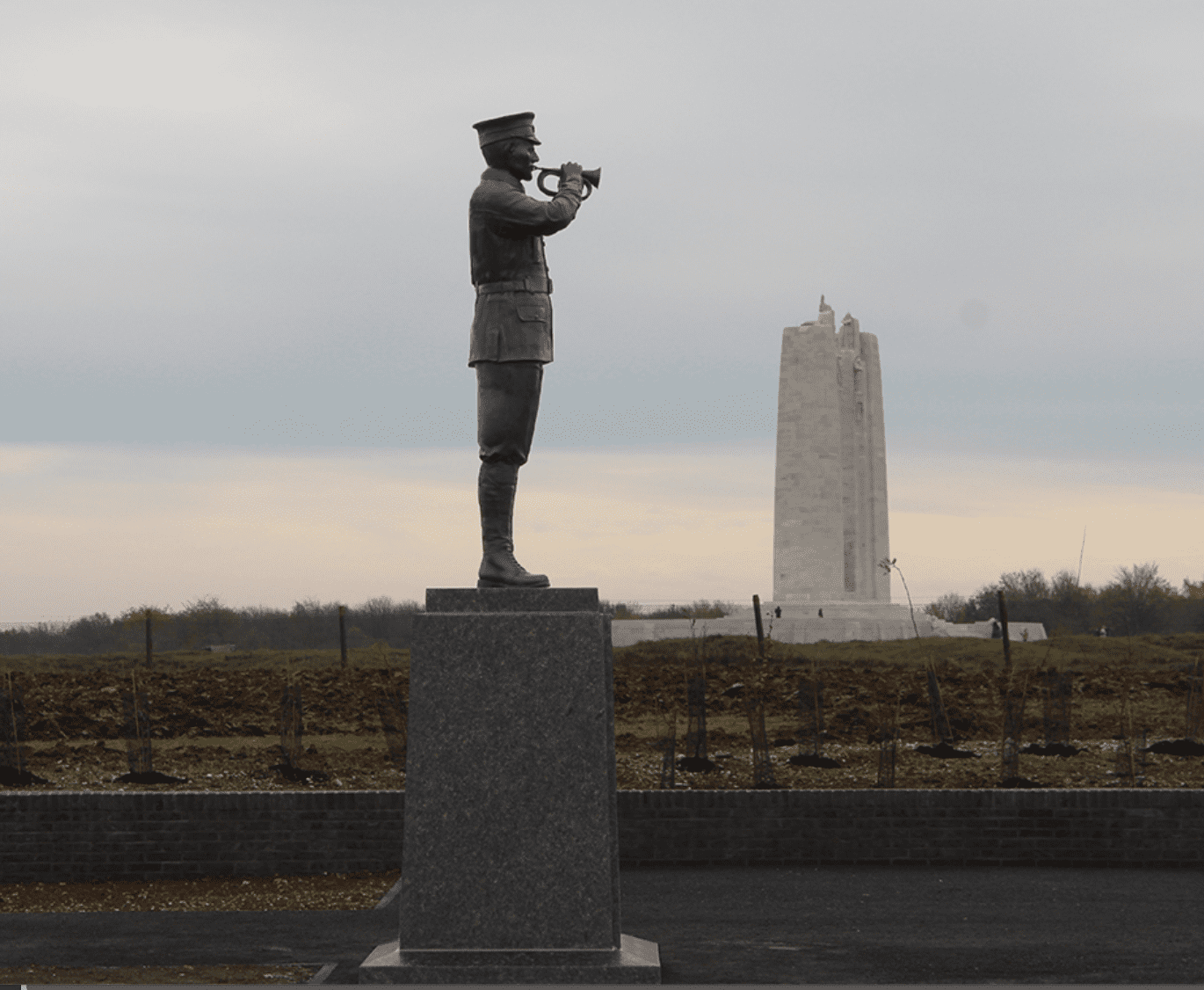
The Vimy Centennial Bugler, Marlene Hilton Moore

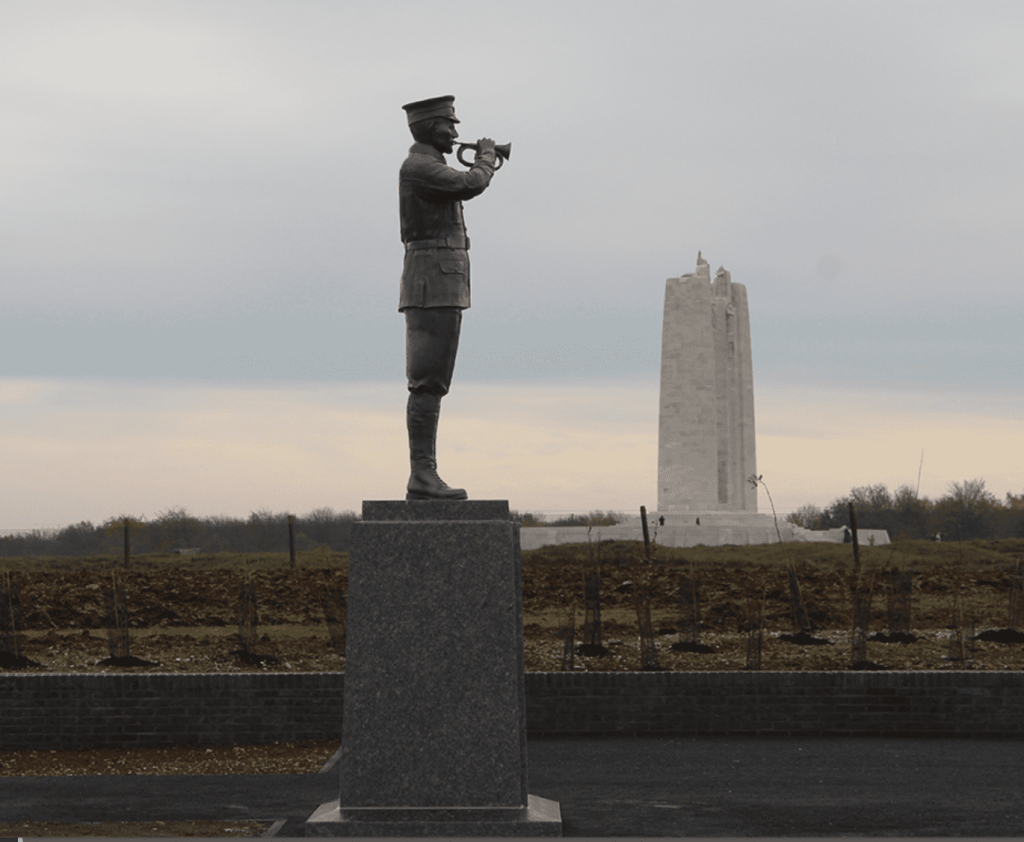
We supplied and installed the granite base for this poignant sculpture that depicts a single bugler, and calls us to remember the bravery and sacrifice of those Canadians who fought in WWI over one hundred years ago. It is a significant feature of Vimy Foundation Centennial Park, part of the Canadian National Vimy Memorial site.

Maajidowin: The Gathering, David M General

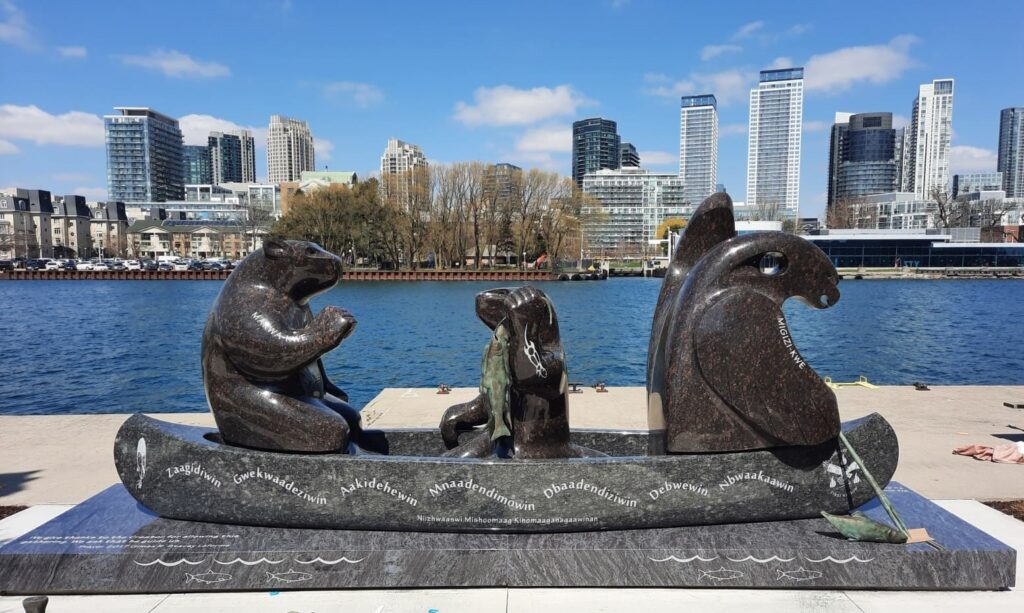
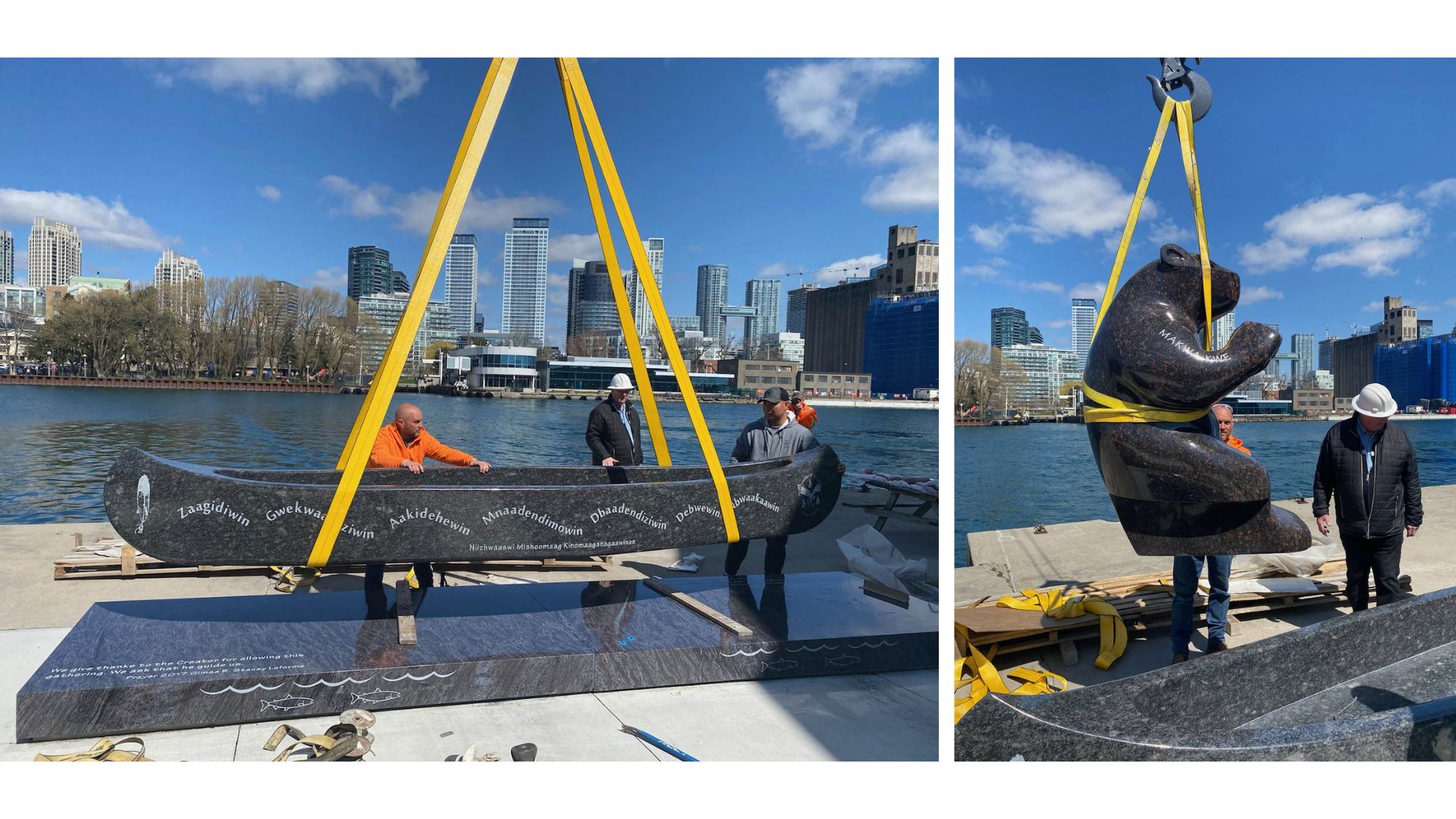
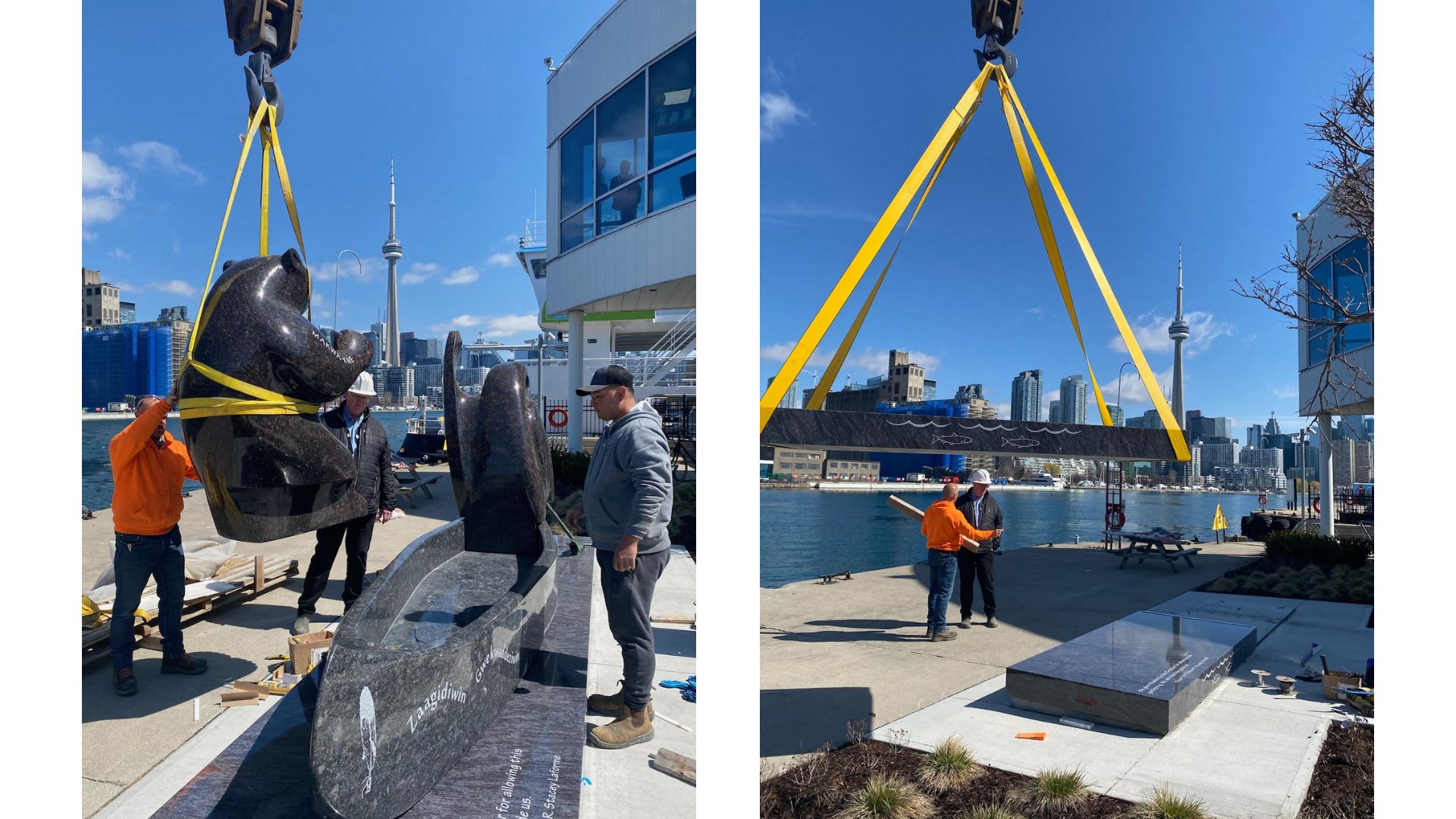
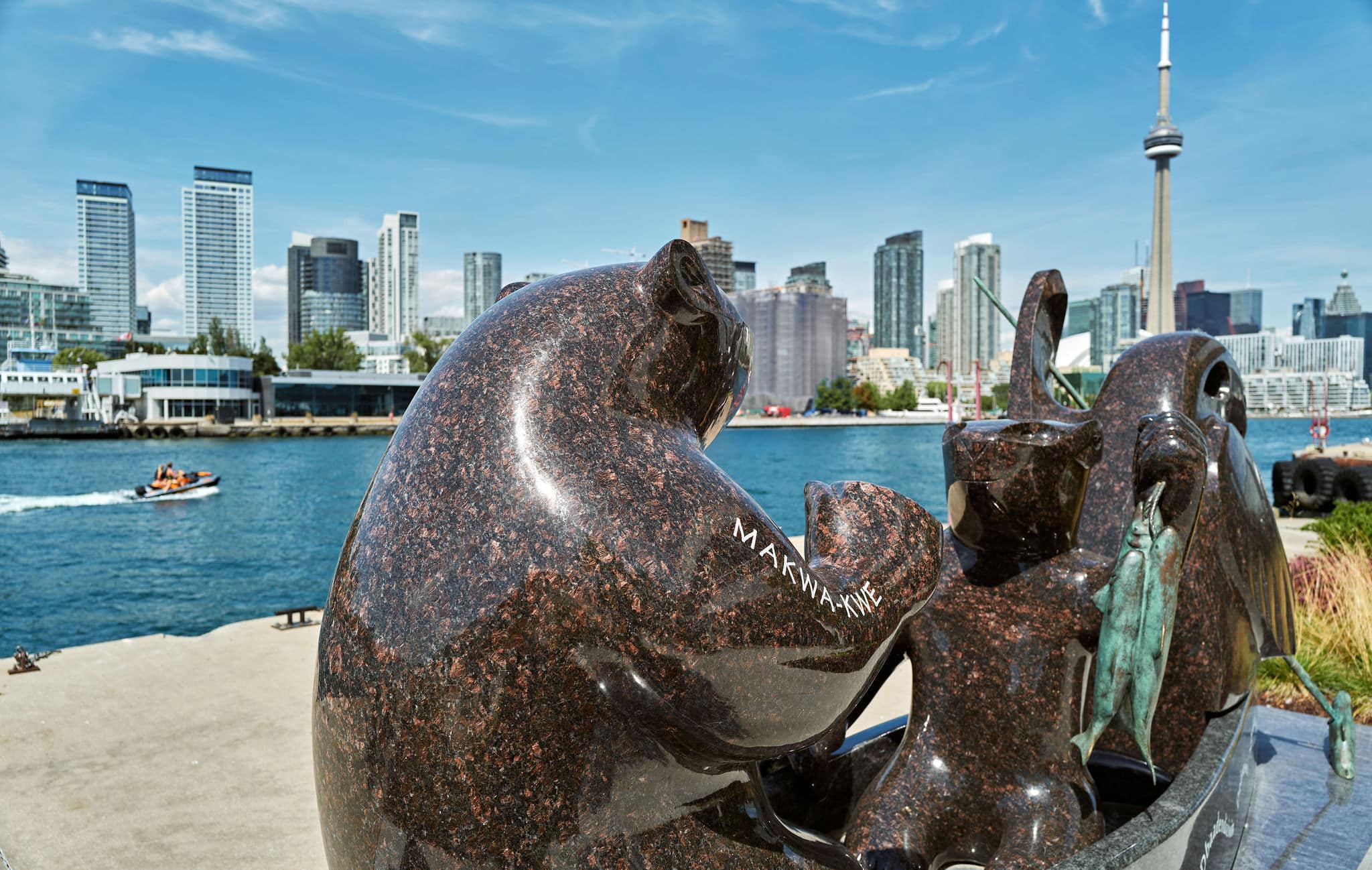
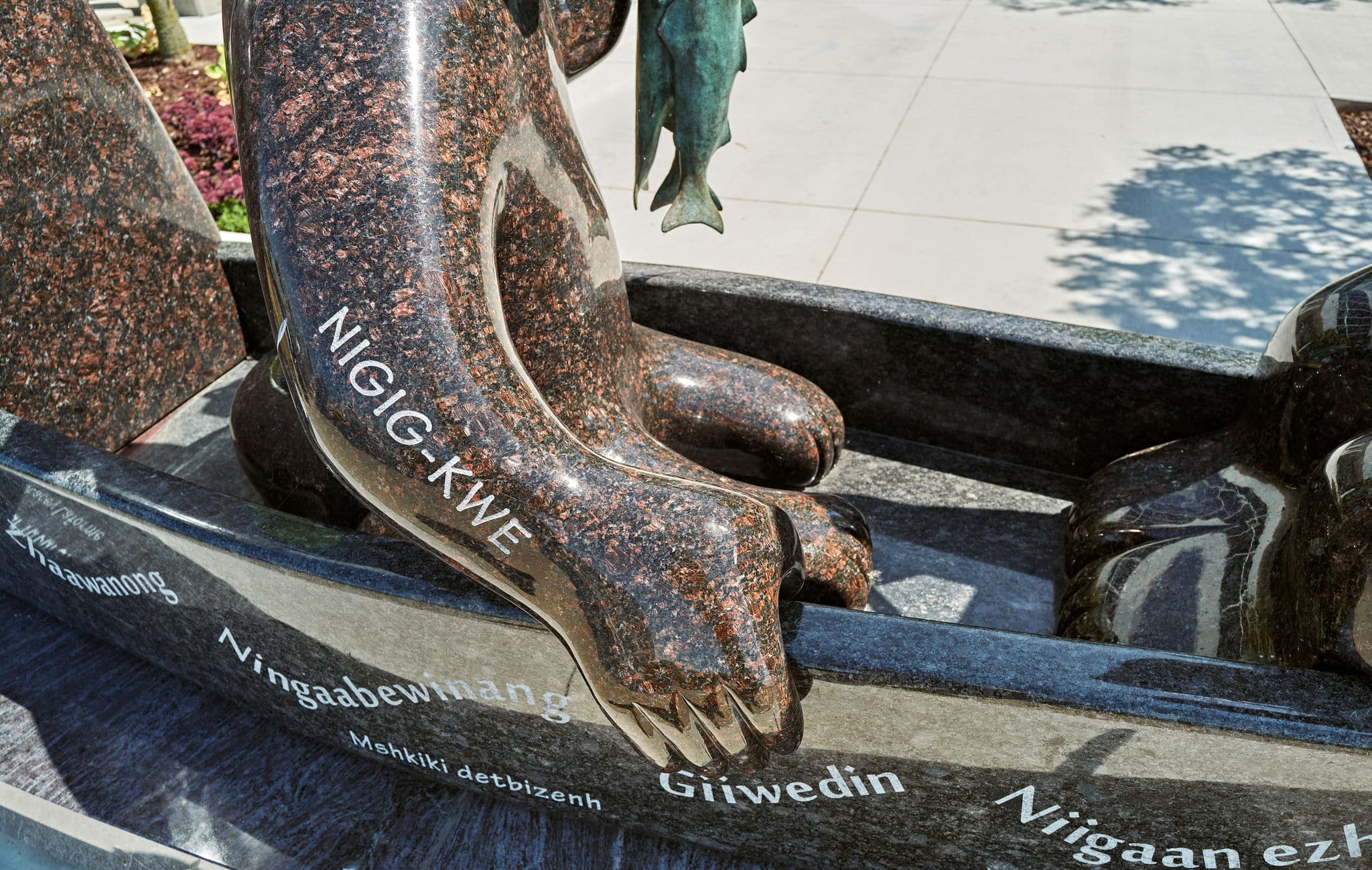
This 16-foot granite and bronze sculpture sits at Billy Bishop Toronto City Airport on the dock wall overlooking the Western Gap. It was created in recognition of the Mississaugas of the Credit First Nation and their relationship to the land, air and water.

We had worked with celebrated Indigenous artist David before, and came to us and discussed the project. We then sourced and supplied the granite for the canoe and the animals and engraved the granite. This included accommodating the artwork provided and ensuring the stencils were placed precisely where the artist envisioned, prior to sandblasting. Take a closer look at the Maanjidowin project.

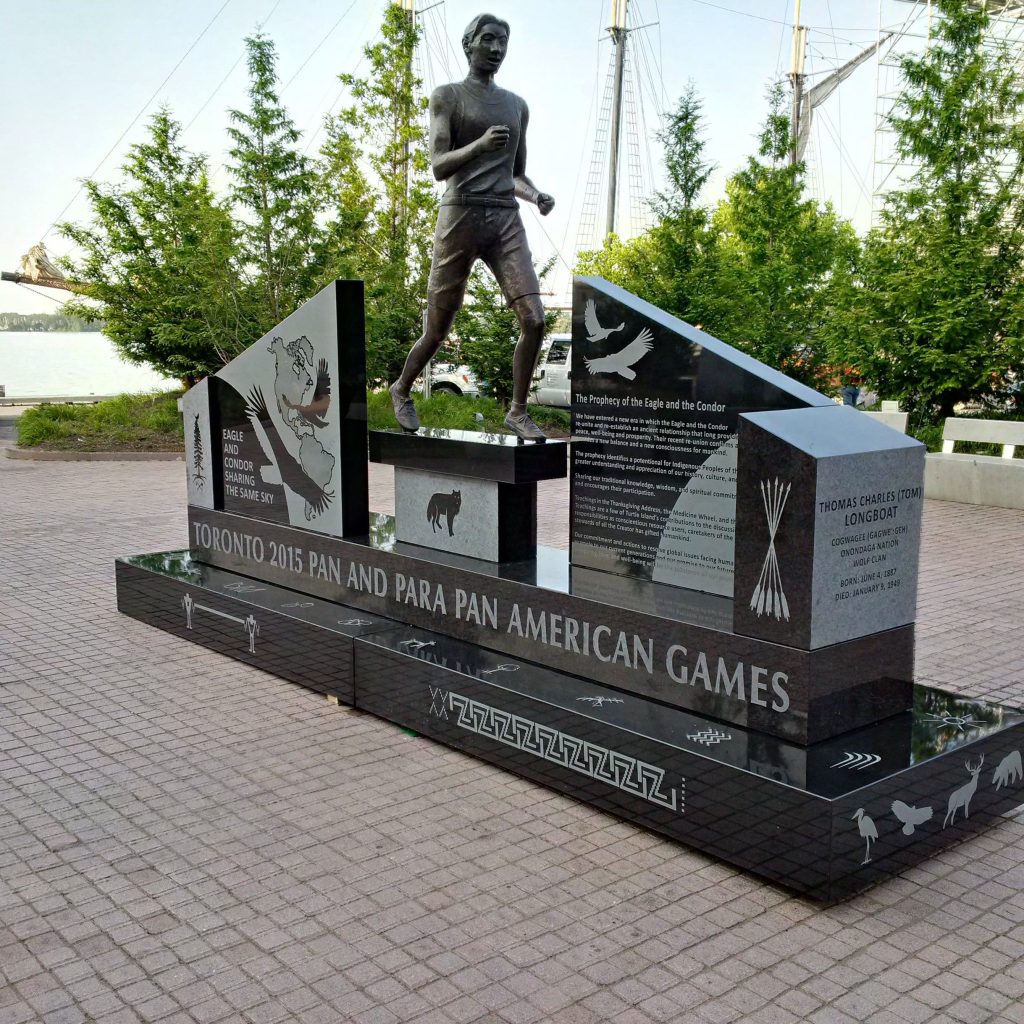
Other memorials we’ve worked on with David include the Thomas Longboat Memorial project for the Pan Am Games in Toronto in 2015 – picture above in this blog – and on The ‘Eagles Among Us’ memorial, located at Battlefield Park in Stoney Creek, ON.

CBTU Monument

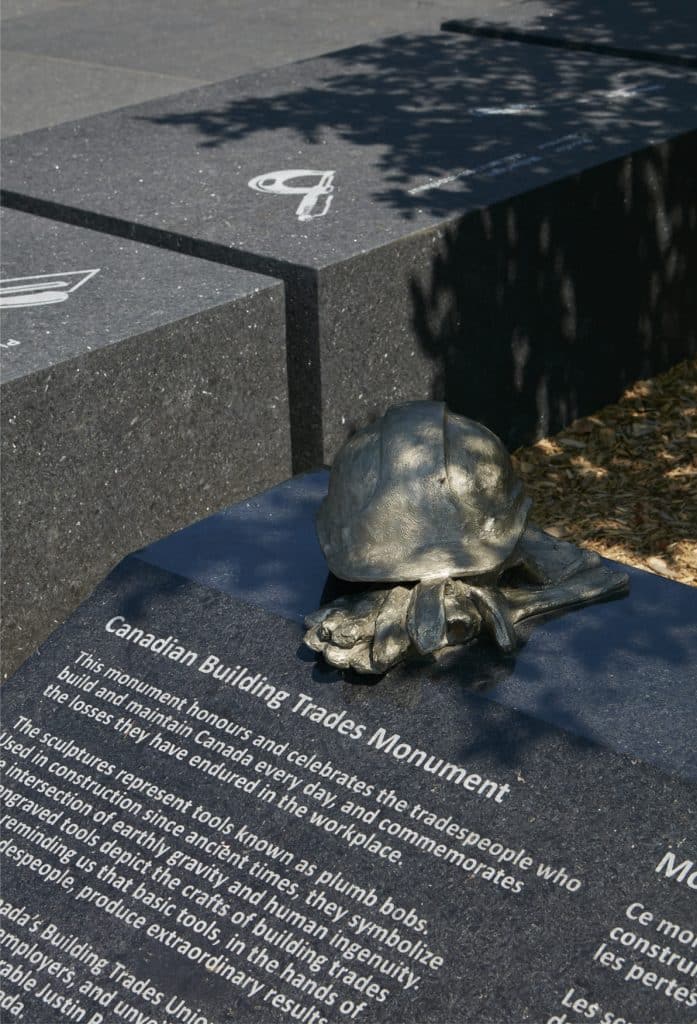
We had the opportunity to work with John Greer and Vanessa Paschakarnis from Intercontinental Sculpture on the Canadian Building Trades Monument in 2017, which celebrates Canada’s skilled building tradespeople.

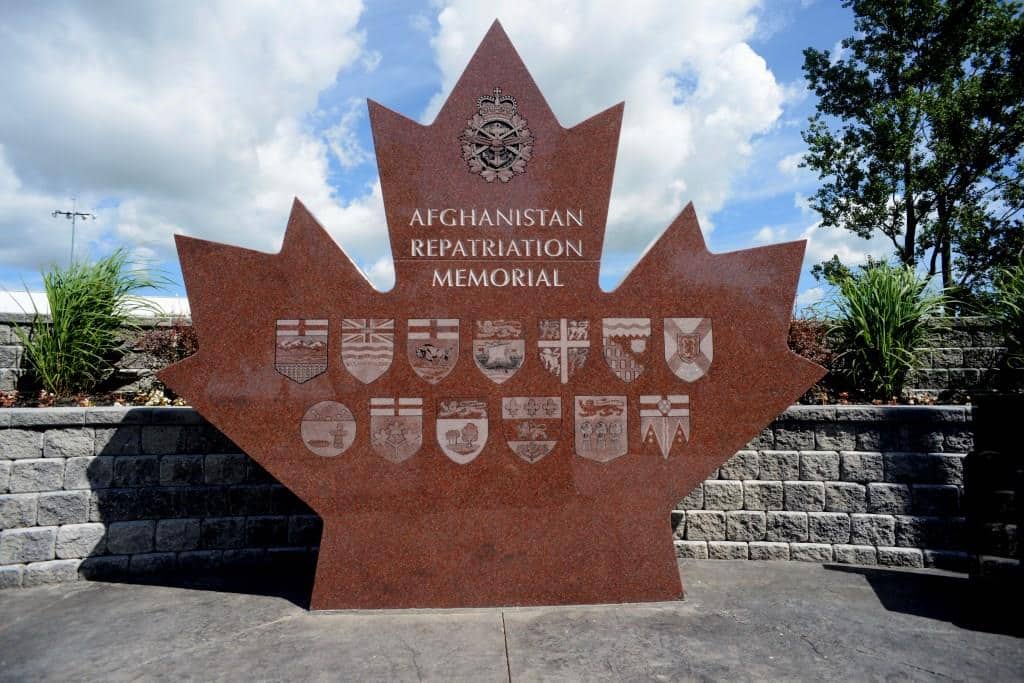
Afghanistan Repatriation Memorial

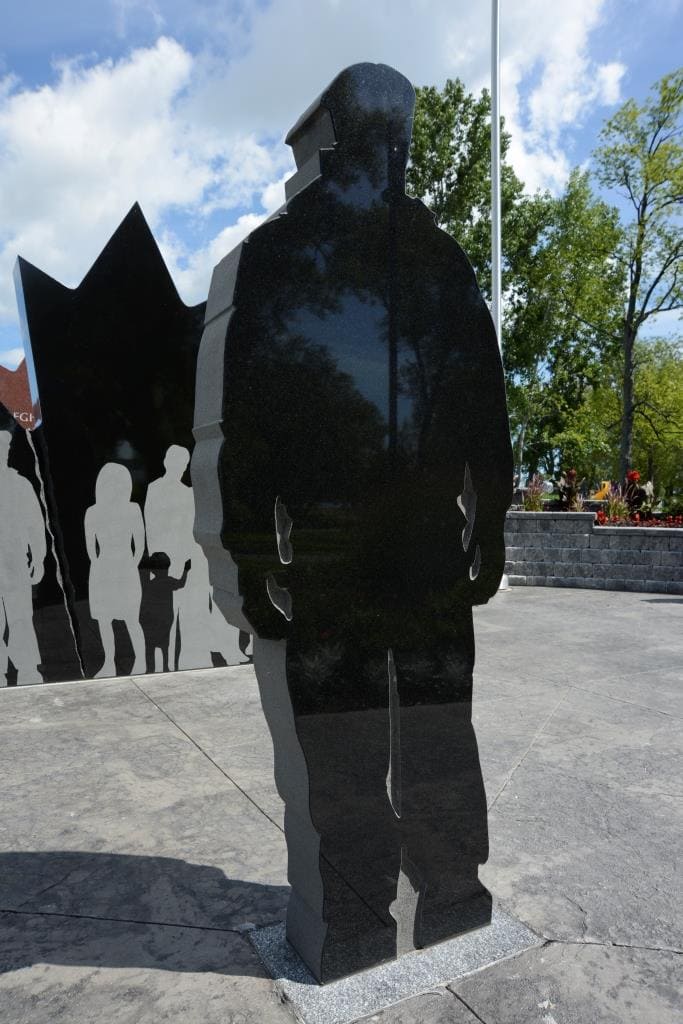
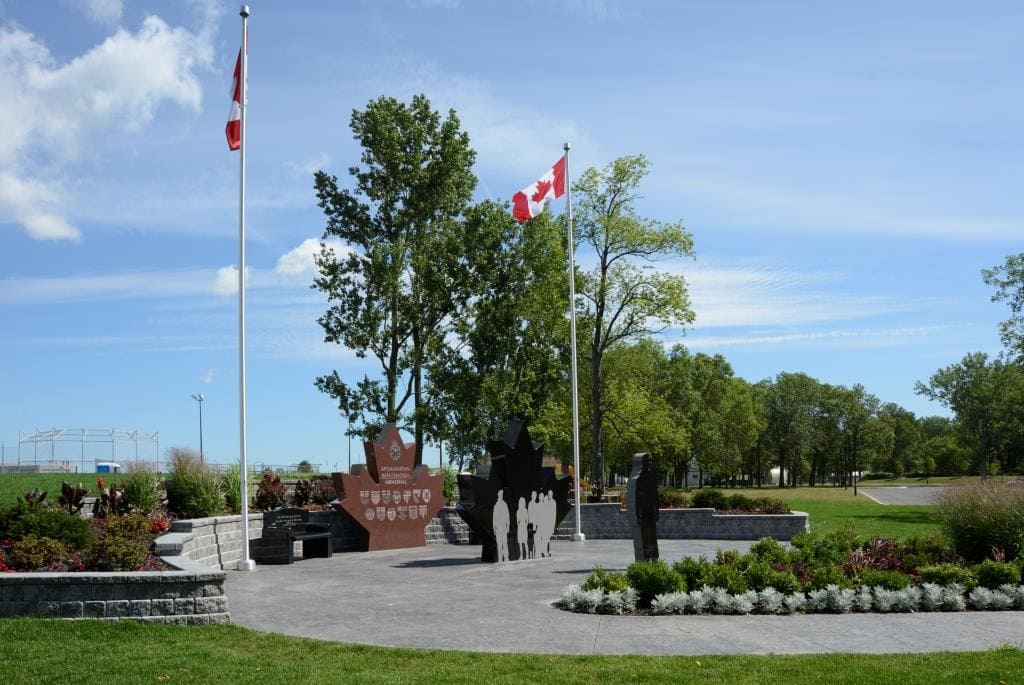
We also worked with Campbell Monument Ltd on the iconic Afghanistan Repatriation Memorial.

In conclusion

These memorials are a testament to the power of teamwork and combined expertise in the memorial art industry. And we’re proud that our 90+ years of granite knowledge and expertise helps memorial artists make informed decisions when it comes to selecting the perfect granite for each project. Through collaboration, we have been able to create unique and meaningful pieces that celebrate and honour the lives of many brave and inspiring people – leaving a lasting legacy for generations to come.

Contact us today

We’ve been providing granite services for over 90 years. Our vision and business model have helped build a loyal customer base that relies on our expertise and quality workmanship. Over the years, our team has grown with like-minded individuals that share the same passion for providing outstanding granite products and services. Let us help build you your vision. Talk to us.

5 Tips for Landscape Artists Inspired by Iconic Granite Landmarks

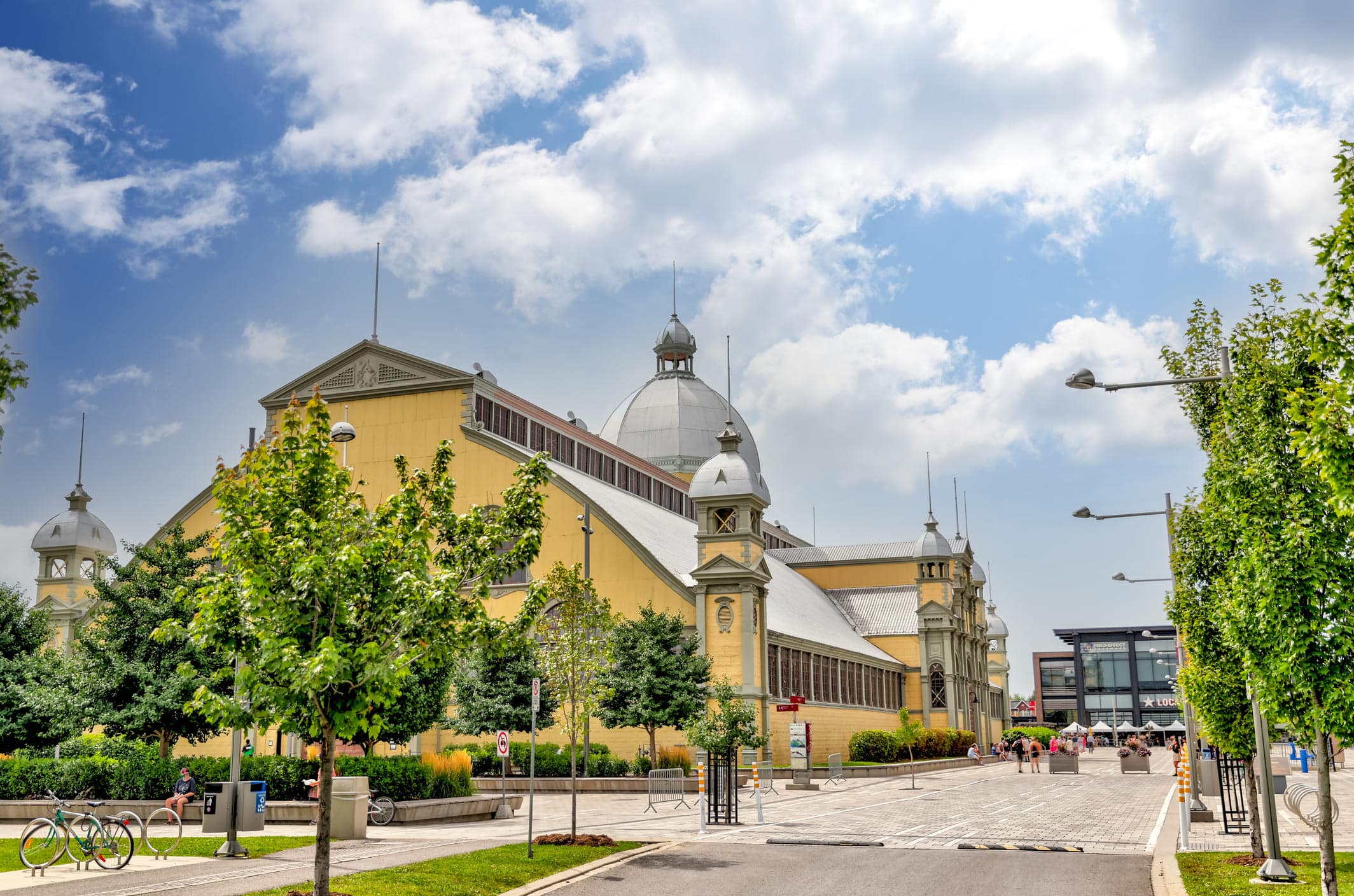
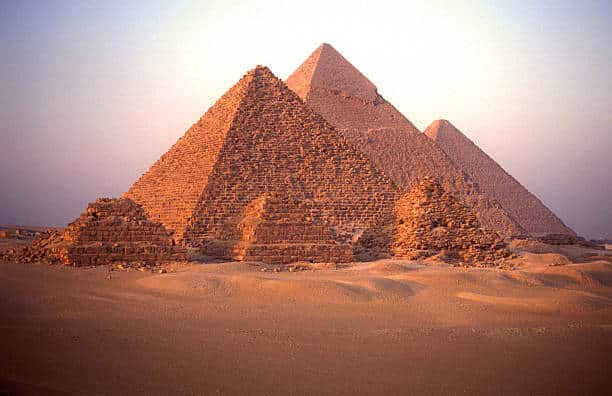
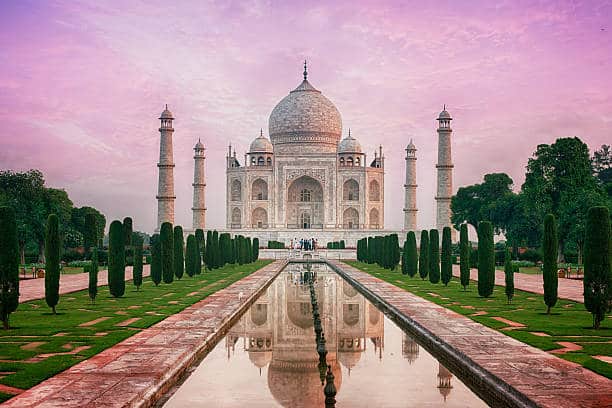
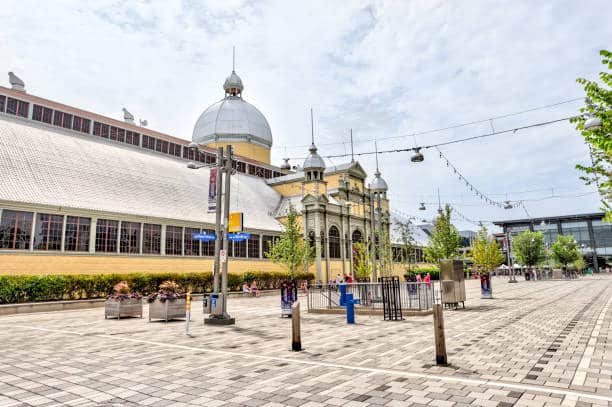
What do the Great Pyramid of Giza, the Aberdeen Pavilion in Ottawa, Canada, the Taj Mahal, Stonehenge and the Statue of Liberty have in common? Aside from being iconic international landmarks that is.

If you hadn’t already guessed, then let us shed some light: granite has played a key role in the construction of each and every one of them.

In this blog, we’ll take a look at these historic monuments, delve into how granite was used in each application – and discuss the ways memorial makers, urban artists and landscape architects can use the tricks of the past to create stunning long-lasting landmarks today.
1. Embrace Durability like the Ancient Egyptians did

Granite is known for its strength and durability, making it the perfect choice for long-lasting structures. The largest of the three pyramids in Giza – a bona fide ancient wonder – is primarily constructed using limestone and granite blocks.

Memorial artists, urban designers and landscape artists can apply this same principle to their work today – by selecting durable materials, such as stone or concrete, for everything from foundations, paths, walls, to other decorative hardscape elements.

The results? Granite not only looks wonderful, it’s built to last. And by combining granite with other hard wearing stones, urban designers and artists will imbue their work with a sense of permanence and longevity – and minimize the need for constant maintenance.

2. Incorporate Texture and Contrast, a la The Taj Mahal

While primarily built using white marble, the Taj Mahal incorporates intricate inlay work featuring a variety of precious and semi-precious stones – and granite.

Granite often boasts unique textures and color variations, and today’s urban and memorial artists can take inspiration from this by incorporating different textures and contrasting elements into their sculptures and landscapes.

Combine smooth and rough surfaces, mix materials like wood and stone, or vary plant textures to create visual interest and dynamic compositions.

3. Balance Simplicity and Sophistication

Many granite architectural designs strike a balance between simplicity and sophistication. Today’s granite artists and landscape architects can apply this concept by creating clean lines and simple forms while incorporating elegant details and refined elements.

You can see this approach in the iconic The Aberdeen Pavilion (also known as the Horticulture Building) in Ottawa, Ontario, Canada. Constructed between 1898 and 1903, in the late Victorian and Edwardian architectural styles, it incorporates a striking combination of brick and stones including granite.

While the building’s foundation and lower levels were constructed using locally quarried Nepean sandstone – and the upper levels and exterior walls were made of red brick – granite is incorporated into the structure as accent pieces.

You’ll see granite in the columns, lintels, and many of the decorative elements of this forever-eye-catching building.

4. Prioritize Functionality

Granite architecture often focuses on functionality, ensuring that the stone serves a practical purpose.

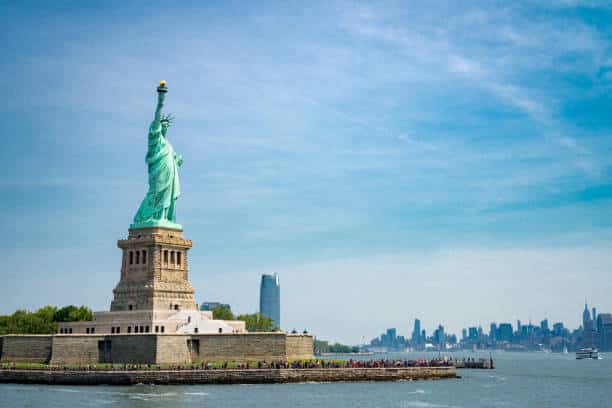
One famous landmark that uses granite to service a functional *and* aesthetic purpose is the Statue of Liberty.

While its main body is made from copper – and its internal structures from steel and iron – the statue stands on a huge foundation of concrete, granite blocks and granite-faced concrete – all of which provide that all-important stability and support.

The Statue of Liberty’s pedestal is also made of granite. Its exterior comprises rough-hewn granite blocks, while its interior is constructed with dressed granite blocks. The rugged texture and natural colour variations of the granite contribute to the eternal visual (and very Instagrammable) appeal and impact of the structure.

5. Pay Attention to Scale and Proportion

From the most famous to the locally beloved, granite structures usually exhibit a sense of proportion and scale that fits harmoniously with their surroundings.

Granite architects, memorial artists and urban artists can apply this principle by carefully considering the scale of landscape elements, such as trees, shrubs, and architectural features. A truly, cohesive example of landscape architecture, art or memorial, needs to maintain a balance between the sizes of its different components and the world around it.

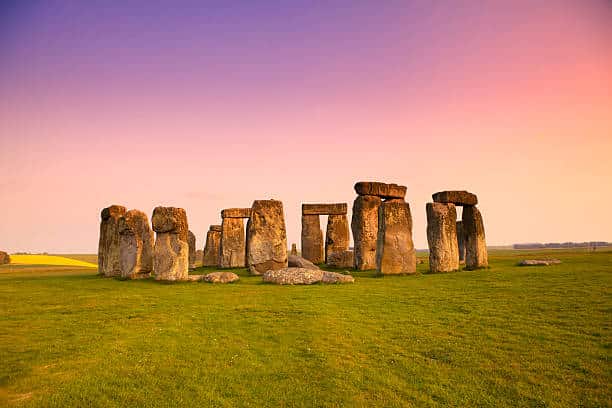
When considering landmarks that wow with their sense of scale and proportion, they don’t come much more iconic than Stonehenge – the ancient myth-enveloped, stone circle located in Wiltshire, England.

These prehistoric large standing stones – or, sarsens, as they’re better known – comprise many different types of stone and rock, including Preseli Spotted Dolerite, a type of igneous rock that contains a significant amount of granite.

Stonehenge is an imposing structure, with some of its stones weighing several tons and it stands at over 4m tall. The sheer hugeness and solidity of these stones create a grandeur and monumentality that has evoked awe and wonder in onlookers since its creation in the Neolithic period, around 2500 BC.

Conclusion

As we’ve explored, granite has played a key role in the structure of many of the most beloved landmarks around the world, including: the Taj Mahal, the Aberdeen Pavilion, the Statue of Liberty, Stonehenge and the Pyramid of Giza.

All of these landmarks showcase the enduring beauty and significance of granite in architecture and cultural heritage. Which is why landscape architects, memorial artists and urban designers love working with granite just as much today as they did then…

Contact us today

Did you know that we at HGH Granite have been providing granite services for the last 90 years? Our vision and business model have helped build a loyal customer base that relies on our expertise and quality workmanship. Over the years, our team has grown with like-minded individuals that share the same passion for providing outstanding granite products and services. Let us help build you your vision.

Our Work on the Landscape of Nations Memorial

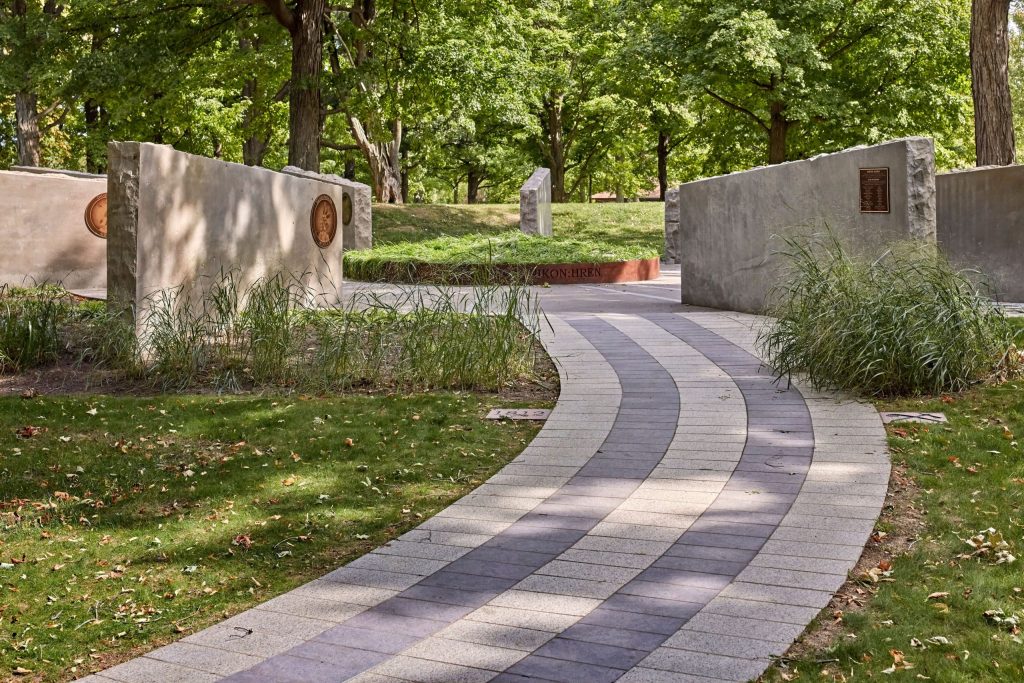
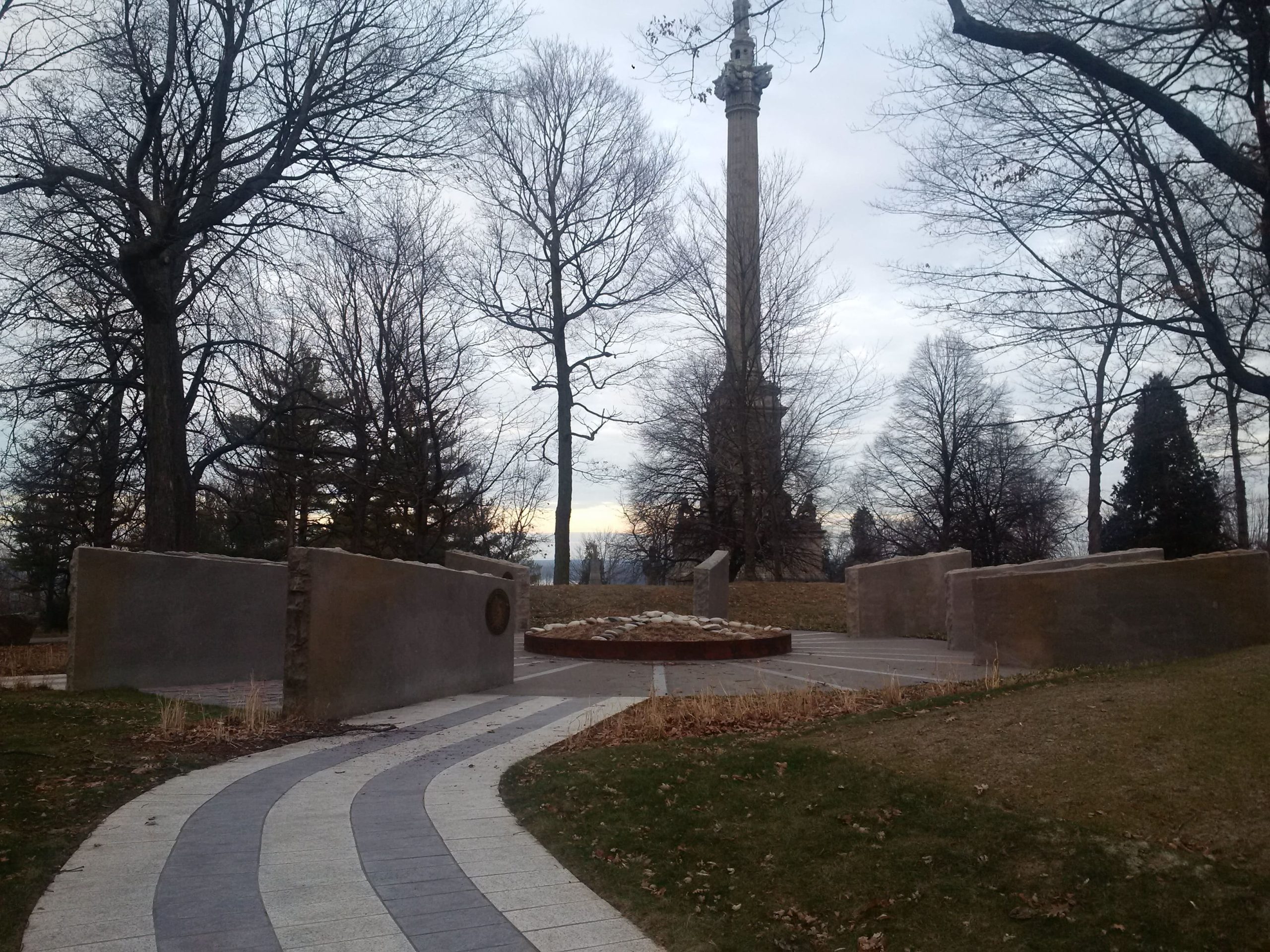
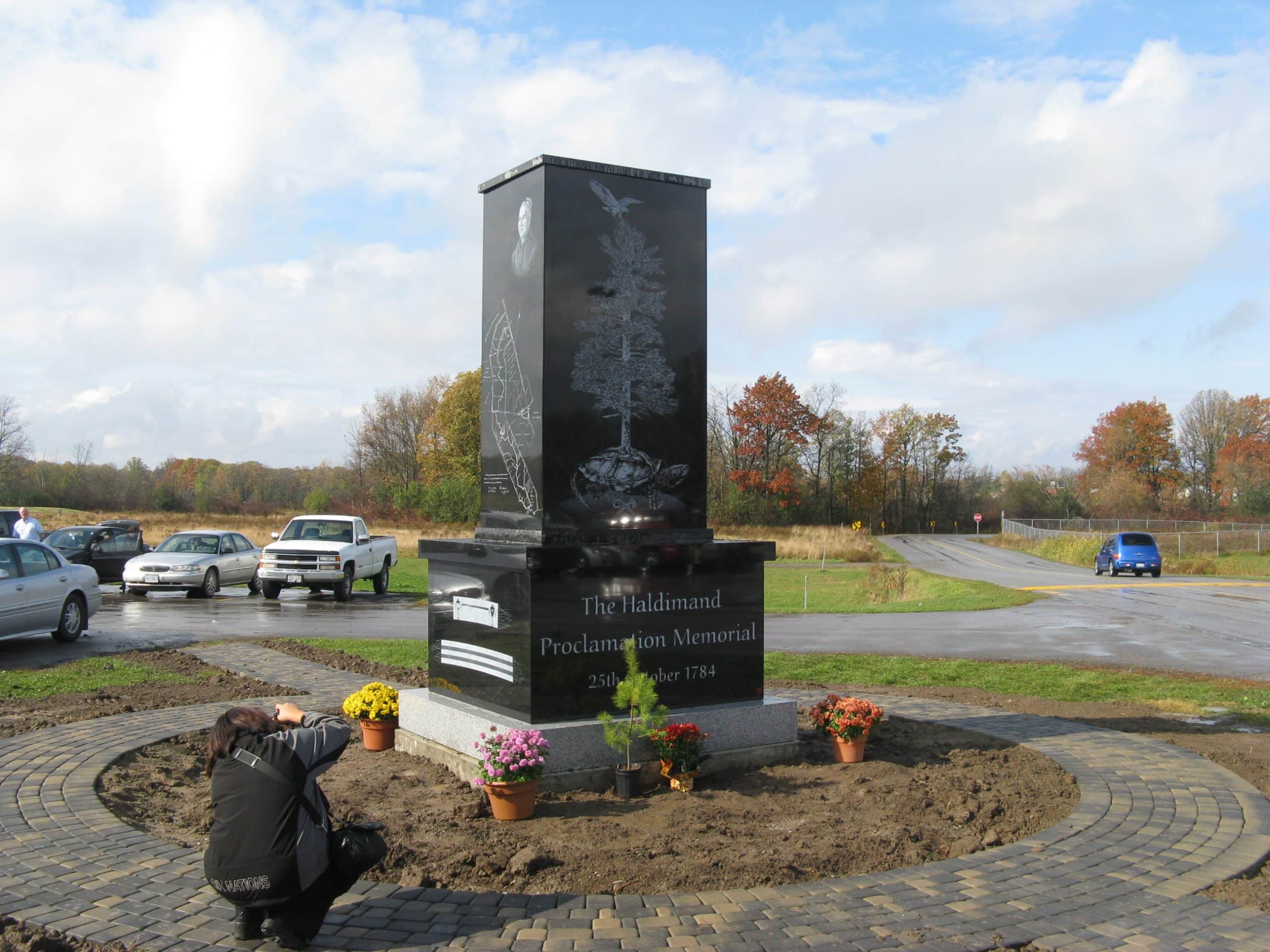
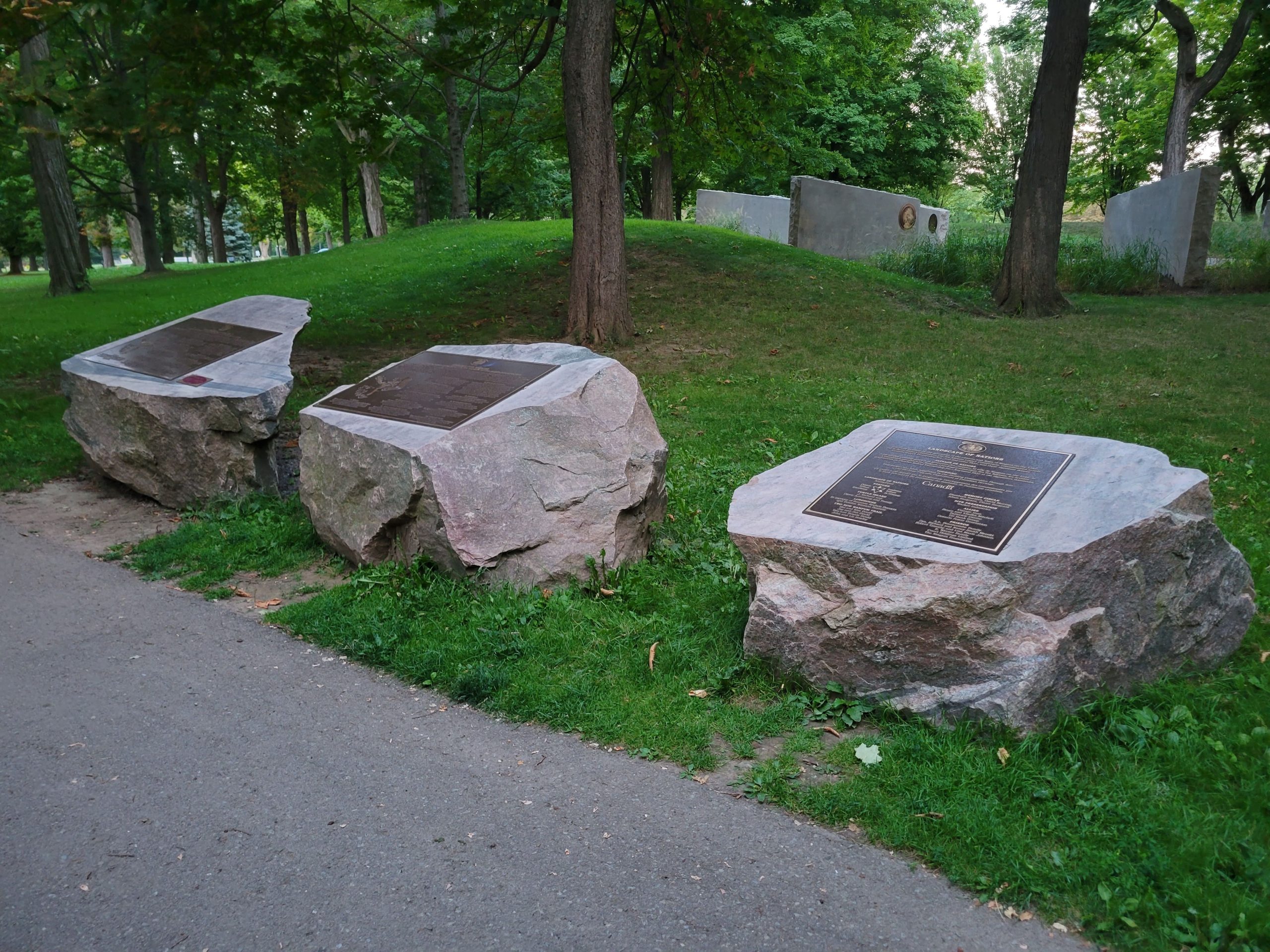
We were honoured to work alongside landscape architect Tom Ridout in the creation of the Landscape of Nations memorial in Queenston Heights Park, Niagara on the Lake, Ontario, back in 2015.

The large outdoor permanent installation is a living memorial dedicated to the contributions and sacrifices made by the Six Nations and Native Allies on Queenston Heights and throughout the War of 1812. It also symbolises the position of the First Nations people at the core of Canadian history – and national affairs today.
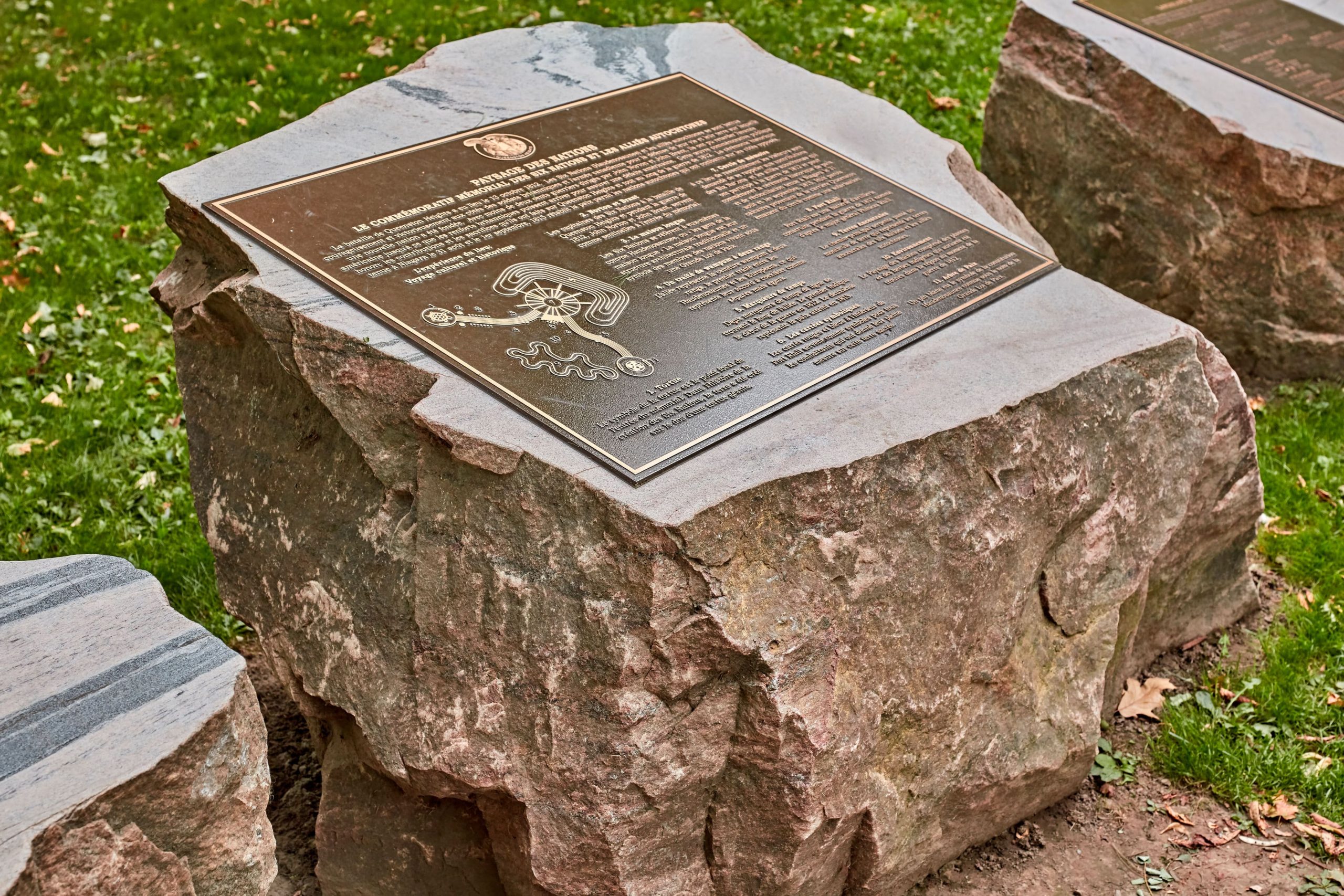
HGH sourced and supplied large amounts of granite in different colourways for different elements of the project.

The history behind the memorial

We’re often asked which are our favourite-ever projects to have worked on but the truth is, they all have a special place in our hearts. Many have huge historical significance and honour important people from our past and present – and this project is no different.

The Battle of Queenston Heights took place on this site during the War of 1812 – during which Major-General Sir Isaac Brock and his Canadian aide-de-camp, Lieutenant Colonel John MacDonell, lost their lives.

The battle was all but lost until the Six Nations warriors – the Haudenosaunee – and Indigenous Allies arrived to help and ultimately turned the tide.

A look in more detail

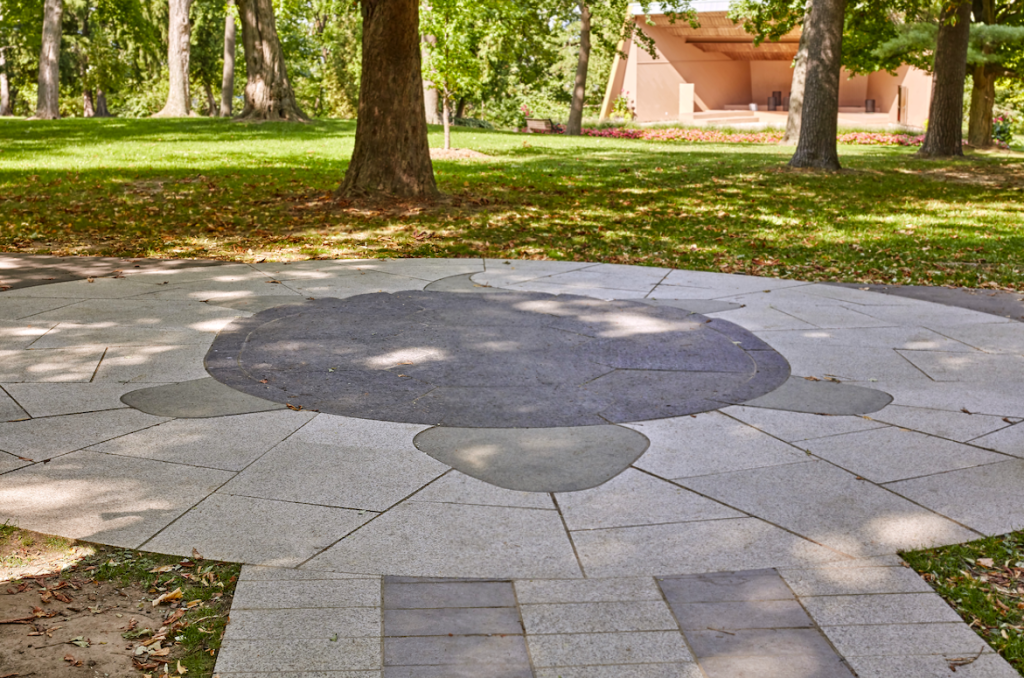
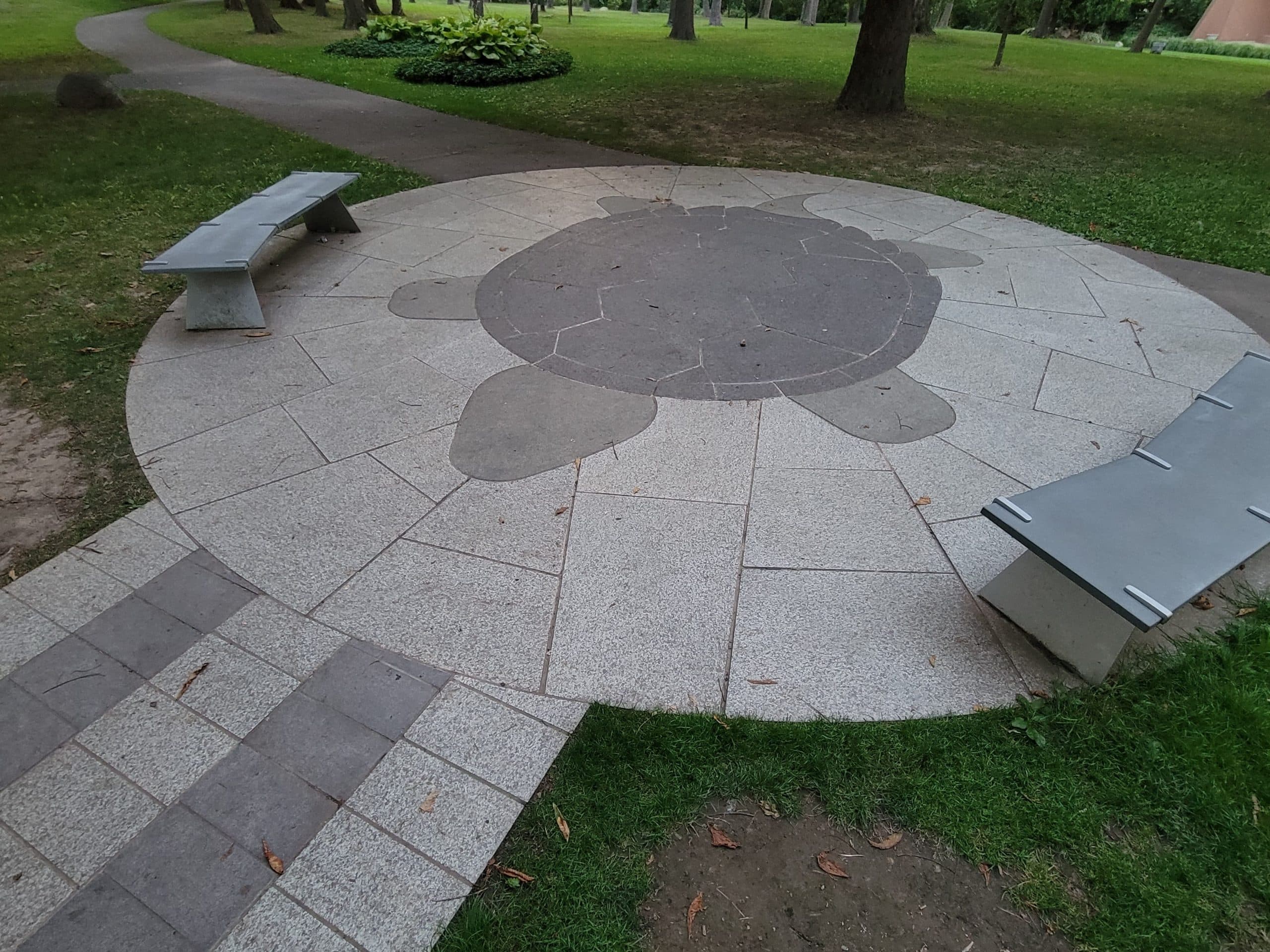
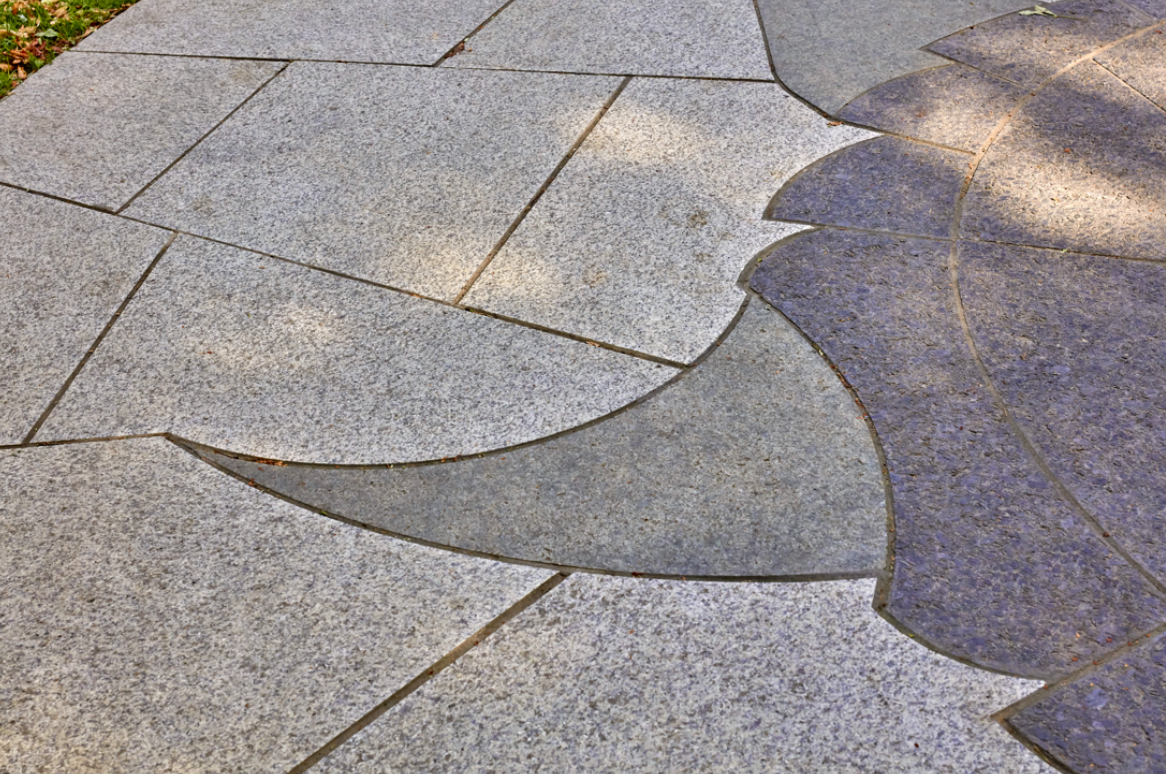
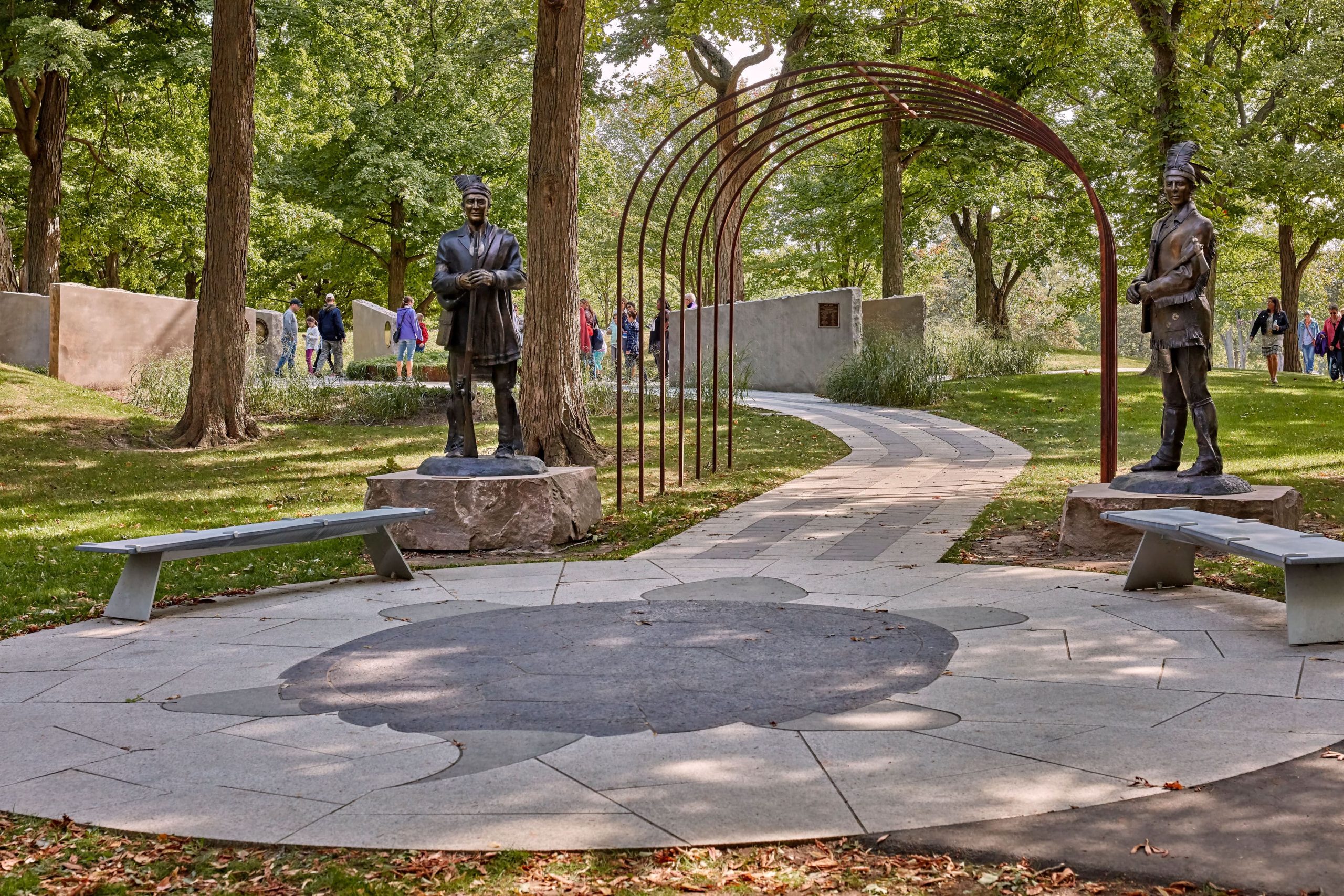
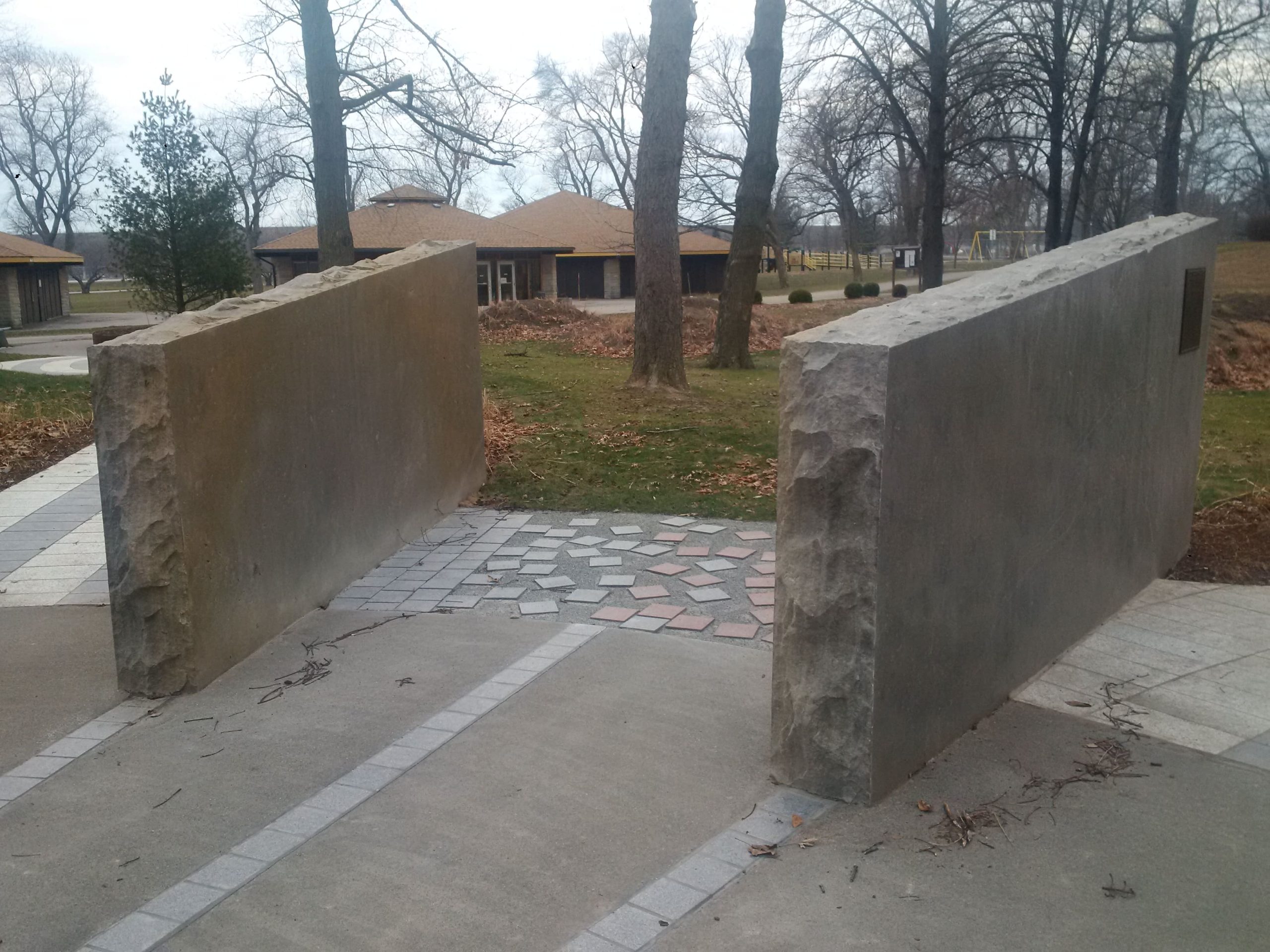
Visitors to the memorial are greeted by a Turtle focal point – rendered in granite pavers on the main pathway. The history of the turtle is significant. In the Six Nations creation story, the earth was created on the back of a giant turtle when Skywoman fell from the sky. The story goes that Skywoman landed gently on the back of a turtle and was given dirt from the ocean floor to spread on its back, representing the ground we walk upon. The cutting to size of the granite pavers to create the turtle design – along with their installation – was an intricate process, equally complex and rewarding.

John Norton and John Brant

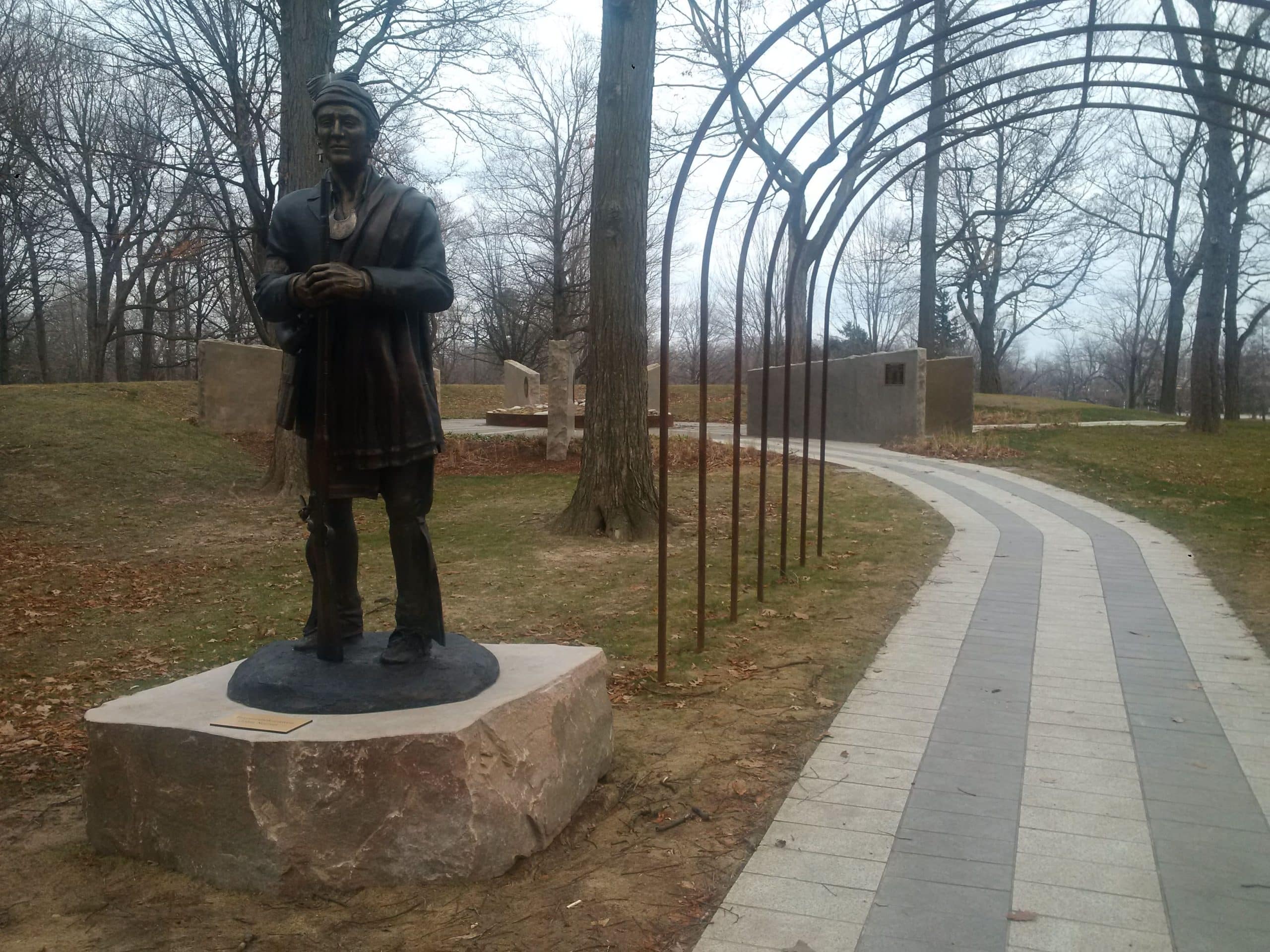
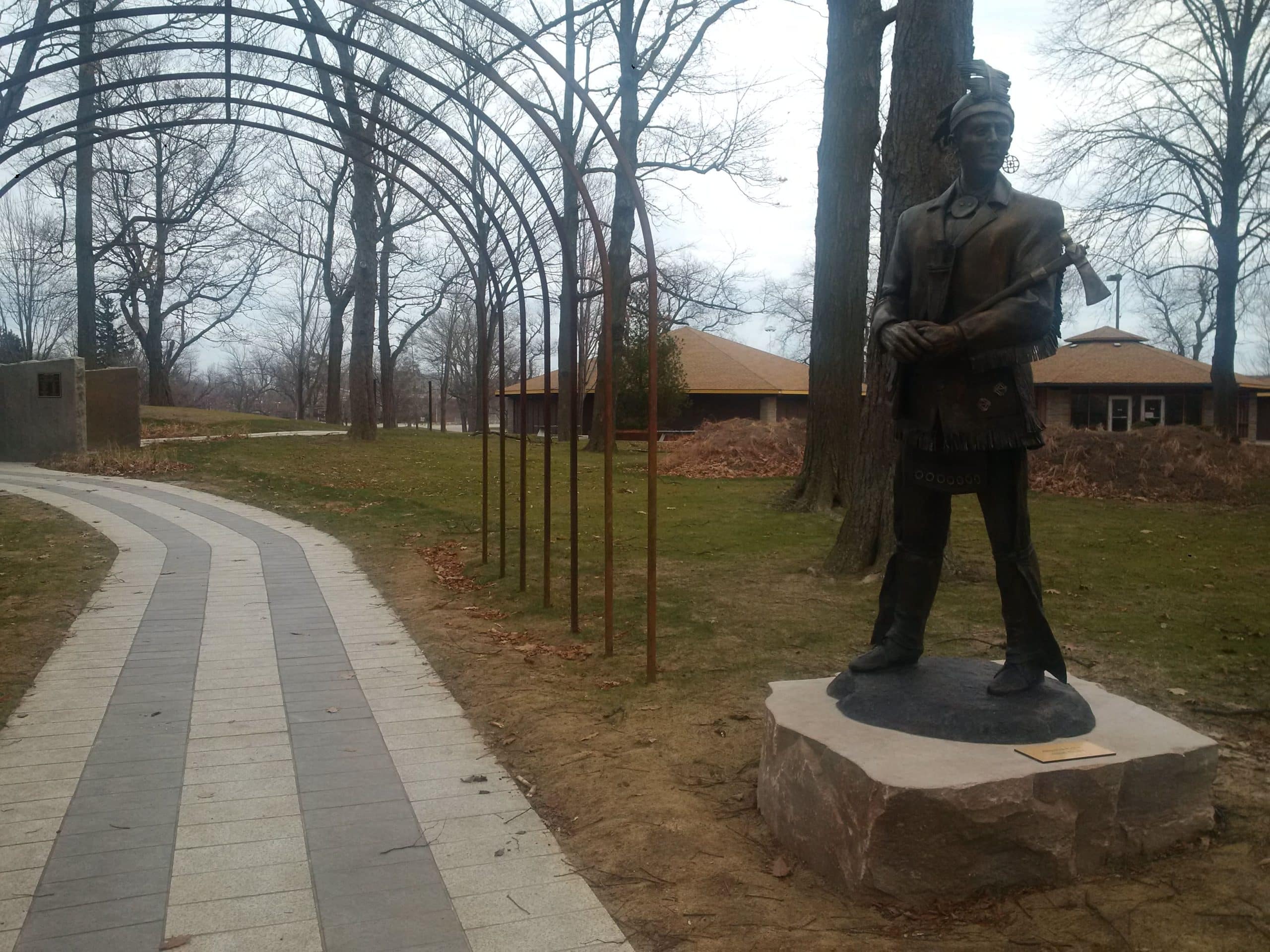
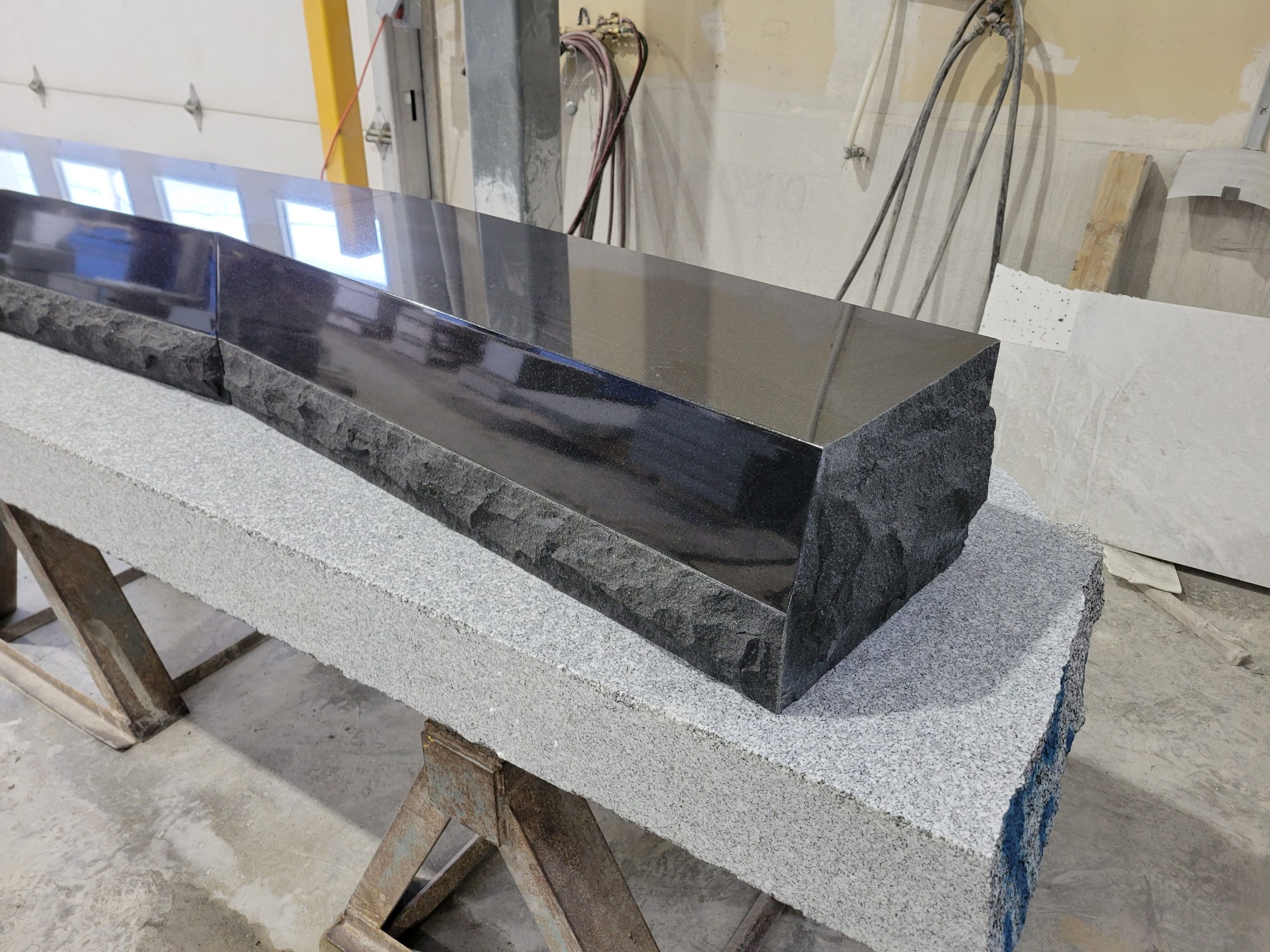
Near to the Turtle stand two bronze figures in Native clothing and feathered headdresses. These are the figures of John Norton and John Brant – the two Mohawk Chiefs, who led the native warriors into the Battle of Queenston Heights after Sir Isaac Brock died. The figures were created by Six Nations bronze artist Raymond Skye and we were honoured to supply the granite bases on which they stand.

The Longhouse

The statues of Norton and Brant stand at the entrance to an archway of tall steel rods – The Longhouse. A longhouse is an architectural structure traditional to the Six Nations, which provides shelter – in fact, Six Nations people used to refer to themselves as `People of the Longhouse`.

The Wampum Belt Walkway

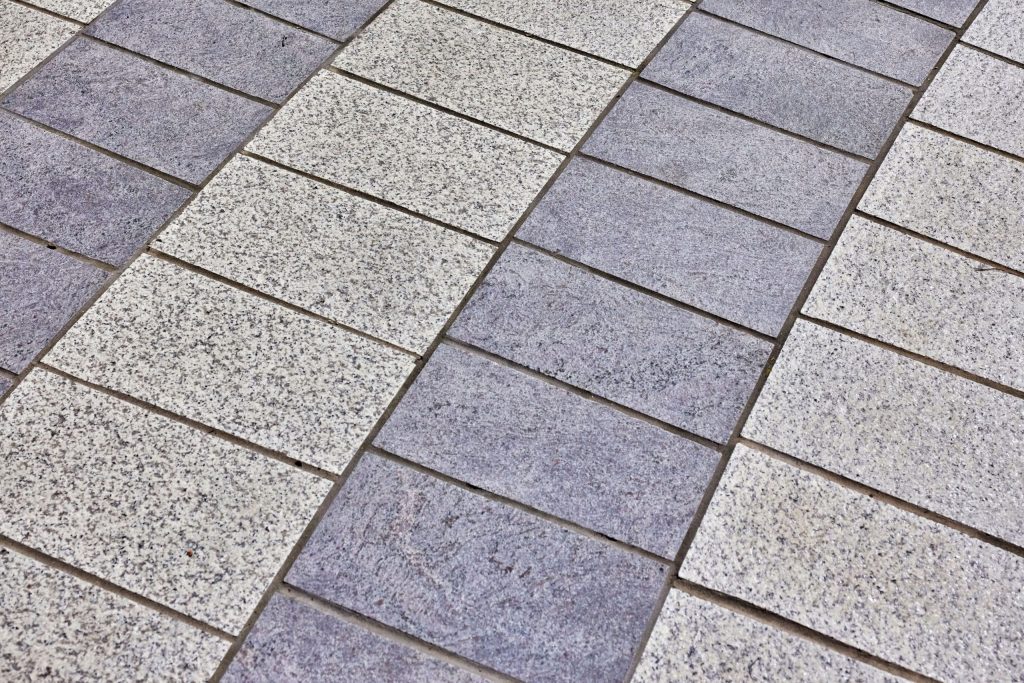
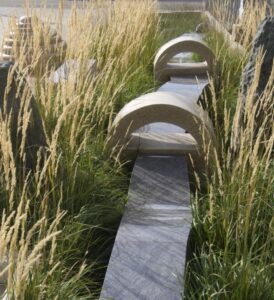
Starting at the Turtle and running beneath the Longhouse in the direction of the central installation of the memorial is a walkway composed of two parallel bands of granite – one light, one dark. These two granite bands represent the Two Row Wampum Treaty between the Six Nations and Dutch settlers in the early 1600s.

The First Nations used to record their treaties in the form of wampum belts of different coloured beads, rather than on paper. The two rows represent the Dutch ships and the canoes of the native people sailing together in mutual respect, the walkway representing their agreement to co-exist on parallel paths.

The Memory Circle

At the centre of the installation is The Memory Circle where the names of the Six Nations and Native Allies are carved into bronze medallions on the surrounding stones, shaped into a sunray pattern.

Tree of Peace

The memorial also features an Eastern White Pine tree that stands as a symbol of the Six Nations constitution, known as the Great Law of Peace. Our team worked around this and other precious 200-year-old-plus trees to install the large granite boulders for the bronze plaques that line the pathway leading to The Memory Circle.

The memorial was unveiled to the public in October 2016 and has become a much-loved visitor attraction, allowing people to learn more about, and reflect upon, the Six Nations people and their legacy.

From the intricacy of the work on the turtle paving area to managing the installation of the large boulders around the ancient trees –  any damage of which incurred a significant fine – this was a complex, challenging and deeply rewarding project to be a part of. We’re proud to say it showcases our team’s capabilities – and sensitivity – in the field of landscape art and memorials to brilliant effect!


4 Key Challenges and 4 Big Wins of a Vietnam Memorial Project

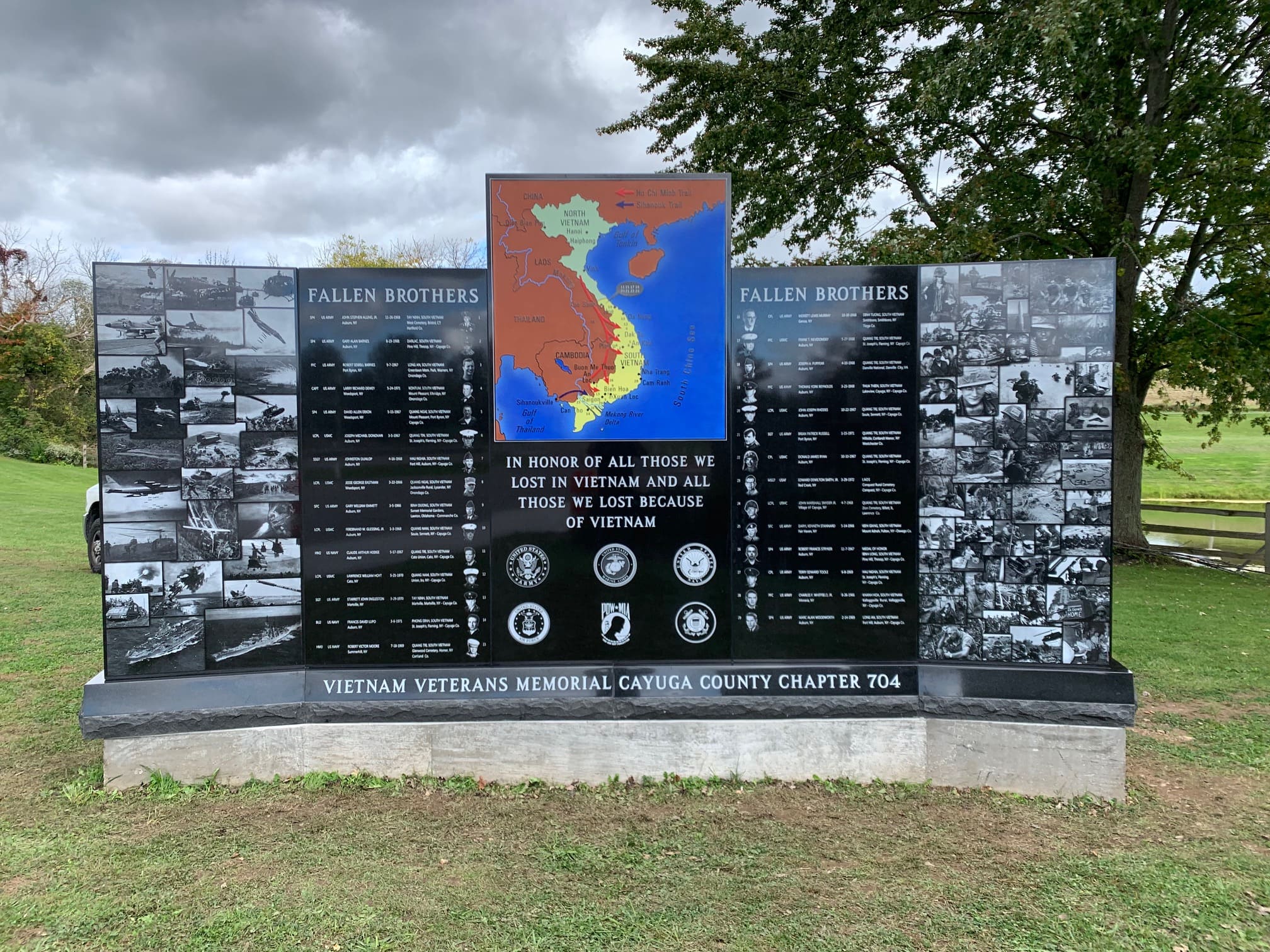
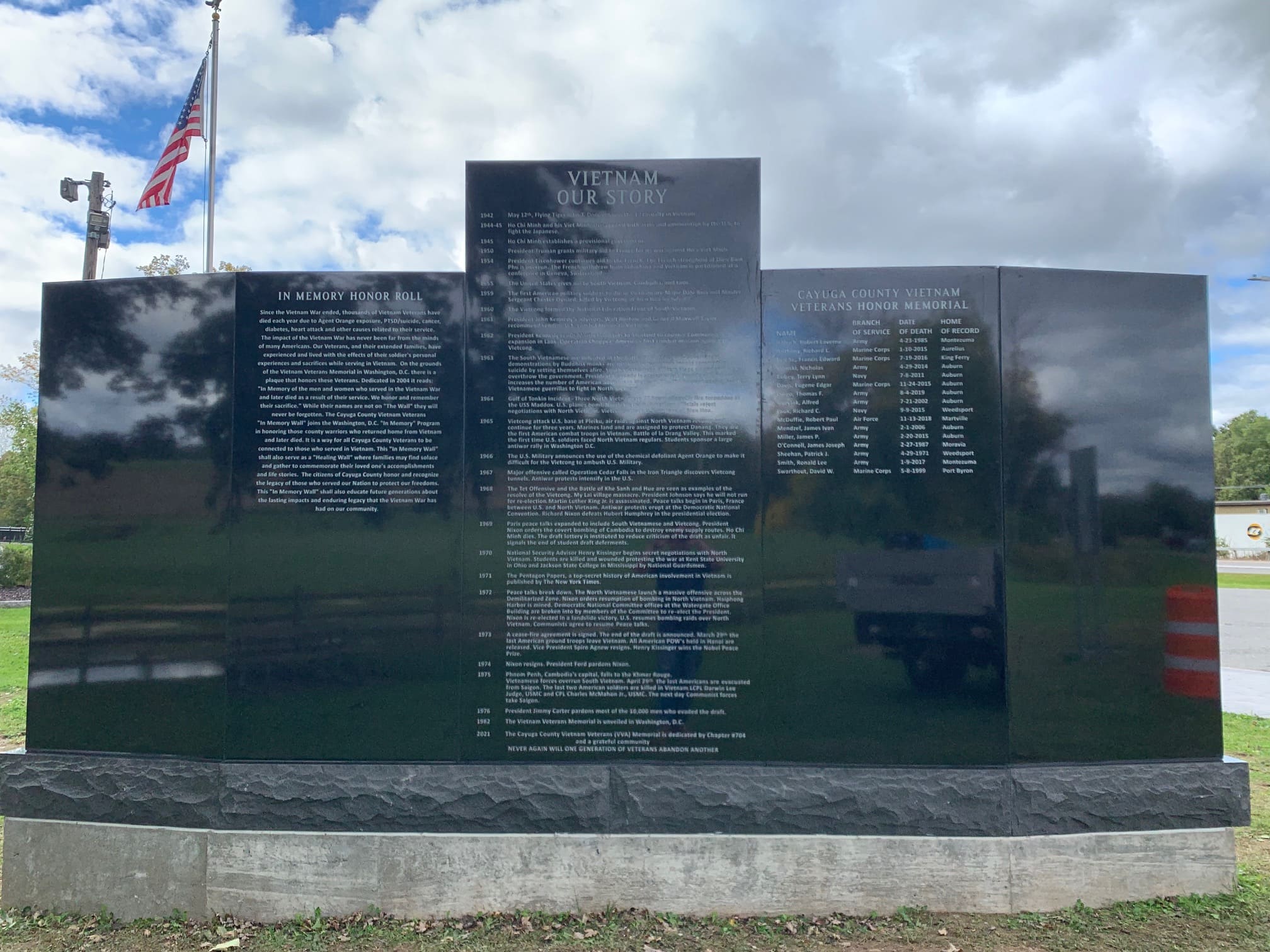
As much as we wish we could say otherwise, not every project of ours has been delivered without a hitch. Case in point: the Cayuga County Vietnam Memorial, whose memorial concept was born almost four years before the memorial was eventually installed.

This isn’t a usual turnaround time for a project. An average memorial project like this might take one to two years, from start to finish.

However this project was first touted in 2017 and we all know what was waiting for us in 2019/2022. Yes, people say never work with animals or children – but working through a global pandemic can be pretty hard-going  too!

Let’s take a look back…

In 2017, we received a call from Four Seasons Memorials in Auburn, NY, asking us to help them create a memorial honouring those from Cayuga County who lost their lives in the Vietnam War.

The clients presented a range of concepts to us and we were responsible for then putting the overall memorial design together, using the text and graphics we’d been provided with.


Challenge 1: the approval process

The approval process was slower than usual because we needed the go-ahead from both our client – and the Cayuga County Vietnam Veterans Group. This entailed a lot of back and forth. Of course, we wanted to make sure the design was spot-on, and that everyone was happy, before it went into production. 

So while this part of the process took a lot longer than usual, there was a good reason behind it.

Challenge 2: the pandemic

When the overall shape and size of the monument had been confirmed, the Jet Black granite was ordered from India. 

It arrived at HGH in 2019 and once the final approval of the artwork was received in 2020, the granite was uncrated and inspected. It was at this point that we were surprised to find some significant defects in the stone which prevented us from being able to proceed with the engraving. 

The challenge now was that it was 2020 and we were in a global pandemic with supply chains and shipments all over the world at a standstill. 

We reordered the granite from India – however, it became clear we wouldn’t receive it in time so we had to begin looking at our domestic supply chain within Canada. 

We were able to source an excellent black granite, which was quarried in Africa and partner with a fabricator in Quebec to get the monument made to our quality expectations.

Challenge 3: escalating costs

The work involved in polishing the granite walls and base of the monument was very costly to do in Canada. However, because of the time constraints, this was our only option. We visited the cutting and polishing facility in person, prior to shipping, to ensure the quality was to our expectations.

Challenge 4: etching machine repairs

This memorial required a significant amount of etching. However, this coincided with our Laser Etching machine having to take a break, due to needing a new part. Normally, this would be quick to order in. Because of the pandemic, however, it did not come in a hurry. We waited 6 months and there was still no sign of it arriving so we took the plunge and ordered a brand new impact etching machine.

Never ones to let a challenge defeat us – or more importantly, to let down a client – we reached out to our friend Mark Derusha from Derusha Supply and the company sold us a new SuperMax impact etching machine, which arrived within a couple weeks.

Finally, the project could be completed!

As you can see, the process wasn’t smooth-sailing. But as you can also see, the final results were – eventually – stunning. And we take from this project, four big wins, which are:

Win 1: perfect etching 

Once the etching machine issue was solved, the subsequent etching results with the new machine were outstanding. 

Win 2: beautiful contrast 

We might not have had the original Jet Black granite we ordered from India – but the contrast of the etching on the African Jet Black replacement granite was fantastic.

Win 3: an exquisite and enduring memorial

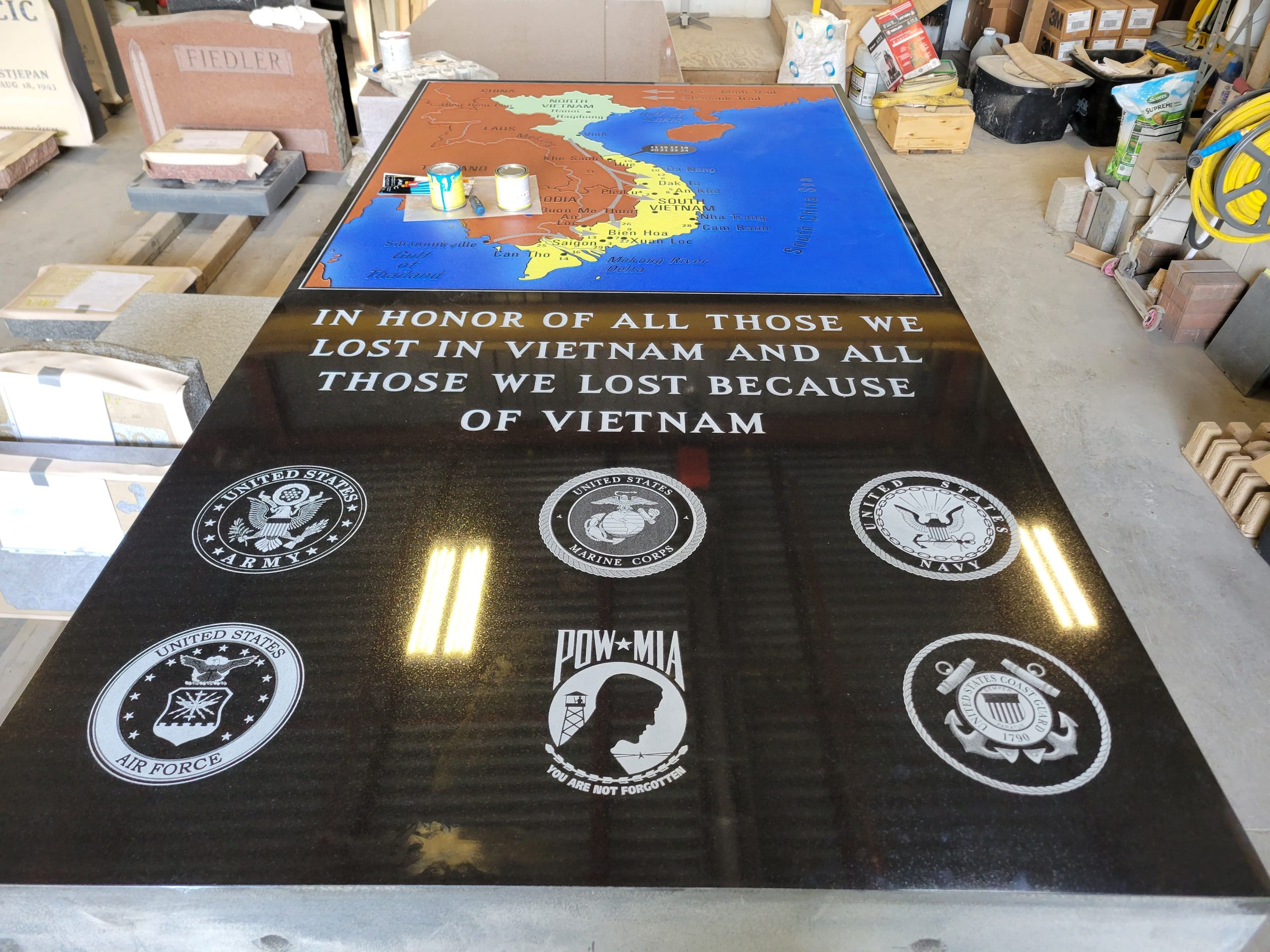
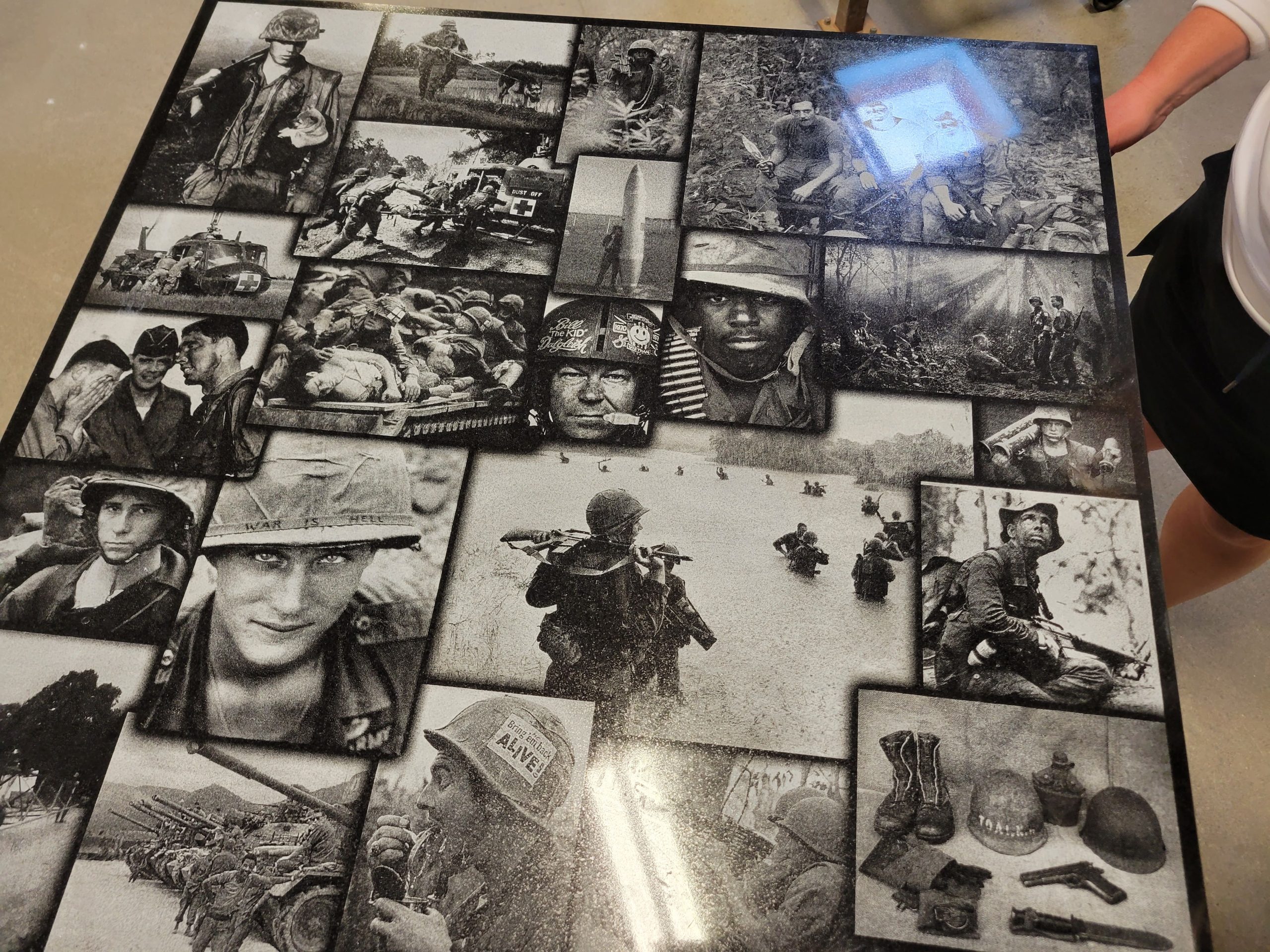
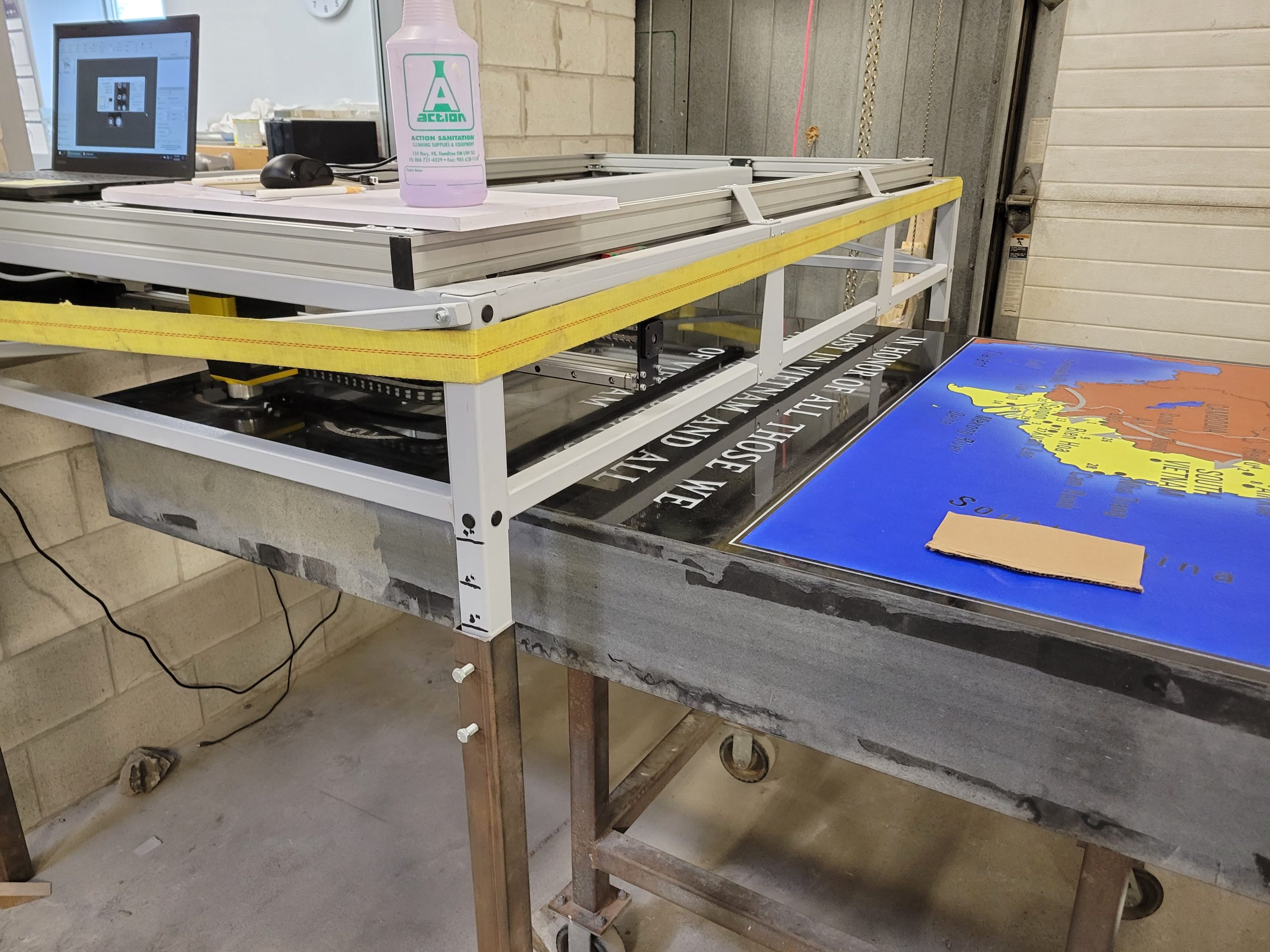
The intricate map on the front of the monument was sandblasted then hand painted. The powerful photo collage and the names of the “Fallen Brothers” are impact etched. The memorial name on the bases of the memorials and on the back of the memorial are all sandblasted. A piece to treasure for a very long time.

Win 4: happy clients

While the process, from concept to completion of the memorial, was extended, stressful and time consuming, the end result was beautiful – and our client and the veteran community loved it.

Do you have a project you’d like us to help with? Contact us today 

Did you know that we at HGH Granite have been providing granite services for the last 90 years? Our vision and business model have helped build a loyal customer base that relies on our expertise and quality workmanship. Over the years, our team has grown with like-minded individuals that share the same passion for providing outstanding granite products and services. Let us help build you your vision.

Our Most Asked Questions About Cemetery Monument Installation

Cemetery monument installation is an important part of our work here at HGH and a specialised procedure that we’re often asked about.

From traditional memorials to benches and multi-piece monuments, the scope of work we carry out varies greatly. So let’s get started with some of our most frequently asked questions.

Is there a typical installation process?

Good question. Before we dive in, we should start by saying there’s no such thing as a typical installation process. It will vary depending on geographical location and the cemetery where  the monument is being installed.

How is the headstone transported to the cemetery?

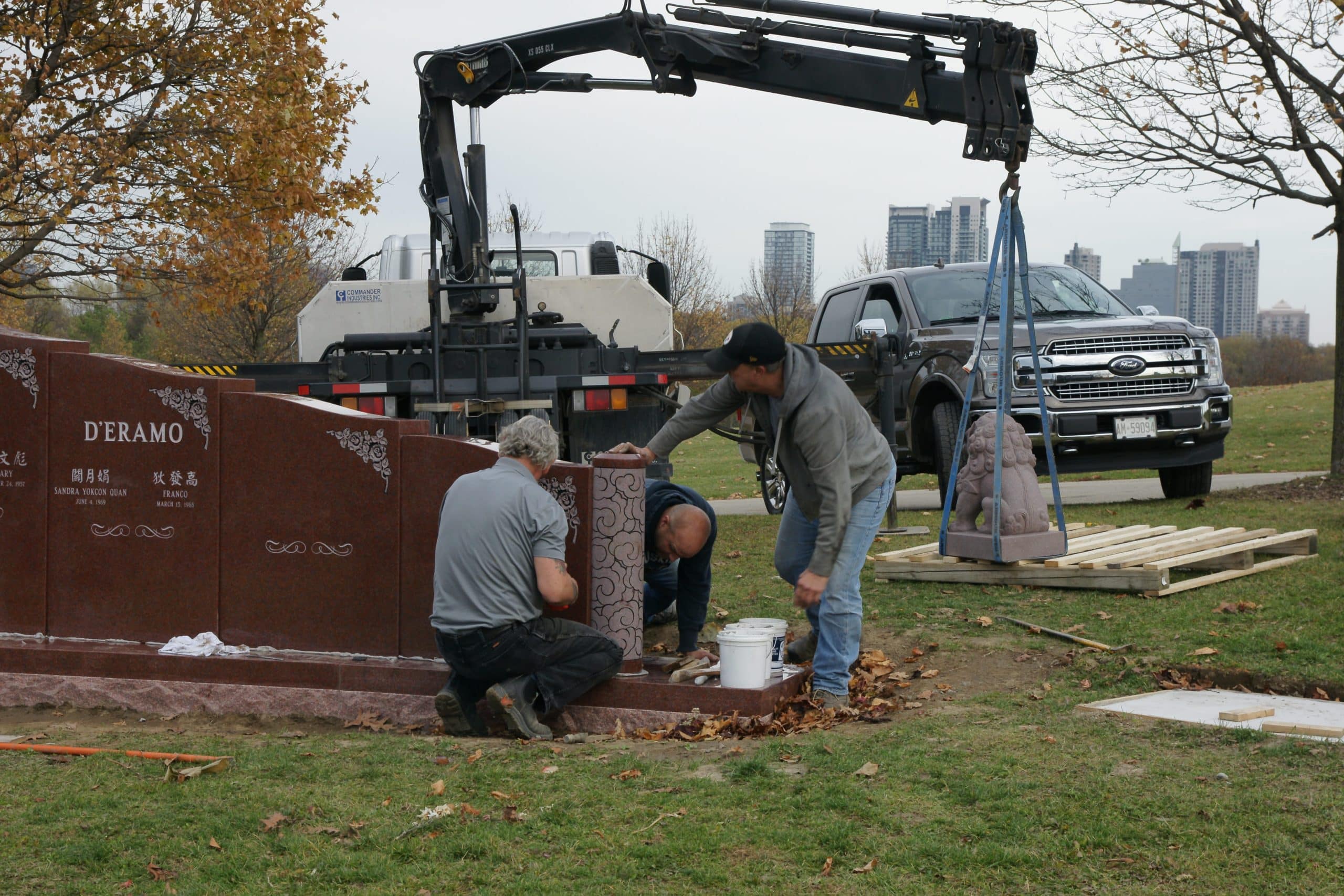
Our granite headstones are loaded onto a crane truck. If the cemetery in question is accessible and it is permitted, the crane truck will drive in and install the piece directly – taking great care to protect the grass being driven on. 

If the monument plot is in an inconvenient location, or the cemetery is old and inaccessible, then the piece will be transported to its destination in a hand-cart.

HGH Granite cemetery monument installation

How many pieces makes up a monument?

Upright Granite monuments are usually constructed from two pieces of granite. The upper headstone section, or die, which sits on a stone base. The die and base are joined together with a monument setting compound.

Is this how the monument stays in place?

Yes, the setting compound is a sealant – like putty – and it goes around the perimeter of the joint. Spacers – made from little pieces  of lead – are then placed in each corner. The lead leaves  a gap so the setting compound fills the void to create the necessary seal – this also stops the monument from rocking and prevents chipping. 

Once the setting compound and lead are in place, the monument itself is placed on top of the base. We leave it to sit for a few minutes and then trim the perimeter with a knife to clean away the setting compound – before giving the monument a final wash and wipe down.

Do you need to follow a set of industry-wide Health & Safety regulations? If so, what are they and why are they important?

Every company has its own H&S methods, developed through experience. The health and safety of our team is of huge importance to us, so naturally, we do all we can to ensure our staff feel confident during the process of installation. From making sure there’s always at least a couple  of team members on site at the same time, to ensuring the team has the correct work gear and safety equipment.  

We recently acquired a new piece of equipment to help our team carry out their installations even more efficiently and safely. Watch this space for the first picture!

How do people look after the memorials once installed?

The great thing about granite memorials is that they’re nearly  maintenance-free. In the event of a headstone getting dirty, a light mix of dish soap and water can be used to clean them up. If the memorial has a steeled  surface and moss has begun to develop on it, it can be removed with white vinegar and water, along with a gentle scrub brush.

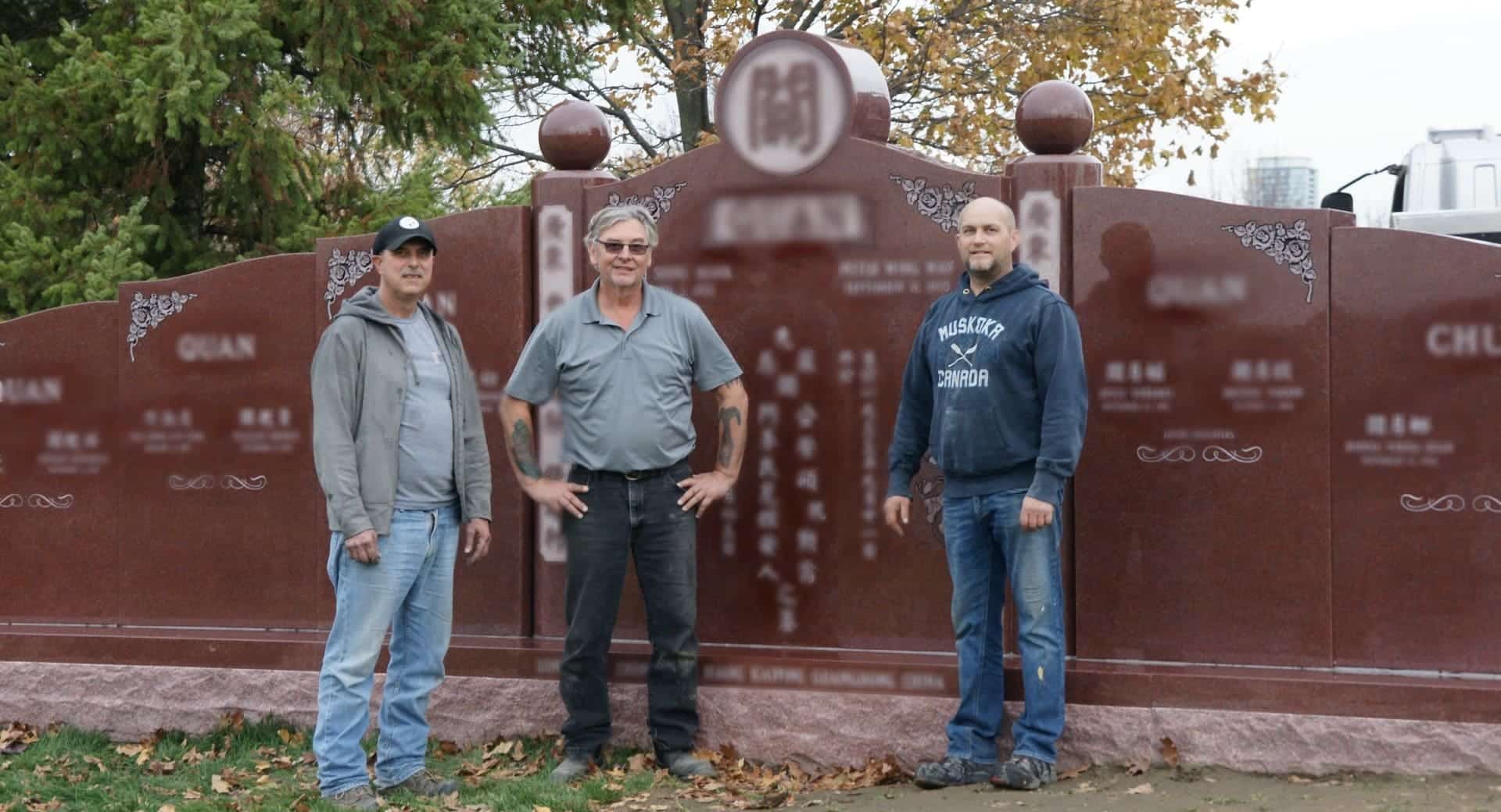
HGH Granite team completing a cemetery monument installation

Is installing memorials an emotionally rewarding process? 

Absolutely. It’s humbling – and rewarding – to know we’ve played a part in providing a place people can visit and reflect and remember their loved ones.

Got a question about sourcing granite? A new project you’d like to discuss?

We’ve been providing granite services  in Canada and the USA for the last 90 years and our loyal customers come back time and again for our experience, knowledge and artistry. We’d love to help you build your artistic vision today, too. Contact us today and the conversation can begin!

Why Granite is the Perfect Material for Streetscape Artists

Granite has a romantic backstory. (And all artists love a romantic backstory!)

Made up of quartz, mica and feldspar, it comes from crystallised magma cooled deep beneath the earth’s crust.

While it’s under there, it’s heated and compressed to such a high pressure that it forms a super-strong interlocking structure – and it’s this that gives granite its unmatchable density, hardness and strength.

Elemental and easy to work with

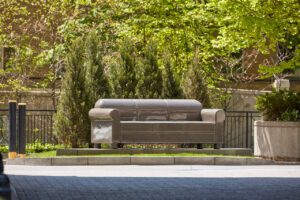
Granite couch by HGH Granite

The perfect material with which to make enduring pieces of public art and streetscape architecture, wouldn’t you say? Granite enables artists to imbue an artistic vision with a genuine monumental quality. While associated with the past, it also allows artists and architects to enter the future.

Take the over six-tonne granite Chesterfield sofa in Yorkville, Toronto, created by artists Susan Schelle and Mark Gomes.

We were responsible for sourcing, carving and polishing this gleaming piece of Crystal Brown granite for the artists, before their finished piece was unveiled to the public in 1998.

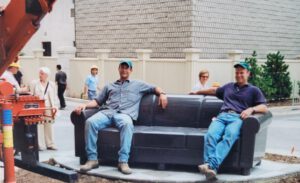
Granite couch install

While the public aren’t advised to use the sculpture as an actual sofa (it is art, after all – the picture above shows the installation process!) the piece has been sitting proudly and thrilling onlookers for almost 25 years – and counting. When polished up, granite can preserve its shine for many centuries, in fact.

It’s resistant to the elements

Streetscape architects and sculptors love that granite is weather-proof. Resistant to sweltering and plummeting temperatures, and that it also stands up, spectacularly, over long periods of time, to vehicular traffic and footfall.

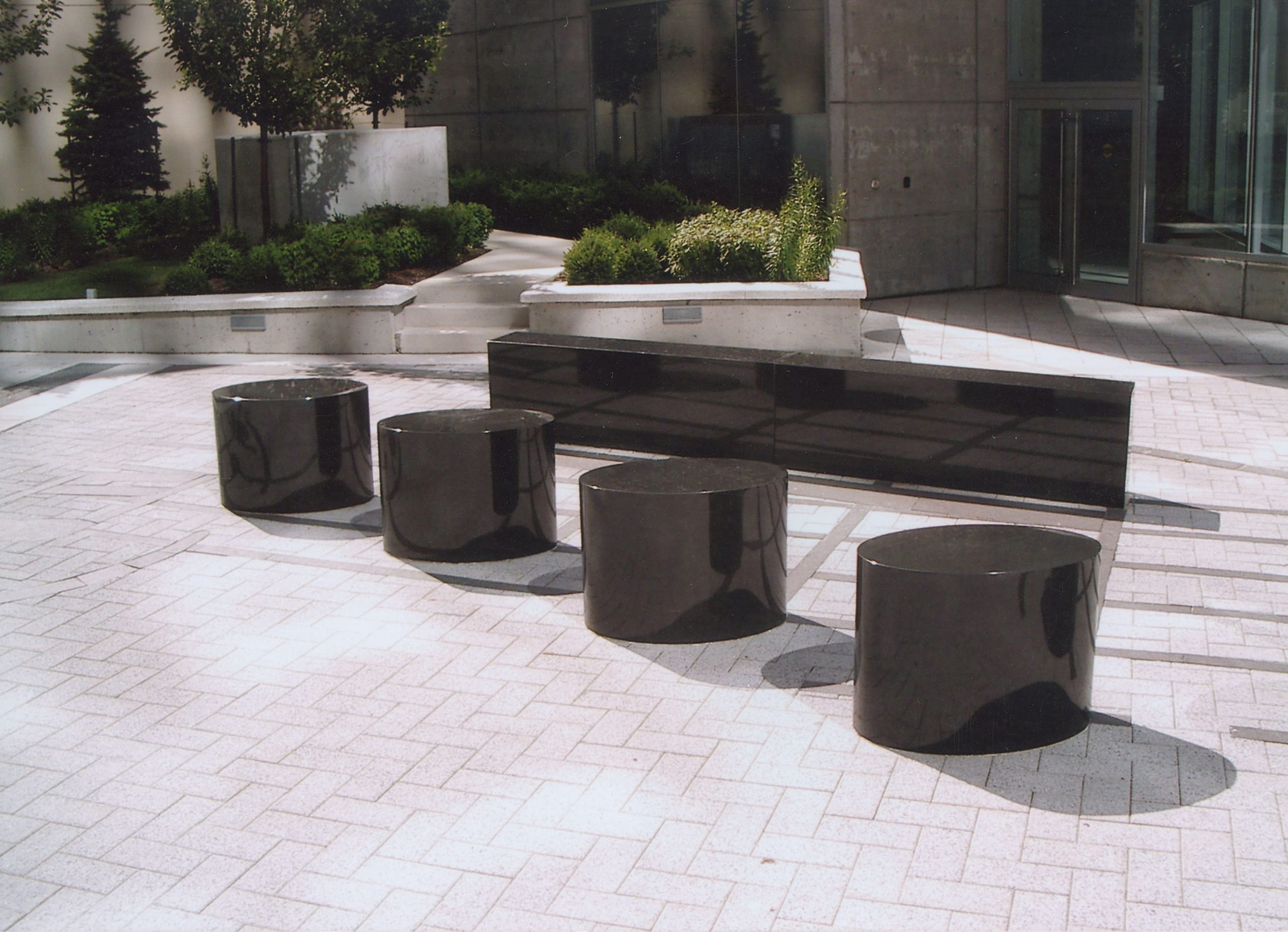
We’ve worked with artists on a number of stunning public thoroughfares where heavy human traffic is the norm. Such as the graphic granite plaza at the Sony Performing Arts Centre, below left, and the giant Persian rug-style plaza outside the Four Seasons Hotel, in Yorkville, Ontario, below right – both designed by Claude Cormier + Associés.

Not only do these works surprise and delight every person who steps upon them, the works themselves don’t feel the strain – and aren’t prone to the same wear and tear – as much as a man-made material such as precast concrete.

Granite’s durability means it’s a gift that keeps on giving – to the current generation and for generations to come.

The design possibilities are endless

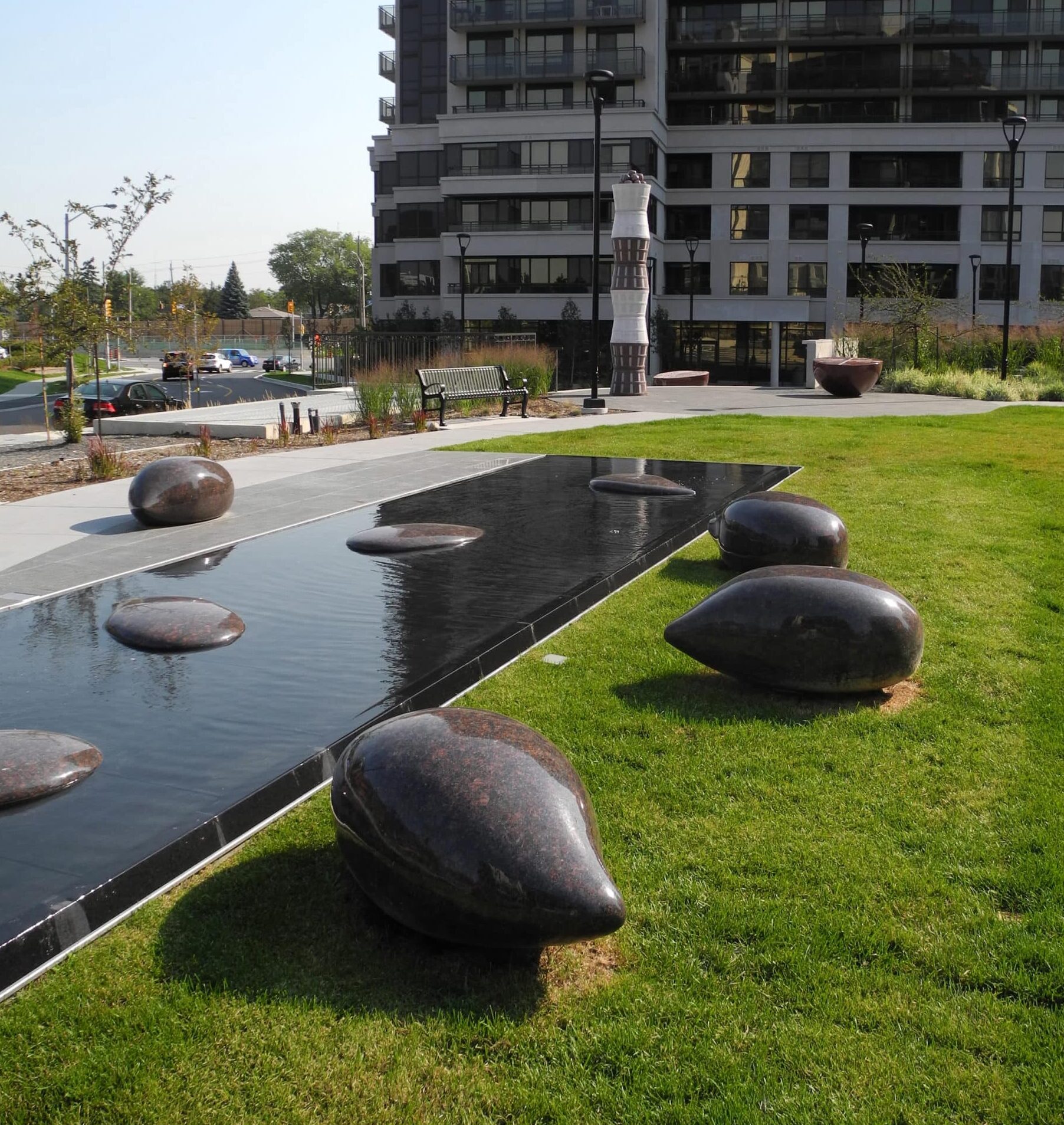
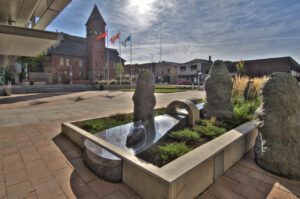
Granite offers so much potential for decorative beauty and creativity. Just take a look at the integrated public artwork Indigena Domain, above, which is located in front of the Cambridge City Hall in Ontario. It was created by artist Stephen Cruise and incorporates a stunning granite river and sculptural components that evoke shapes from the living world.

Granite has a huge colour spectrum, too – from whites and blacks to blues and pearly greys, pinks, reds and greens. We love the way granite brings elegance, ambience, character – and a sense of strength and timelessness – to any landmark or streetscape.

It’s sustainable and available

Sustainability and availability go hand-in-hand with granite, which is another big draw for contemporary artists and architects.
Work with the right granite expert with the right tools and equipment and granite is easy to grind and shape, too. It’s also relatively abundant, nigh-on indestructible and considered to be an inexhaustible rock. And one more reason (for now) that it’s the first choice stone for so many designers and architects to work with is? It’s cost effective too. Yes, granite rocks.


Got a question about sourcing granite? A new project you’d like to discuss?

We’ve been providing granite services all over Ontario for the last 90 years and our loyal customers come back time and again for our experience, knowledge and artistry. We’d love to help you build your artistic vision today, too. Contact us today and the conversation can begin!

Maanjidowin (The Gathering): A Closer Look

Client: David M. General
Commissioned by: PortsToronto
Location: Billy Bishop Toronto City Airport, West Gap dock wall
Testimonial: “The work that HGH Granite can produce fulfils my sense of Indigenous perspective and the relationship of our art to the land.” David General, Artist

In this blog, we’re going to take a deep-dive into one of our favourite recent projects, showing you the 4-step process of taking a sculpture from idea and prototype to national treasure.

The project we’re looking at is Maanjidowin: The Gathering, created by David M. General, Mohawk Nation, Wolf Clan of the Six Nations, who is known for his mix of Indigenous and modernist style.

Where is it?

The 16-foot granite and bronze sculpture sits at Billy Bishop Toronto City Airport on the dock wall overlooking the Western Gap. It was commissioned by PortsToronto in recognition of the Mississaugas of the Credit First Nation and their relationship to the land, air and water. 

What does it represent? 

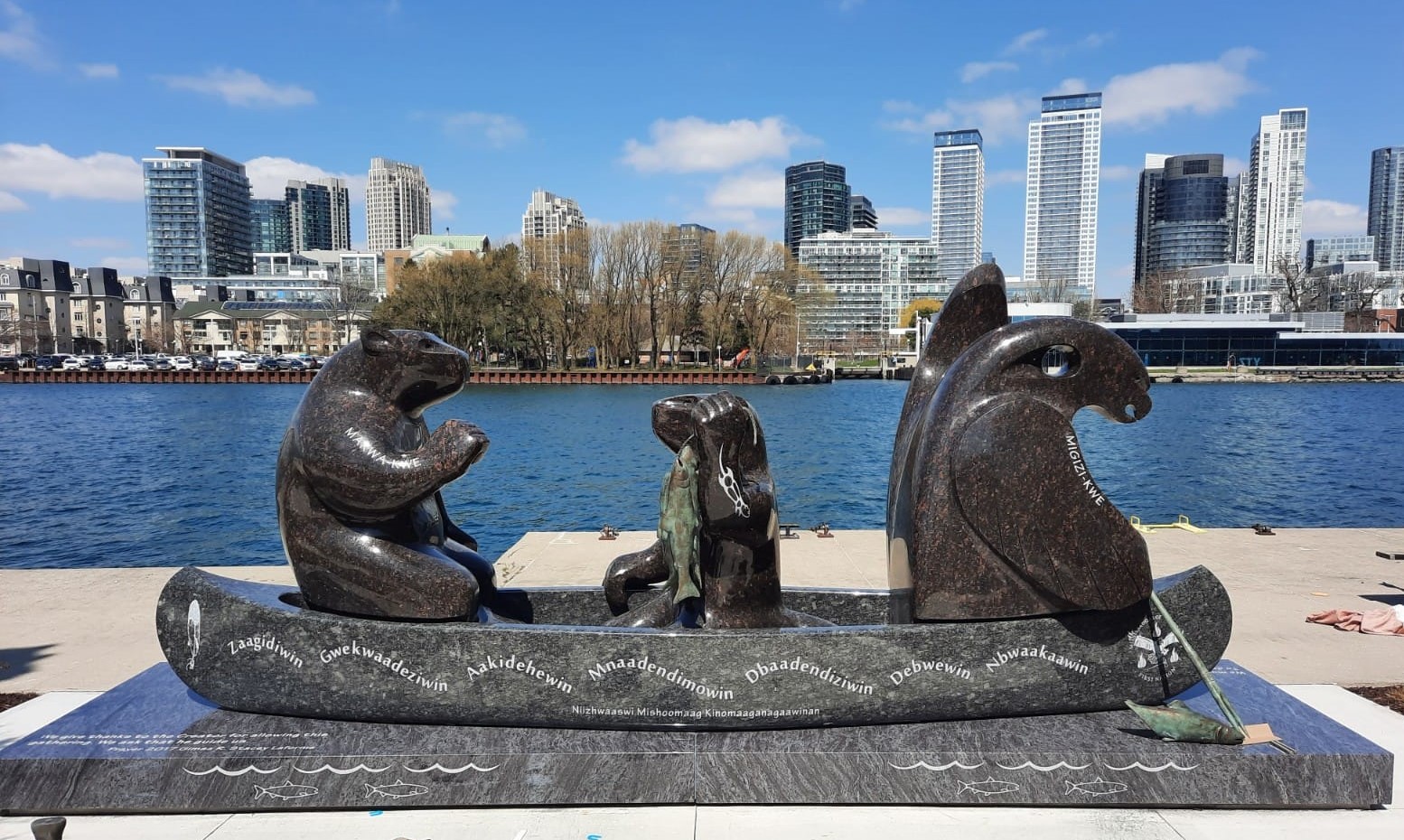
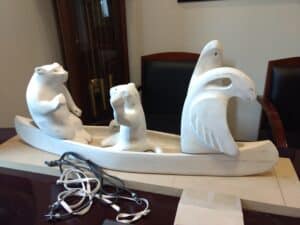
Three mythical fishers – Mukwa-kwe (Bear), Nigig-kwe (Otter) and Migizi-kwe (Eagle) – who have come to the estuaries and islands along Toronto’s Lake Ontario shoreline to fish. Their canoe is inscribed with words and symbols of significance to the Mississaugas of the Credit, including the Medicine Wheel and the Seven Grandfather Teachings, which are guiding principles that provide the moral and cultural foundation of life. 

How did HGH get involved?

We had worked with the artist David M. General before on various projects, including the Thomas Longboat Memorial project for the Pan Am Games in Toronto in 2015 and on The ‘Eagles Among Us’ memorial, located at Battlefield Park in Stoney Creek, ON. He came to us and discussed the project then HGH sourced and supplied the granite for the canoe and the animals, along with hand-polishing each piece and doing the engraving on the granite. This included accommodating the artwork provided and ensuring the stencils were placed precisely where the artist envisioned, prior to sandblasting.


The 4-step process of taking Maanjidowin from an idea to reality


1. The prototype

This model – or maquette created by the artist – shows the Maanjidowin prototype, which was used for the initial presentation then used to scale the full-size model. David talked us through his plans and we discussed the suitability of different granite types before placing an order with our quarry in India.


2. Production

Once the design was decided upon and the granite was ordered, it was time for work to start on the real thing. All the granite carving and polishing was completed in India then once the granite arrived at HGH we were responsible for fitting the bronze into the granite figures, sandblasting all the text and artwork then finally installing the finished piece.


3. Shipping 

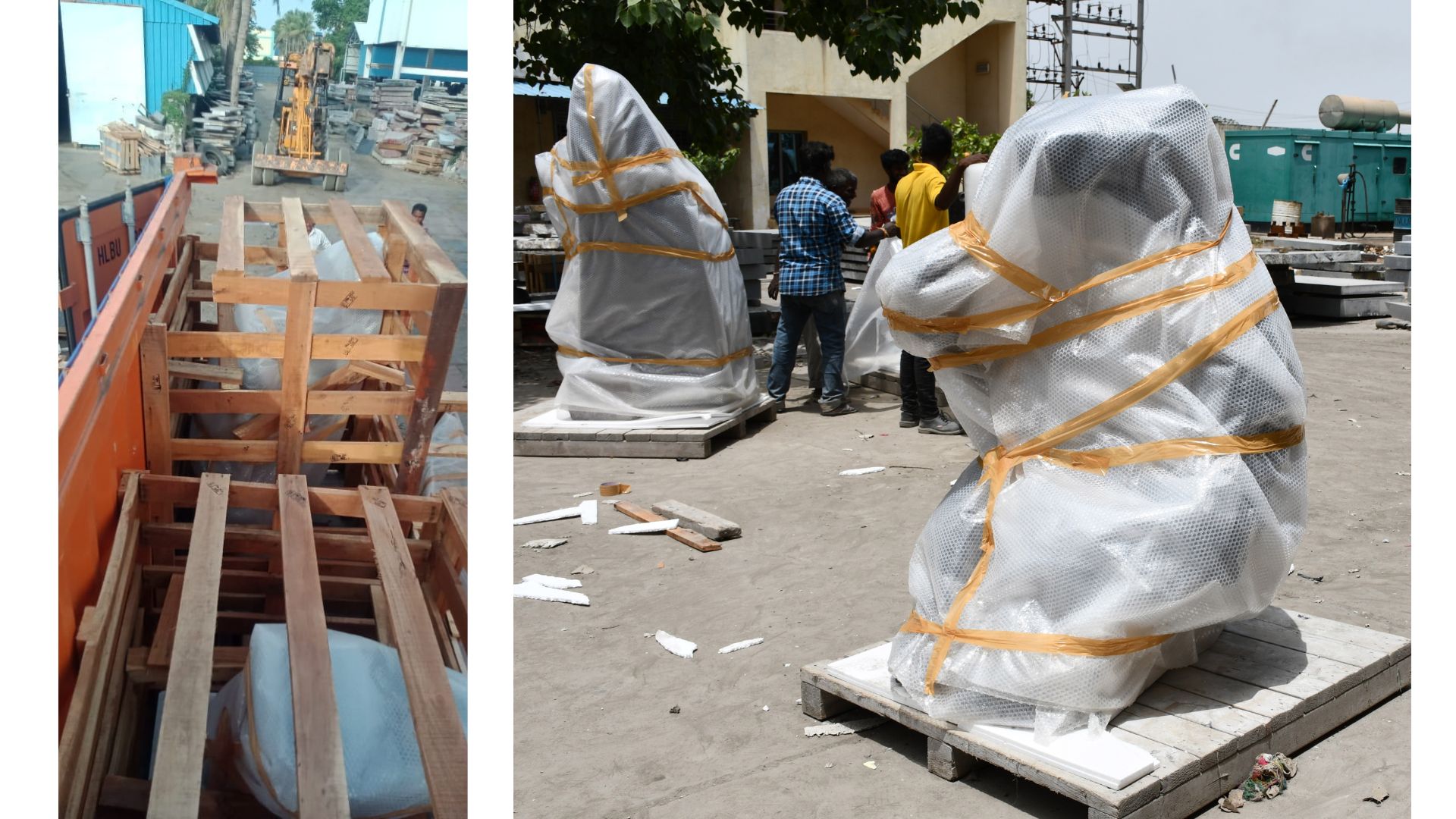
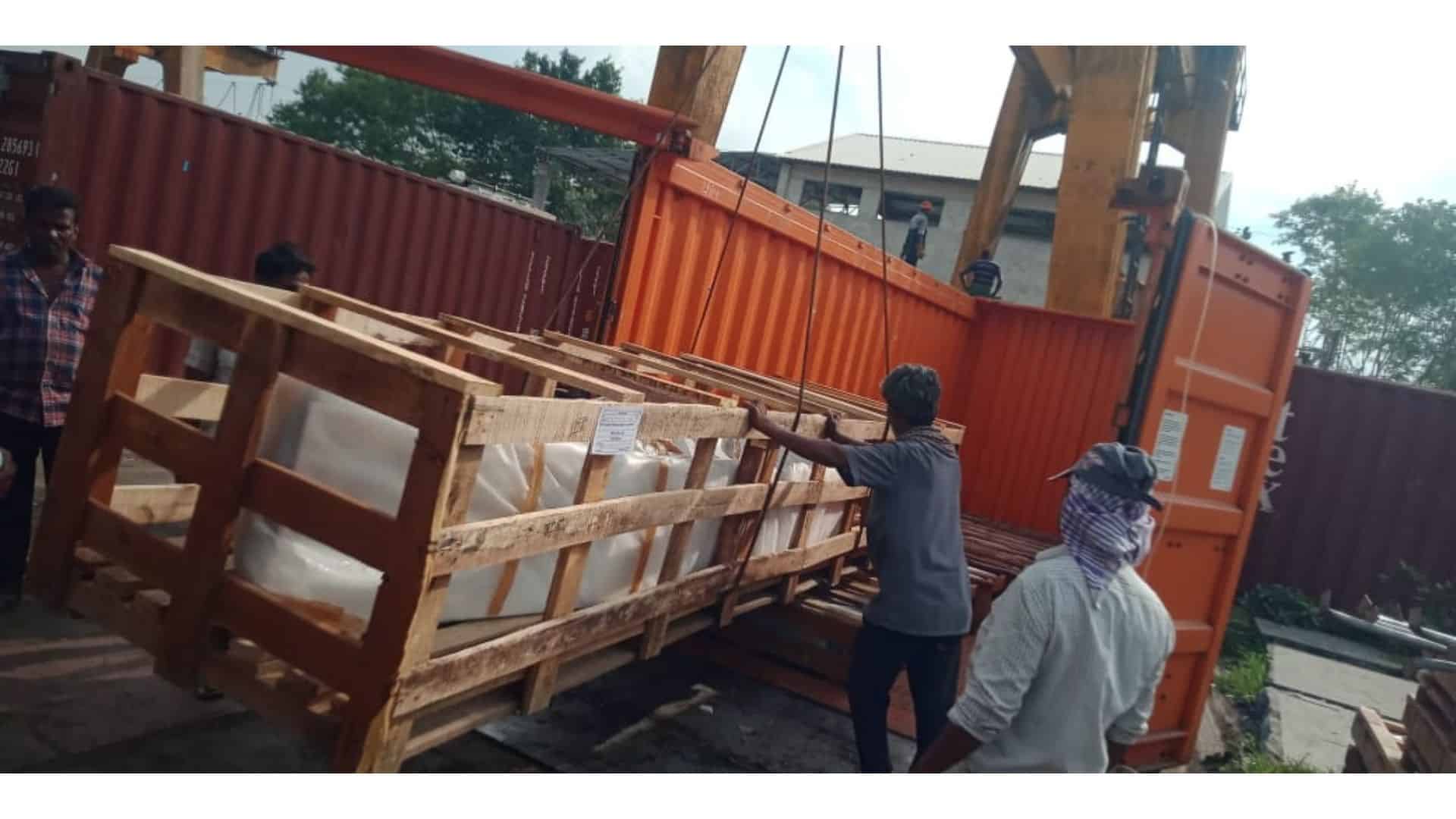
Then it was time for the sculpture to be shipped to its final destination. As you can see our team in India wrapped each piece individually and placed them into special shipping crates using our cranes. 

4. Install

It was installed in partnership with the Mississaugas of the Credit throughout April 2022 and was opened to the public on 4 May 2022.

The Results

Maanjidowin opened on 4 May 2022 and has quickly become a beloved part of the Toronto Airport landscape.

The Honourable John Tory, Mayor of Toronto said: “Billy Bishop Airport is an important gateway for residents and visitors alike, and I am pleased that those travelling through the airport, as well as those within the surrounding community, will be able to enjoy and learn from this new and important sculpture.”

Contact us today 

Did you know that we at HGH Granite have been providing granite services for the last 90 years? Our vision and business model have helped build a loyal customer base that relies on our expertise and quality workmanship. Over the years, our team has grown with like-minded individuals that share the same passion for providing outstanding granite products and services. Let us help build you your vision.

Step by Step Guide to Choosing a Cemetery Memorial

A cemetery memorial is a lasting and unique way to remember the life of a loved one. They provide a place for people to reflect and grieve – and act as a physical reminder of the individual who has passed away.

Choosing a memorial is a very personal and subjective experience and involves various parties – from family and loved ones to memorial specialists and cemetery personnel.

However, there are some basic steps to follow when choosing a memorial that will help the process go more smoothly and be one less thing to worry about. Here’s our short step-by-step guide to the process.

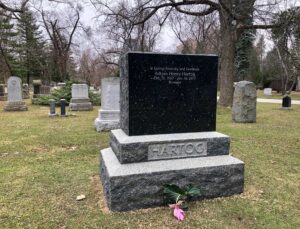
HGH Granite Hartog Memorial


1. Orientation

Before picking a location within the cemetery, decide if you would like the memorial to be an upright monument or flush grass marker.

2. Size

By-laws outlining what memorial type and the permitted size can be installed on the site and these are specific to each cemetery. Make sure to check, when purchasing a plot, that the cemetery will allow for the size of the memorial you have planned.

3. Overall Look

Once you have chosen a memorial site you can begin to picture how you would like the memorial to look. A great way to get ideas is to take a walk through a cemetery and take note of the various colours, shapes and designs. You can also browse memorial displays – online or in brochures – to find a design that meets your requirements then share these findings with the memorial specialist so they have a better idea of your vision ahead of the design process.

4. Suitability & Foundations

Memorial sales staff will be able to confirm if the memorial you have in mind will be suitable for your chosen site and can also order a memorial foundation if required. The foundation is installed beneath the base of an upright monument, to add stability while the ground around the memorial moves due to the natural elements. In some areas this is a concrete foundation which is poured up to 48 inches deep – while other areas might require a 4-inch thick granite foundation slab.


5. Colour & Material

Next you will want to choose the colour and material of your memorial (see our guide to choosing granite colours). If you’re considering a granite memorial with sandblast engraving or etching, we would recommend going with darker colours, such as American Black, Jet Black, and Cambrian Black which give great contrast. Once the colour is confirmed the design process can begin.

6. Stone Orders

After the dimensions, colour and final design drawings of your memorial are approved the granite/ stone can be ordered (unless you choose one that is already in stock).

7. Engraving

Once the granite/stone arrives the engraving process begins. Click the link to get an idea about the types of engravings, etchings and hand sculpting you can opt for.

8. Delivery & Installation

Once completed, the memorial is delivered to the cemetery for installation on the appropriate lot.

As we mentioned in the intro, every memorial purchasing process is unique – and there can be extra side steps depending on the style, size and location of your memorial. However, these eight steps represent a typical process. We hope you find it helpful.

Contact us today

Did you know that we at HGH Granite have been providing granite services for the last 90 years? Our vision and business model have helped build a loyal customer base that relies on our expertise and quality workmanship. Over the years, our team has grown with like-minded individuals that share the same passion for providing outstanding granite products and services. Let us help build you your vision.