
When we talk to architects, landscape architects and contractors about a new public-space project, we explain how granite can do a lot of different jobs.
It might be paving underfoot, curbing, steps or seating. It might be used for a fountain or landscape feature. Or it could be engraved with artwork, incorporated into a sculpture or used to create a landmark feature.
And sometimes, it does more than one of those jobs at once.
That’s something we see again and again in the streetscape and public-space projects we work on, where the practical and creative sides of granite often come together.
So, where do streetscape, hardscape and artscape fit into the picture?
What Is Streetscape, Hardscape and Artscape?
Streetscape: is the bigger picture – the combination of elements that shape the look, feel and function of a street or public realm. That can include everything from paving, curbs and street furniture to planting, lighting and public art.
Hardscape: refers specifically to the non-living, structural elements within a landscape or public space. In granite, that might mean paving and pavers, setts and cobblestones, curbs, steps, walls, benches, bollards and other architectural or landscape features designed to stand up to everyday use.
Artscape: is a little less clearly defined and isn’t a standard technical landscaping term in the same way hardscape is – but it’s a useful way of describing the more creative and artistic elements within a space. Think sculpture, public art, engraved stone, artistic water features and other landmark features that help give a place its own identity.
In practice, though, these categories often overlap. A granite bench can be both functional street furniture and a sculptural feature. Paving can provide a durable route through a busy public space while creating an intricate pattern or design. And a granite wall can help define a landscape while also carrying artwork, words or imagery – it’s where the overlap/distinction between hardscape and artscape gets interesting!
When Does Hardscape Become Artscape?
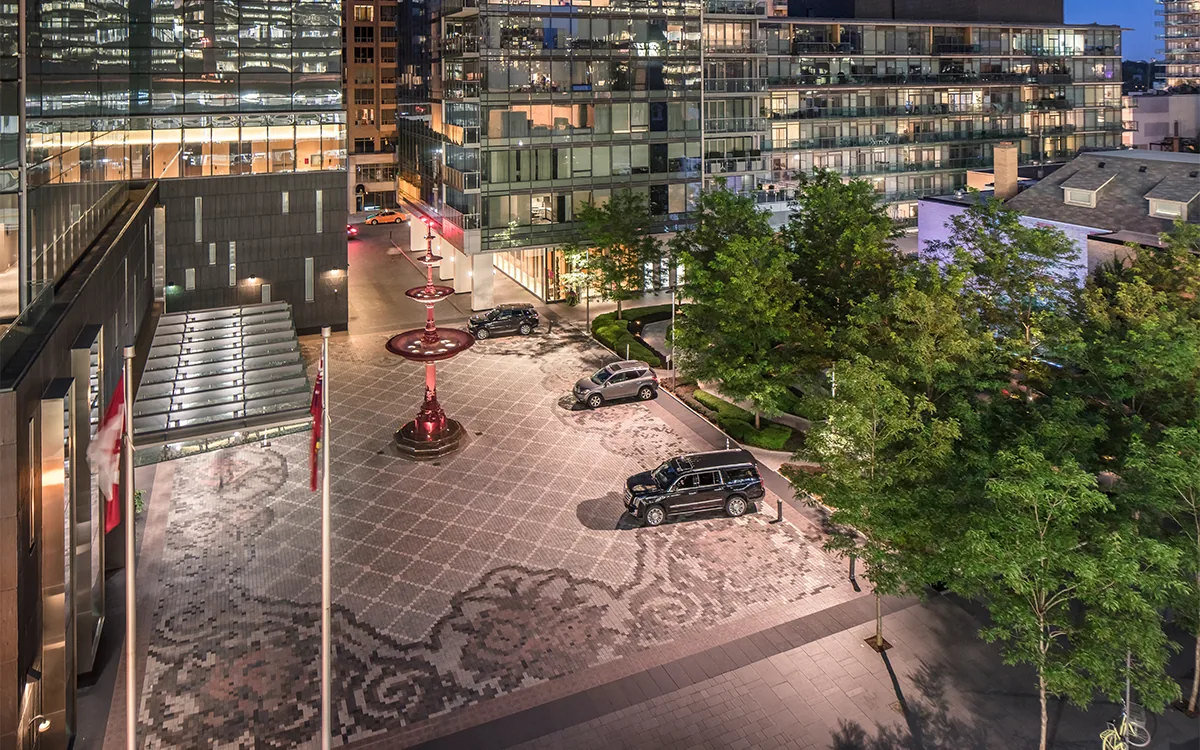
At the Four Seasons Hotel and Residences in Toronto’s Yorkville neighbourhood, the answer can be found underfoot.
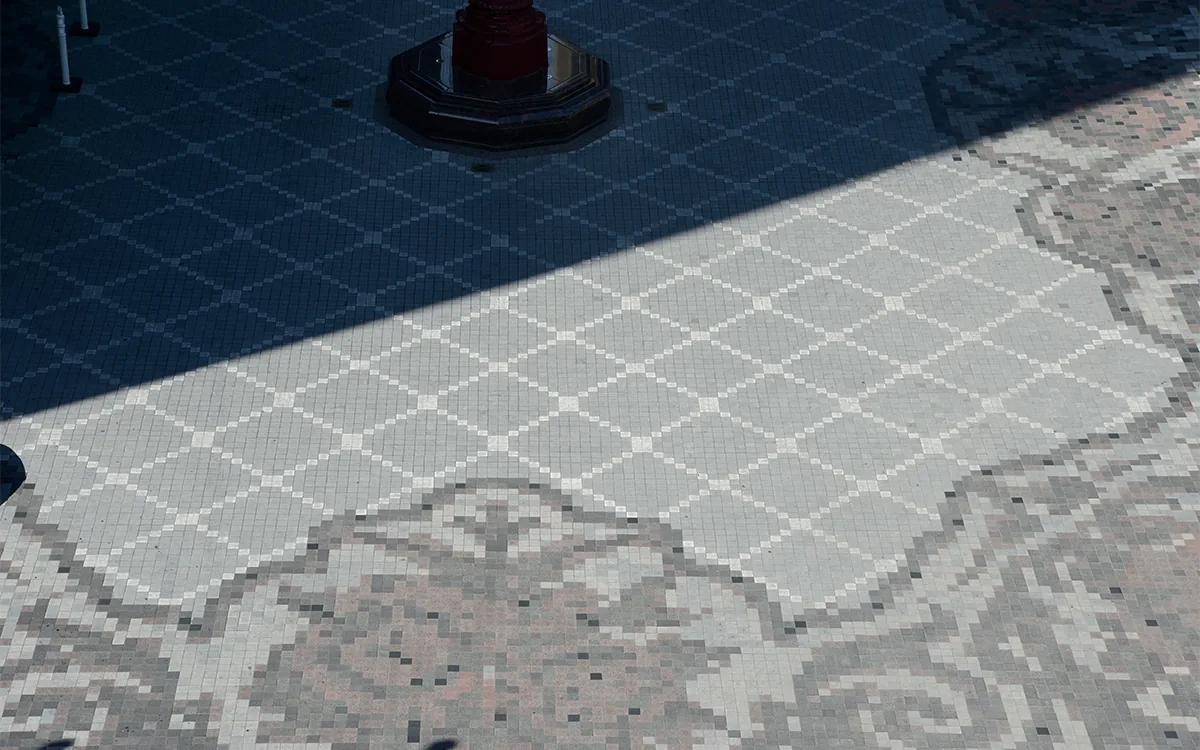
Working with Aldershot Landscape Contractors and designer Claude Cormier + Associés, we were tasked with sourcing the granite for the “urban carpet” at the hotel’s grand outdoor lobby.
Inspired by a giant Persian rug, the intricate geometric design was created using granite cobbles in 14 different colours and finishes.
Functionally, this is an example of granite hardscape – a highly durable surface designed to accommodate vehicles and pedestrians.
Visually, it’s something else entirely. Viewed from above, the granite paving becomes a huge work of pattern and colour that helps give the entrance its distinctive identity (and no doubt played a part in the many awards the hotel has received!)
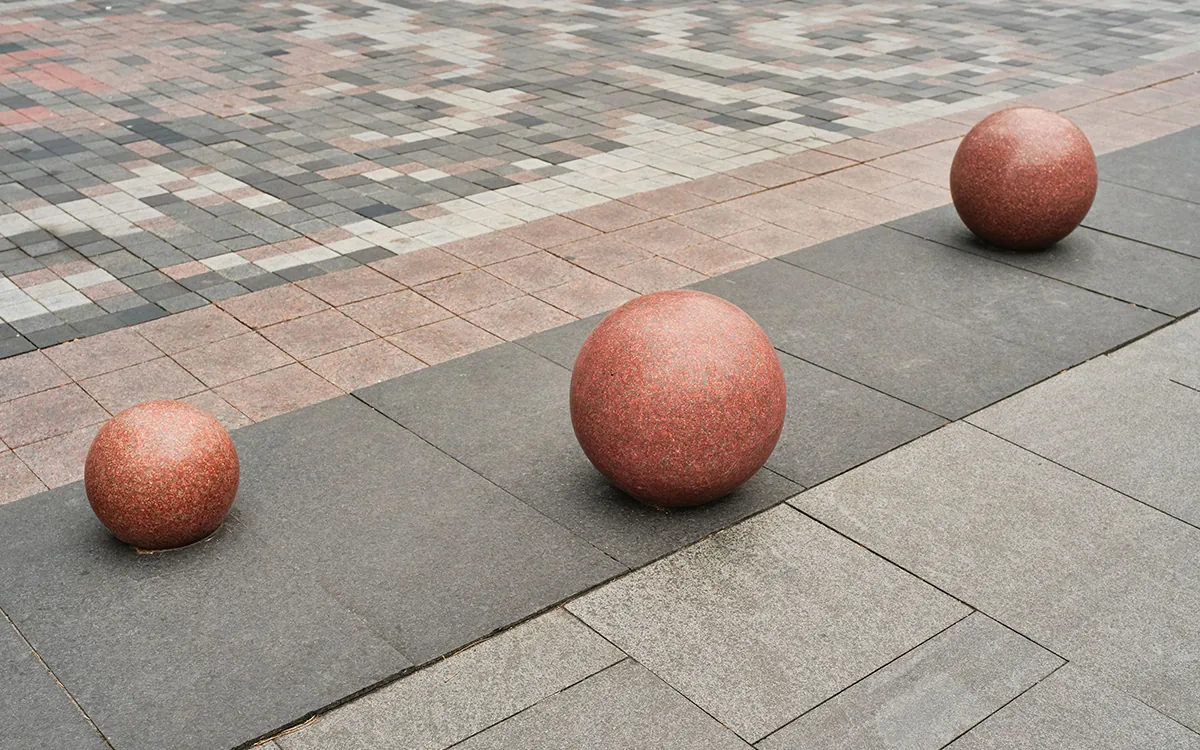
As part of the project, we also supplied granite spheres and pavers for the surrounding sidewalks, granite curbing and stone for the base of the plaza’s fountain.
This is a great example of what can happen when practical hardscape becomes an integral part of the design.
Combining Function and Fun in Streetscape, Hardscape and Artscape
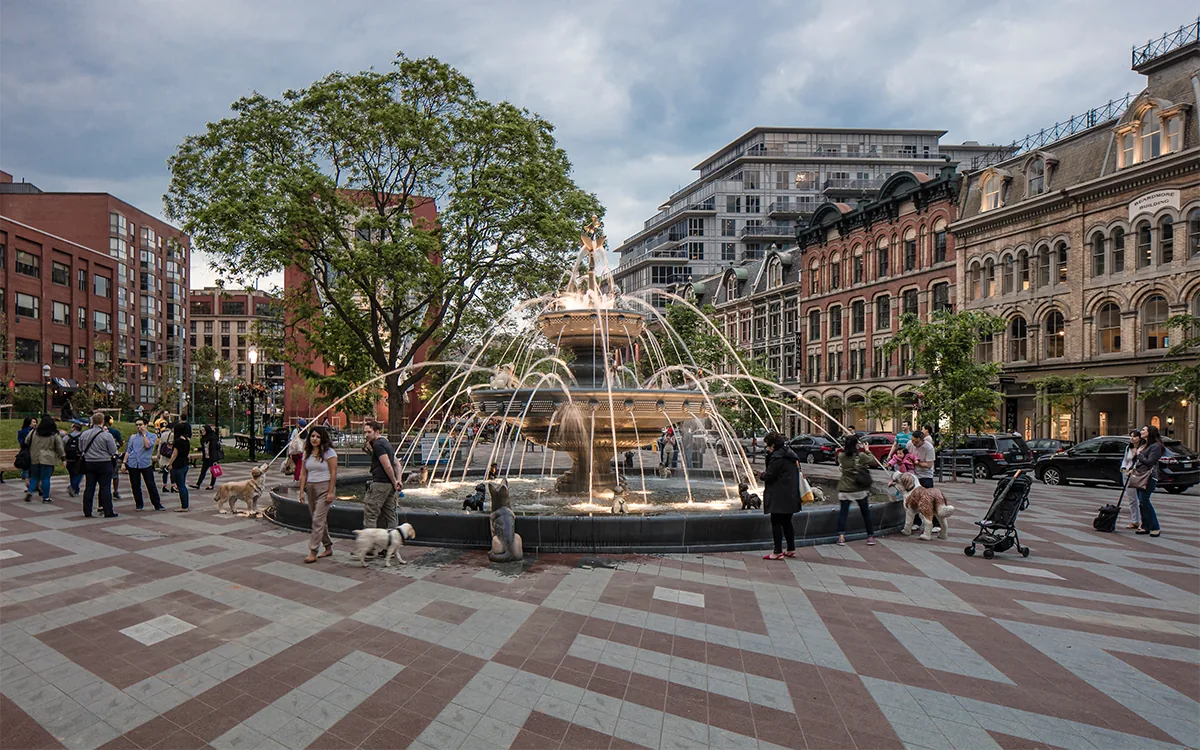
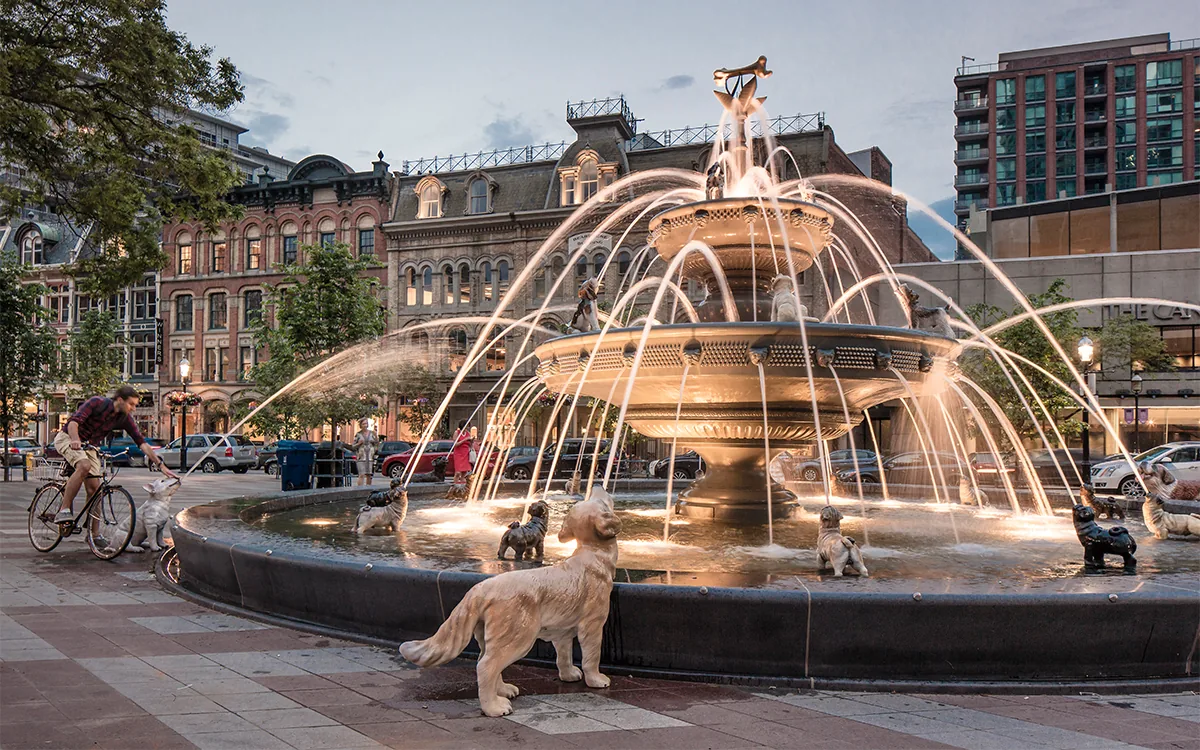
Head a few kilometres across Toronto and you’ll find another very different approach to granite streetscape design at Berczy Park.
This distinctive triangular public plaza sits in the heart of Old Toronto, with the iconic Gooderham Building at its eastern tip.
When the park was modernised, the vision was to create a fun, welcoming communal space for adults, children and dogs, complete with a geometric-patterned thoroughfare described as an “urban carpet” and a whimsical two-tiered fountain.
We loved being part of this project and worked alongside Trinity Custom Masonry, Somerville Contracting and Claude Cormier + Associés to source granite from Asia and Europe in the specific colours needed to create the complex paving pattern.
We also supplied the granite for the fountain basin, which incorporates a drinking trough around the water feature for some of the park’s most enthusiastic visitors – dogs!
Here, granite paving, public art and a water feature aren’t treated as separate ideas. They help create the character and experience of the park as a whole.
Connecting a Public Space to Its Landscape with Granite
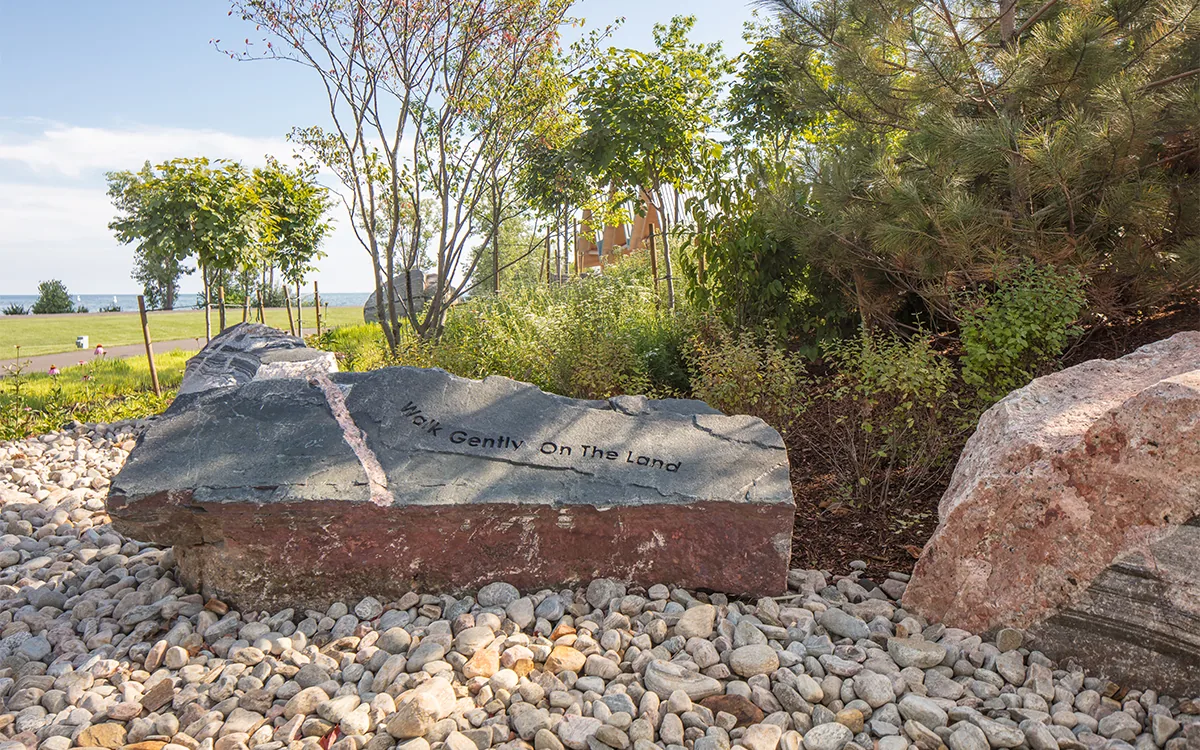
Granite doesn’t always need to be highly polished or precisely patterned to make an impact. At Trillium Park at Ontario Place, the natural character of the stone was fundamental to the design.
The 7.5-acre waterfront park transformed a former parking lot into a modern urban forest inspired by the Ontario landscape, with its design developed in consultation with people from across the province, including the Mississaugas of the Credit First Nation.
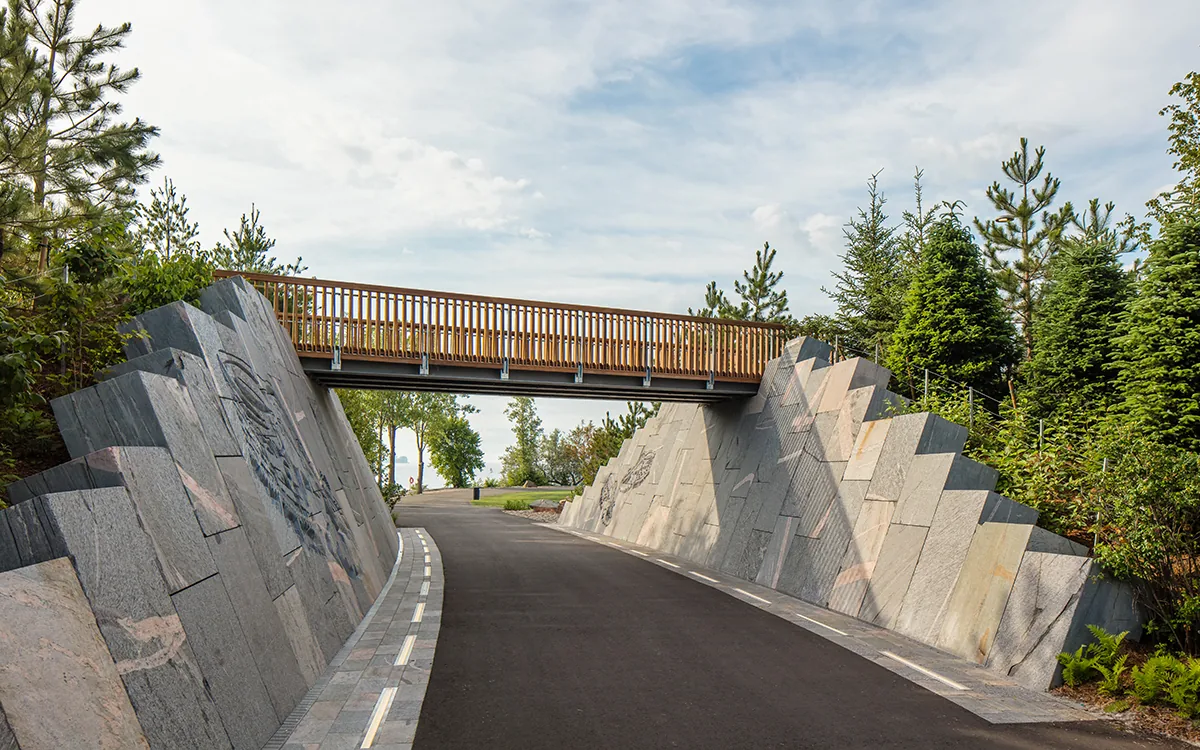
For this project, we sourced granite quarried in Northern Ontario for two significant areas within the park: the Ravine with Moccasin Identifier and the Bluff.
The natural granite rocks and boulders of the Bluff create an atmospheric communal seating area overlooking Lake Ontario. Interesting tidbit: the wall was constructed off-site at our quarry then dismantled and rebuilt on site.
For the Ravine walls, engraved designs were sandblasted into sections of granite at HGH before the stone was delivered and installed.
The result shows another side of granite in public spaces. Rather than competing with its surroundings, the stone helps connect the built landscape to the natural geography that inspired it.
When Granite Becomes the Art
And then there are projects where the line disappears altogether.
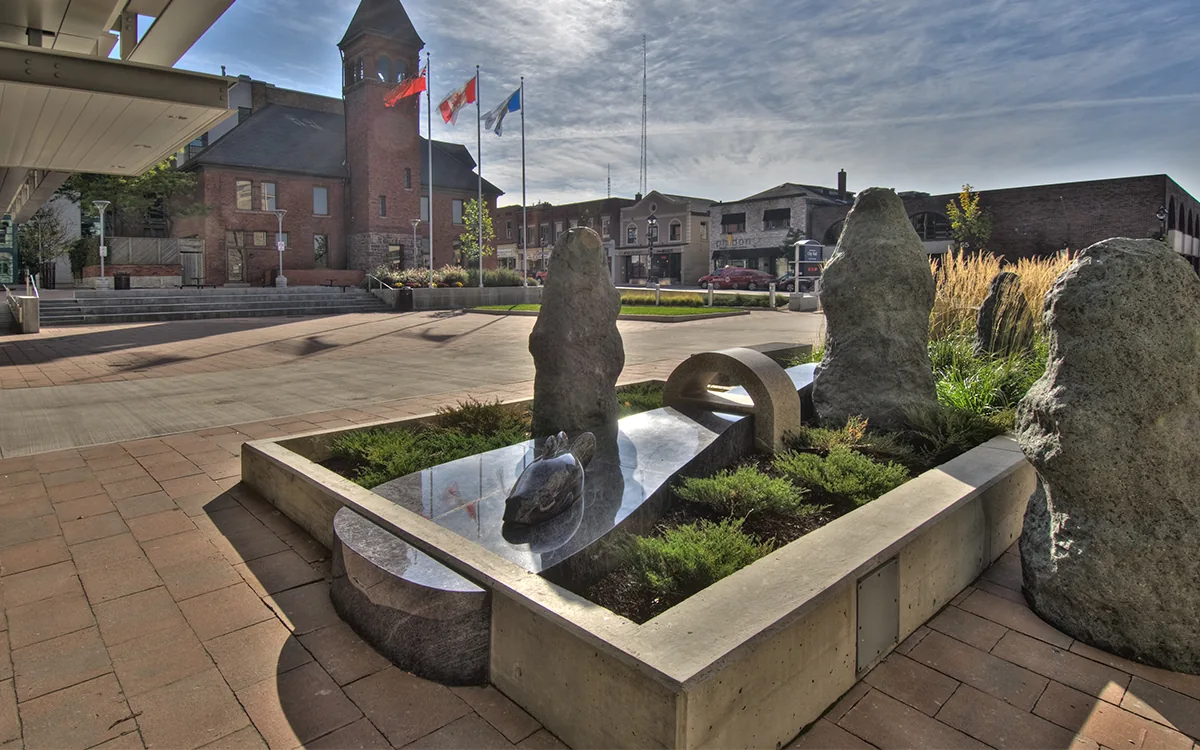
Indigena Domain, created by artist Stephen Cruise for the Cambridge Civic Administration Building, is an integrated piece of public art celebrating the communities that came together to form the City of Cambridge.
The work references Galt – once known as The Granite City – Preston, Hespeler and Blair, while its sculptural elements and water feature also draw on the natural world and the continued presence of the Grand River and its watershed.
For this project, we sourced polished granite for the art elements in a palette including Bahama Blue, Jet Black, Rustic Gold, Mountain Rose and Red Deer Mahogany.
Here, granite isn’t simply supporting the artwork or providing the hardscape around it.
It’s part of the artwork.
Colour, finish, form and fabrication all contribute to the artist’s vision and tell a story.
Hardscape or Artscape?
For architects and landscape designers, the question doesn’t always have to be whether granite is being used as hardscape or artscape.
Often, it can do both.
A granite bench can provide somewhere to sit while also becoming a sculptural feature. Paving can guide people through a space while creating a pattern visible from surrounding buildings. A wall can help shape a landscape while carrying engraved artwork, words or imagery. Natural boulders can provide seating, define an area or become part of a water feature.
And a material selected for its durability can also bring natural colour, texture and character to a project.
That’s one of granite’s strengths in public-realm design: practical requirements and creative ideas don’t have to live separately.
Why Use Granite for Hardscape and Public-Space Design?
Public spaces ask a lot of the materials used within them.
They need to cope with weather, foot traffic and, depending on the application, vehicles and the realities of busy urban life. But architects and landscape designers are also looking for materials that contribute something visually to a project.
Granite brings those two requirements together.
Available in a wide range of natural colours, textures and finishes, it can be fabricated into everything from granite pavers, cobblestones, curbs and steps to benches, water features, engraved stone and large-scale architectural features.
It can be precision-cut for a complex geometric streetscape or left closer to its natural form to create a rugged landscape feature.
Bringing Granite Into a Public-Realm Project
One thing all four of these granite hardscape and public-space projects demonstrate is that thinking about granite early on is key.
For instance, a design might call for a very particular colour, unusual finish, complex paving pattern, large natural boulder or precisely fabricated piece. Understanding what’s available – and how it can be quarried, fabricated, transported and installed – can help turn an ambitious concept into something buildable.
That’s where HGH comes in.
We work alongside landscape architects, architects, artists, contractors and municipalities, helping with everything from granite selection and sourcing to custom fabrication, engraving and installation.
Sometimes we’re sourcing stone from several countries to achieve a particular palette. Sometimes we’re walking through a quarry looking for exactly the right boulder.
Whatever the project, the starting point is the same: understanding what the design is trying to achieve and finding the right stone – and the right process – to help make it happen.
Granite Hardscape & Artscape FAQs
What is granite hardscape?
Granite hardscape refers to the non-living, structural granite elements used within landscape and public-space design. These can include paving and pavers, setts, cobblestones, curbs, steps, walls, benches, bollards and other architectural features.
Why is granite suitable for streetscape and hardscape projects?
Granite combines durability with a wide choice of natural colours, textures and finishes. This makes it suitable for heavily used public spaces while giving architects and landscape designers plenty of scope to create something distinctive.
Can granite be used for both functional hardscape and public art?
Absolutely. Granite can perform a practical role as paving, seating, steps or walls while also contributing to the creative identity of a space. It can also be carved, engraved, sandblasted and fabricated for sculptures, monuments, water features and other public art installations.
How can granite hardscape and artscape elements be combined?
Sometimes the same element can fulfil both roles. Patterned granite paving can become a visual feature, an engraved wall can shape a landscape while telling a story, or functional granite seating can be designed as a sculptural element. Bringing material and fabrication considerations into the design process early can help identify these opportunities.
Thinking About Your Next Public-Space Project?
Whether you’re designing a streetscape, park, plaza, public artwork or architectural landscape, granite can do far more than simply provide a durable surface.
From distinctive natural stone and precision paving to custom engraving, sculptural elements and complex fabrication, HGH works closely with project teams to explore what’s possible – and bring ambitious ideas into the public realm.
We’d love to hear what you’re working on.